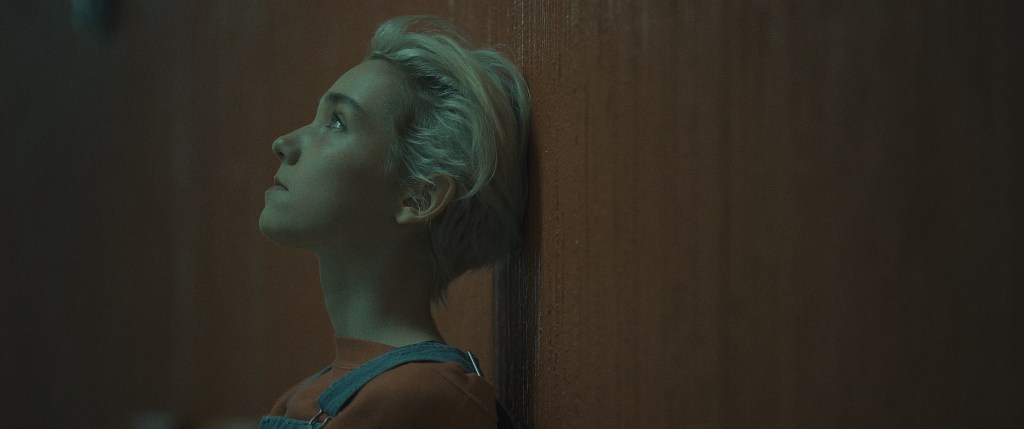
Come True is a Canadian psychological sci-fi / horror available for digital download from the 15th March about a school girl suffering from a sleeping disorder who signs up to a scientific sleep study that does more than just check her R.E.M. frequency.
Set in the present day with a sense of the future it begins inside the dreams of a young girl, Sarah (Julia Sarah Stone), who has been having some dark dreams with a repeated shadow figure appearing in them. She’s sleeping rough and having to make some stealth visits home, as for some unbeknown reason, she is avoiding her parents. Her problematic sleeping troubles mean she is struggling at school and socially. She stubbles across an advertisement on a cafe noticeboard looking for trialists to take part in a sleep study and grabs this gift wrapped opportunity with both hands, to get paid to sleep.
The sleep laboratory tests get under way and she is part of a small group of applicants who are put in rooms to sleep, slipping on some smartly designed pyjama space suits that will monitor their sleeping behaviour. To begin with there seems nothing out of the ordinary as the scientists and lab technicians go about their observations, taking their vital readings but when the psychological tests afterwards have an adverse reaction on Sarah, she’s keen to pull out of the experiment.
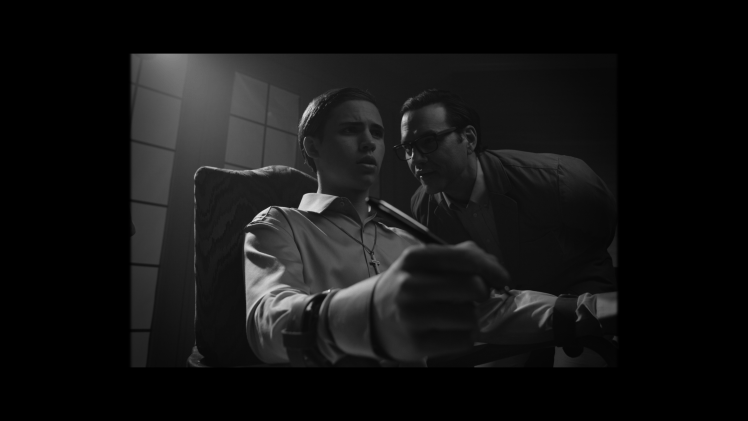
She has an admirer in one of the nerdy scientists Riff (Landon Liboiron) and when her condition gets worse she wants to know what they have been doing and she persuades him to give her an explanation, and in exchange she’ll rejoin the experiment. He reveals to her that with the technology they have, they are able to process the mind’s information into actual moving images and are capable of seeing people’s dreams on monitors, as they fall into the hypnogogic state of sleep.
The CGI dream sequences are dark and foreboding and as a sci-fi horror it maintains an intriguing and slightly disturbing undertone, with some primordial shadow figures appearing in the dreams, although without ever going overboard. The film score has an eerie pop-synth from Electric Youth and Burns that adds to the films stylised cohesiveness.
Directed and edited by Anthony Scott Burns it has a minimalistic retro feel that gives a unsettling insight into the debilitating effects of insomnia. It conjures images of several films in the genre, particularly a quirky Donnie Darko, that allow you to enjoy its oddities and should keep you awake to the end.
Film: Come True
Director: Anthony Scott Burns
Stars: Julia Sharon Stone, Landon Liboiron, Carlee Ryski
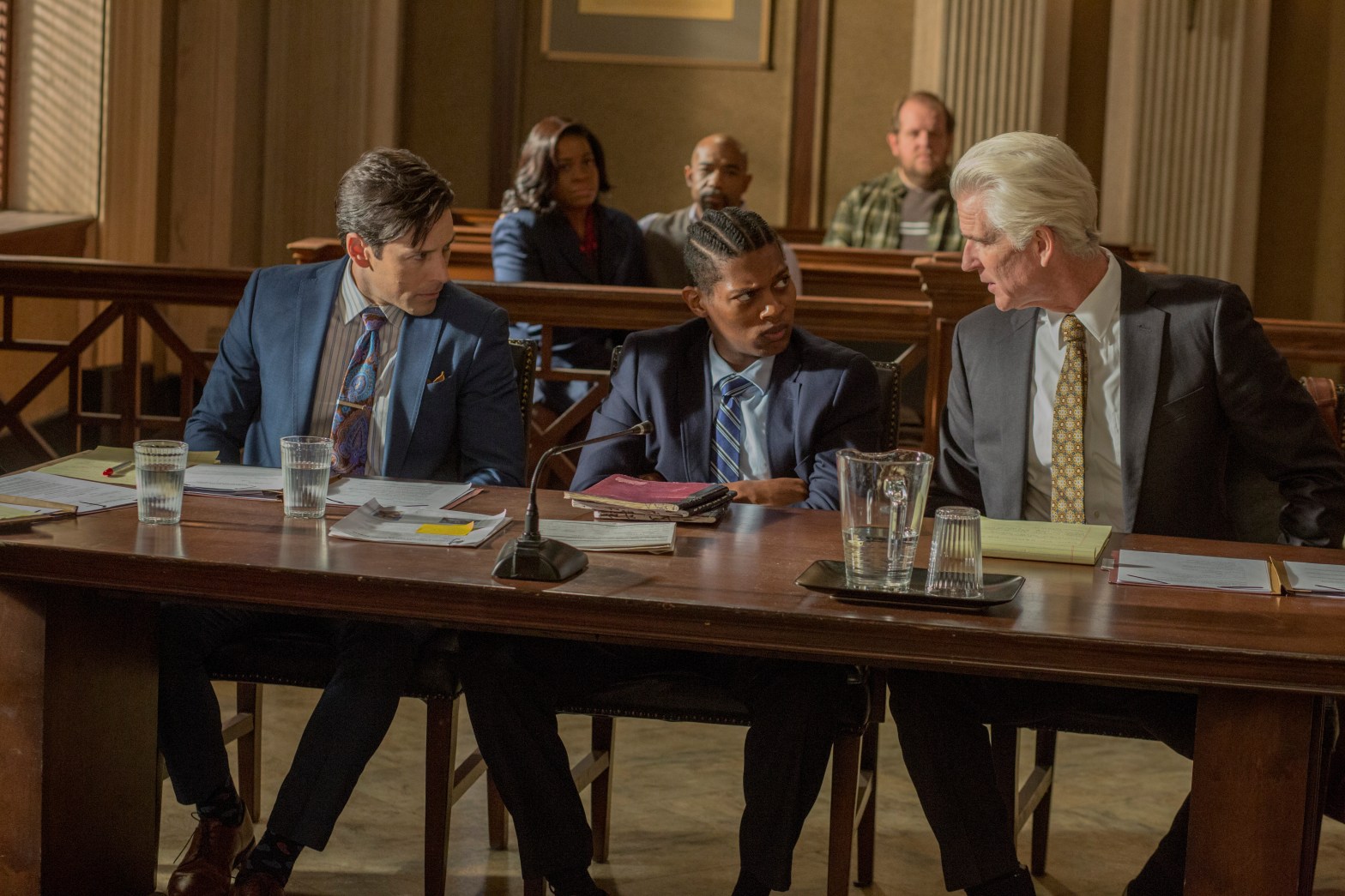
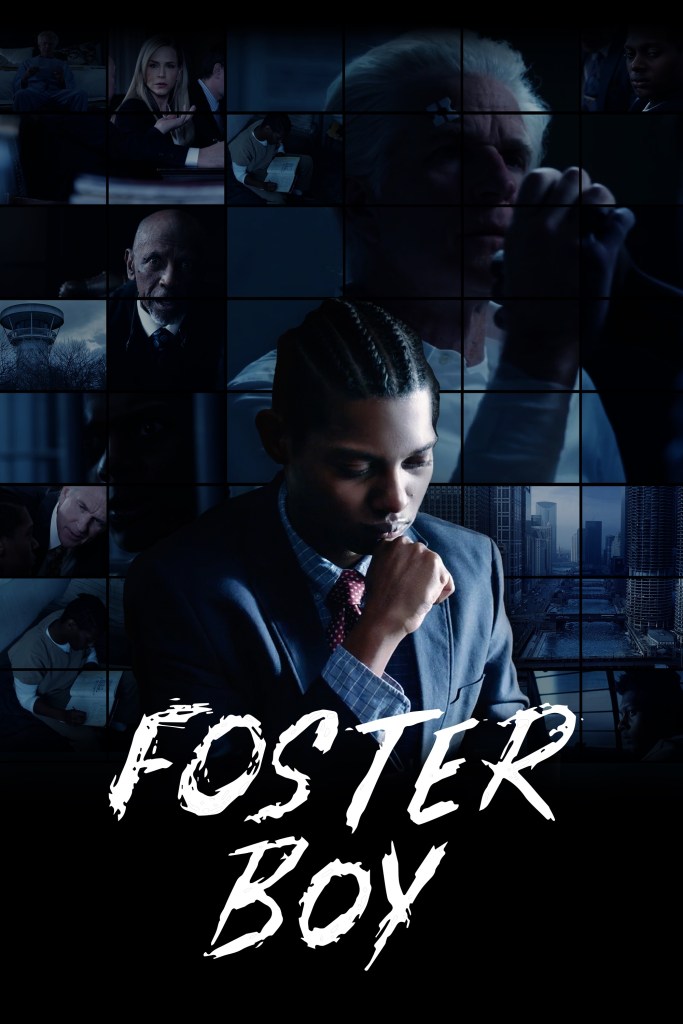
A legal thriller about foster care available for digital download from 1st March, Foster Boy, is based on the true story of foster care victim Jamal Randolph (Shane Paul McGhie) who wants to take a for-profit foster care company to court for the abuse he received in their homes.
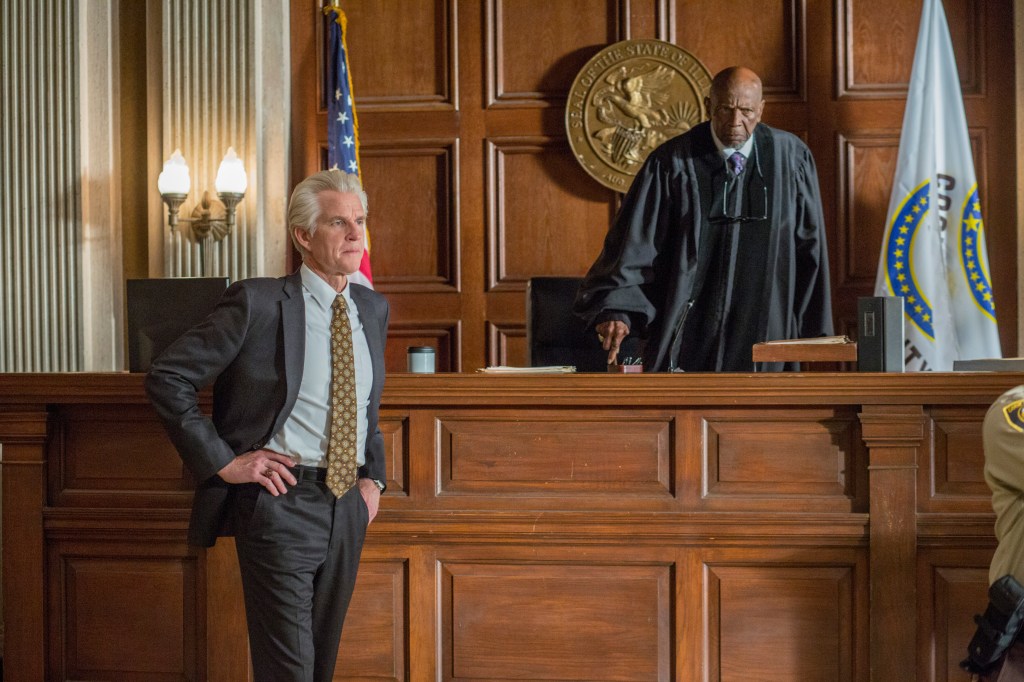
Written by Jay Paul Deratany and based on his experiences as a trial lawyer, the story begins with Jamal, in court for another misdemeanour and as the judge (played by Oscar winner Louis Gosset Jnr) puts it, he has seen him more times than his own grandchildren, we imagine this is just another social misfit stuck in a cycle of repeat offences. But the judge notices the boy has another case pending against a foster care company, which until now there hadn’t been a lawyer to represent him. Step up reluctant attorney Michael Trainer (Matthew Modine – Stranger Things), a high flying corporate lawyer just leaving the courtroom after winning another lucrative litigation, when he is hauled back by the judge and told to work pro bono i.e. for a client who can’t afford it, and fight for the young offender’s civil action case.
These two, from very opposite sides of the track, are forced into an alliance. We find the win at all costs lawyer and the foster care ‘thug’ who refused to take a $50,000 pay off, are capable of healing one another. As we delve deeper into the case the kid has genuine grounds to claim negligence against the privately run foster care company who had put a violent sexual offender into the same foster home as him. The problem is, can he testify with his PTSD symptoms and is there any concrete evidence to convince the jury?
They’re up against a corporate foster care company that makes money taking contracts from the state to find homes for kids, a very nice little earner they will do anything to protect. When their initial pretrial payment is turned down they begin with stronger tactics approaching Jamal’s lawyer to see if they can come to a favourable arrangement but when an even higher offer is rejected they find out this case isn’t about the money. Their tactics become more unsavoury as they try to scare off the opposition and show an unnerving level of power and influence as a series of unfortunate events follow.
The producer of the film, Peter Samuelson, is the founder of First Star, a charity that gives academic support to young adults in the care system. The statistics are clear on how coming from a disadvantaged background or without a stable family affects people’s futures. The lead Shane Paul McGhie corresponded with some of the kids who helped him prepare for the role and his performance made sure that whilst being a victim of horrendous circumstances he came through it showing great strength. Perhaps in the end the courtroom battle is a little too cliched as a film dramatisation with its don’t judge people by appearances message but it’s a heartwarming attempt to tell the story.
Film: Foster Boy
Director: Youssef Delara
Stars: Matthew Modine, Shane Paul McGhie, Louis Gossett Jr., Julie Benz
Click for film reviews with film language worksheets.
Language content and exercises including reading, audio, comprehension questions, vocabulary, discussion questions, pronunciation and listening exercises
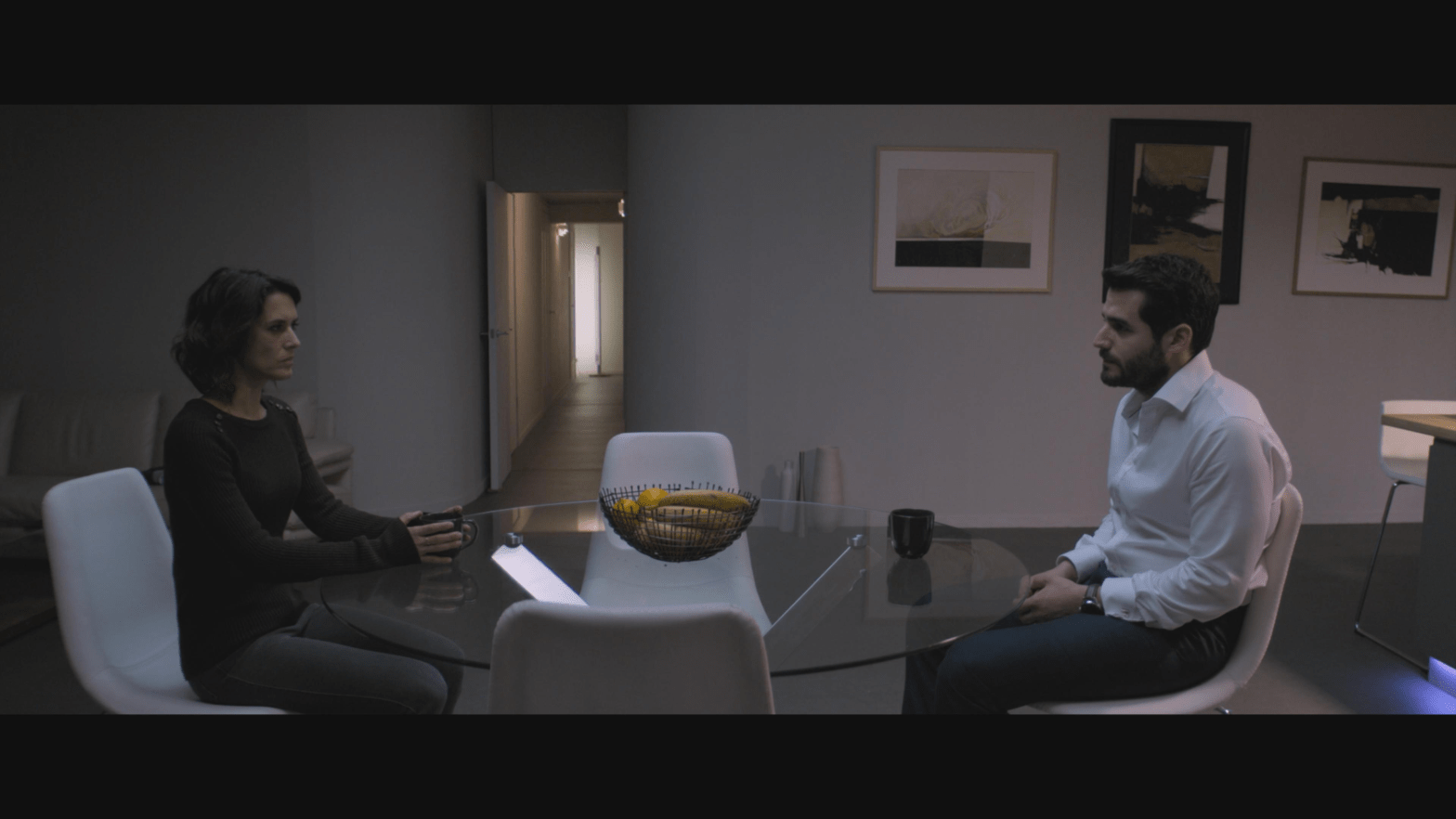
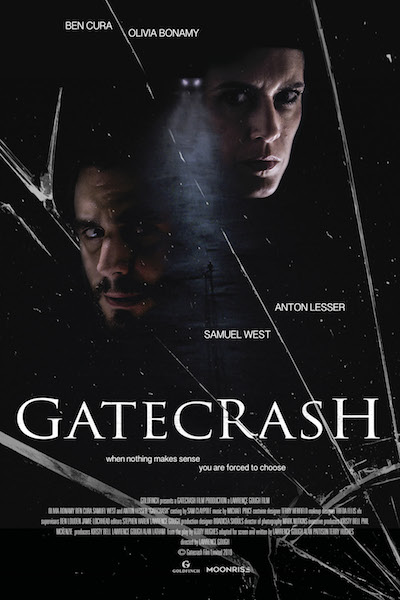
Available on digital download from 22nd February, Gatecrash is a twisted psychological thriller about a couple who return home from a party having been in a car accident with a passer-by late at night. Their confused actions after the incident lead to repercussions that get even further out of control.
Directed by Lawrence Gough and based on an award winning play by Terry Hughes the film begins with Steve (Ben Cura – Marcella) and his French wife Nicole (Olivia Bonamy – Them) talking agitatedly and confusedly after the hit and run incident. Their relationship seems already distant and strained made all the worse by the accident, and the flowing accusations that spill out, quickly become threatening and physical as they attempt to figure out a plan as to what to do next.
Things take a turn for the worse when an oddball policeman (Samuel West – Darkest Hour) turns up and invites himself into the house at which point Steve makes a sharp exit left, leaving his wife to deal with some awkward questioning. The policeman disappears to take a look around their luxury pad and not wanting to leave the policeman to his own devices too long, Nicole goes looking for him in the labyrinth of rooms only to find some evidence of blood.
When we catch up with them again there is a surprising switch in circumstances as we see an interesting line in retribution being administered, along with some marriage counselling. This all happens before Sid (Anton Lesser – Game of Thrones) the actual victim of the incident turns up at the house some years later. We know some time has elapsed because Nicole has had a baby, a seemingly curious plot thread that isn’t as random as its first introduction, after she felt the need to take a timely pregnancy test during the height of the initial crisis.
Sid’s arrival at the house unannounced brings the 2nd act into play, a kind softly spoken older man who believes the couple had helped him on the night of the accident. The interplay between the characters has the feel of the original play throughout with the added dimension of some simple but effective visual storytelling. Olivia Bonamy brings some high anxiety as the bullied wife who gets trapped by a succession of tormentors, most notably her horribly obnoxious husband.
The film doesn’t hang around getting down to the scruples of the incident. Were they arguing in the car? Was he drink driving? …but reversing over the victim? This is a stylised psychological thriller that has elements of a farcical horror, set in a modern country house situated somewhere in a secluded part of the English countryside. The tension builds with some uncomfortable conversations assisted by some creepy sound mixing before a vengeful finale.
Film: Gatecrash
Director: Lawrence Gough
Stars: Olivia Bonamy, Ben Cura, Anton Lesser & Samuel West
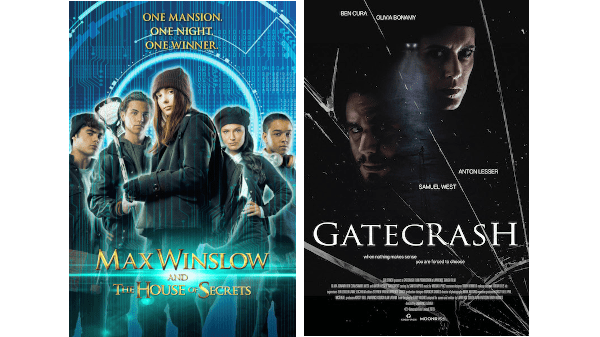
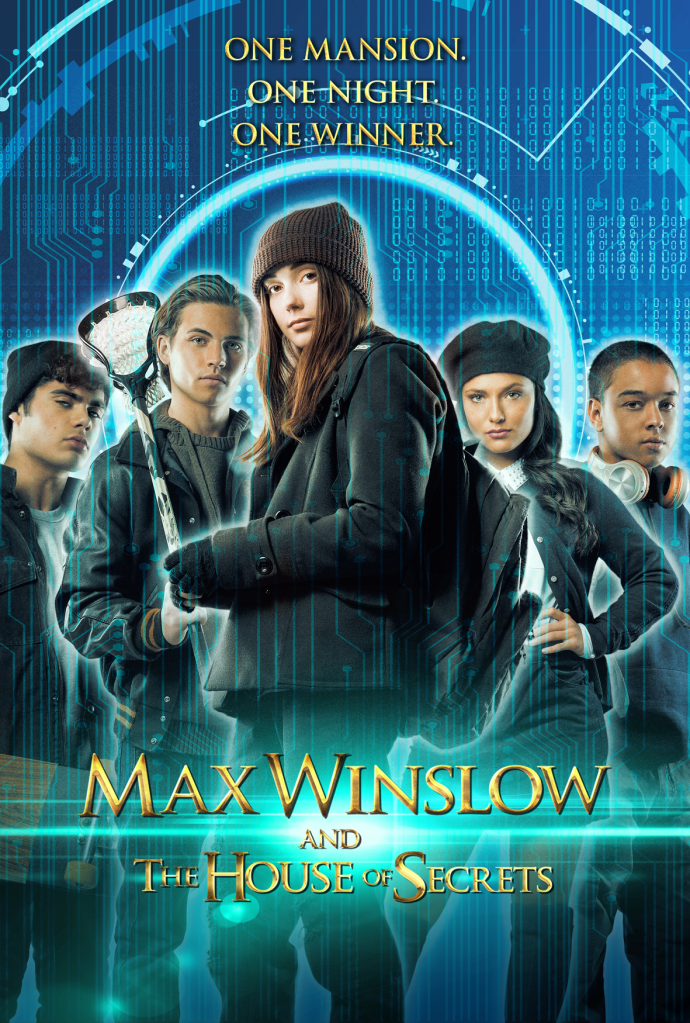
Available on digital platforms from the 15th February Max Winslow and The House of Secrets is a family teen movie where a select group of high school students are invited to the home of eccentric entrepreneur Atticus Virtue to compete to become the winner of his mansion.
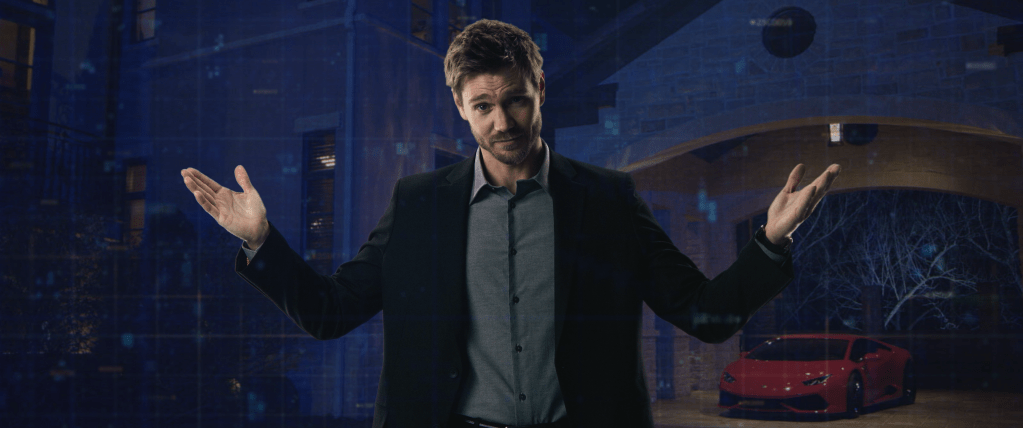
Local hometown technology billionaire Atticus Virtue (Chad Michael Murray), a sort of Elon Musk meets Willy Wonka, has an unusual influence over his former high school in Arkansas. His start up businesses in computer sciences and space flights are now redefining artificial intelligence and as the school’s major benefactor, having donated a whopping $45 million sports stadium, he is able to interrupt classes with a hologram broadcast to announce his latest challenge, a competition for 5 especially selected students to compete in a game for the key to his mansion.
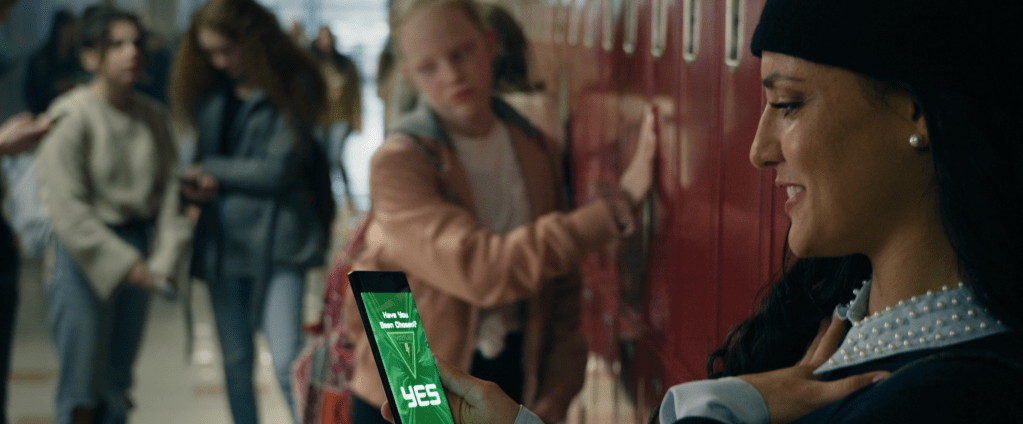
The 5 students find out they’ve been chosen via smartphone much to their delight and are a mix of personalities and talents. The lead is Max (Sydne Mikelle) a geeky female computer programmer who’s the tech guru able to hack into her neighbours smart doorbells and can figure out just about everything except how to get a boyfriend. She has a crush on Connor (Tanner Buchanan) the high school lacrosse star who wants to sing and play cheesy acoustic guitar numbers much to his parents dismay. Then there is also Sophia (Jade Chynoweth) the glamorous social media influencer who is totally unapologetic about her superficial pursuit of getting likes online, Benny the 24 hour gamer (Jason Genao) and Aidan (Emery Kelly) the too cool for school rebel with a bad attitude.
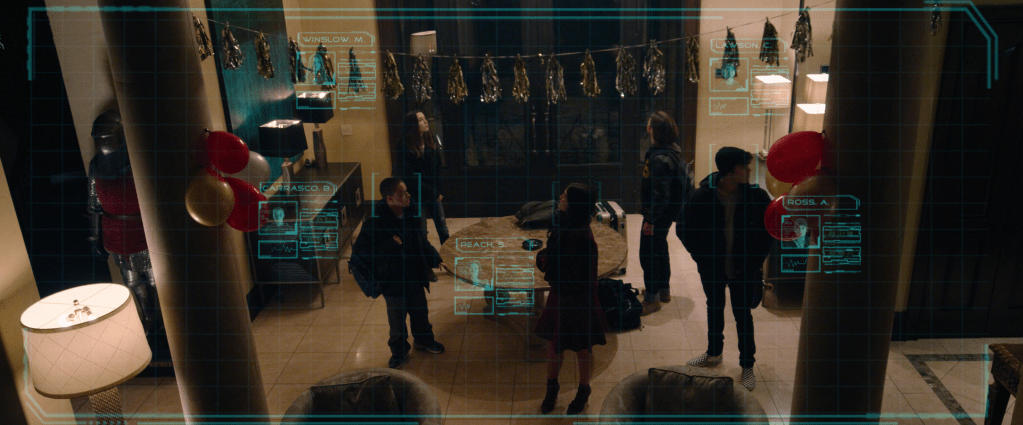
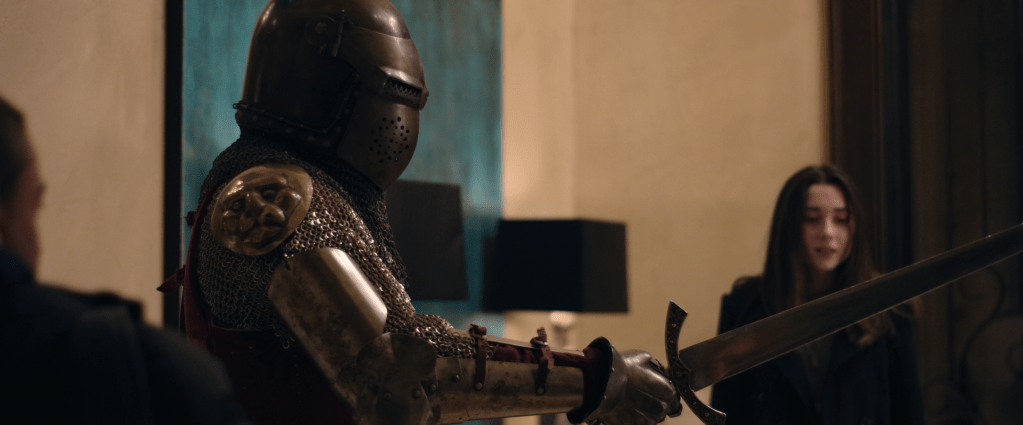
Their arrival at the mansion doesn’t come without a certain amount of trepidation. There are rumours Virtue’s newly unveiled hi-tec pad has been used for human experiments. What kind of experiments is unknown only that he has been working on a top secret project to change reality. They are welcomed by the voice of Haven – the home automated venture, an AI system that controls everything in the house, basically a super tech version of Alexa. Haven is assisted by Sir Mordred the robotic knight, Virtue’s first invention, a menacing looking and sounding Jeeves the butler.
The kids trials begin when they enter the cinema room / golf driving range (the rooms are big and there are lots of them). They get locked in and they’ve only got 3 attempts to crack the code to the door before they are trapped there forever – the first sign that things in the mansion might not be too comfortable for our contestants. The game is now properly underway as the young competitors begin to explore the house accumulating points and solving puzzles, and as they enter the different rooms they come face to face with augmented AI realities of the biggest challenges impacting their lives.
Director Sean Olsen has created an entertaining teen movie that brings a futuristic world to the screen. Its simplified plot meanderings illustrate a vision of the future dominated by AI and an eccentric tech billionaire’s influence on school life whilst touching on some deeper teen social and family issues. It maintains a level of sweetness throughout that means the controlling AI system never gets too sinister and in the final drone onslaught the kids show they’ve got this in a soft teen Breakfast Club way.
Film: Max Winslow and The House of Secrets
Director: Sean Olsen
Stars: Sydne Mikelle, Tanner Buchanan, Jason Genao, Emery Kelly, Chad Michael Murray and Jade Chynoweth
Click for film reviews with film language worksheets
Language content and exercises including reading, audio, comprehension questions, vocabulary, discussion questions, pronunciation and listening exercises
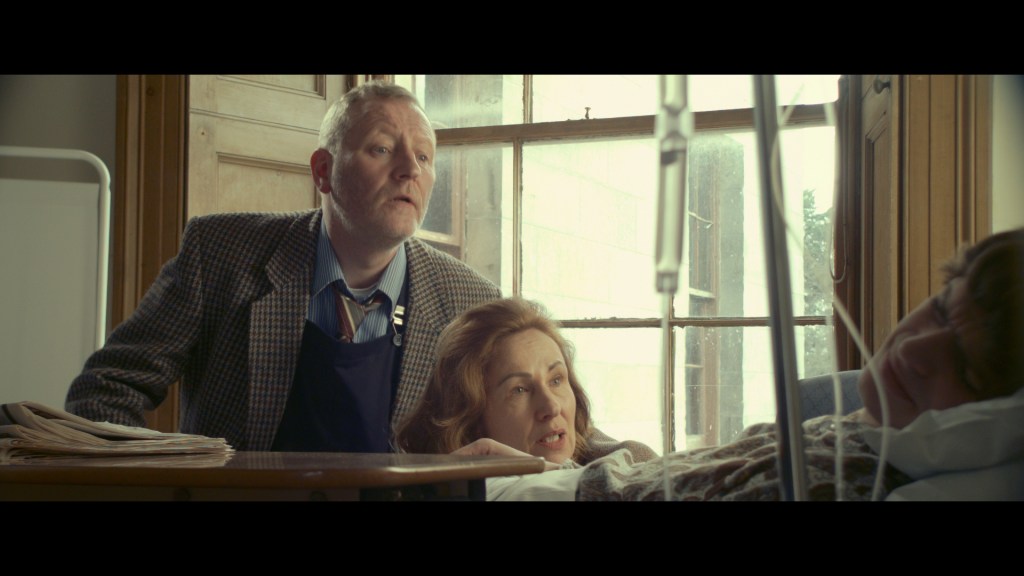
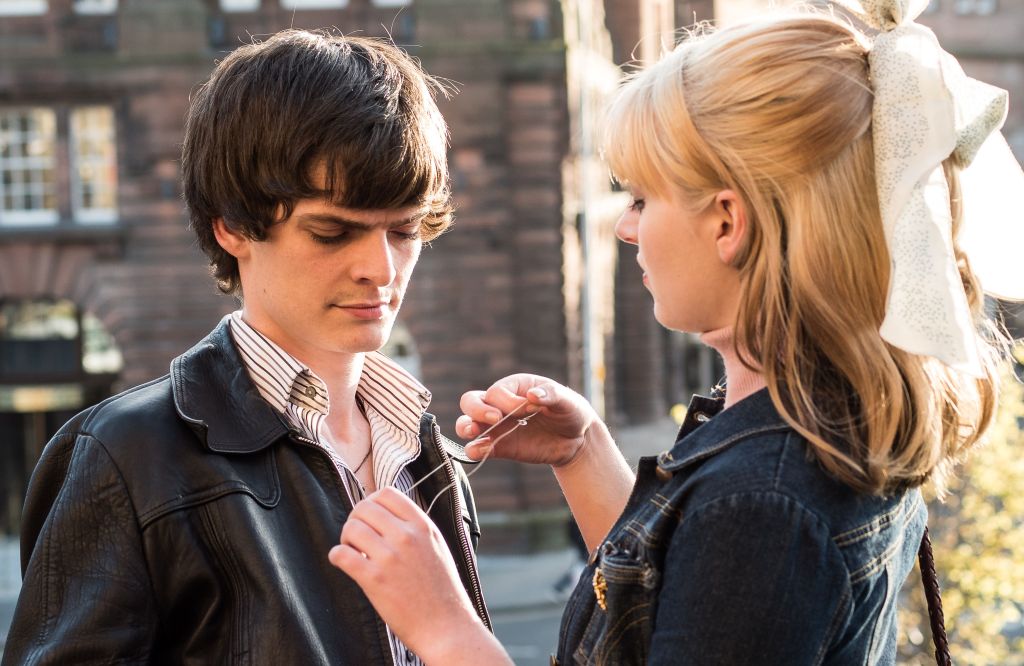
Interview with Dave McLean, writer and director of Schemers, a feature film about the very beginnings of his career whilst growing up in Dundee, Scotland before becoming a music promoter and manager to some of the world’s most famous bands including Nirvana, the Foo Fighters and Placebo.
Available on DVD and digital downloads from 25th January 2021.
Tell us about yourself and your new film
My name is Dave McLean, I’m the ripe old age of 65, based in Bangkok, Thailand.
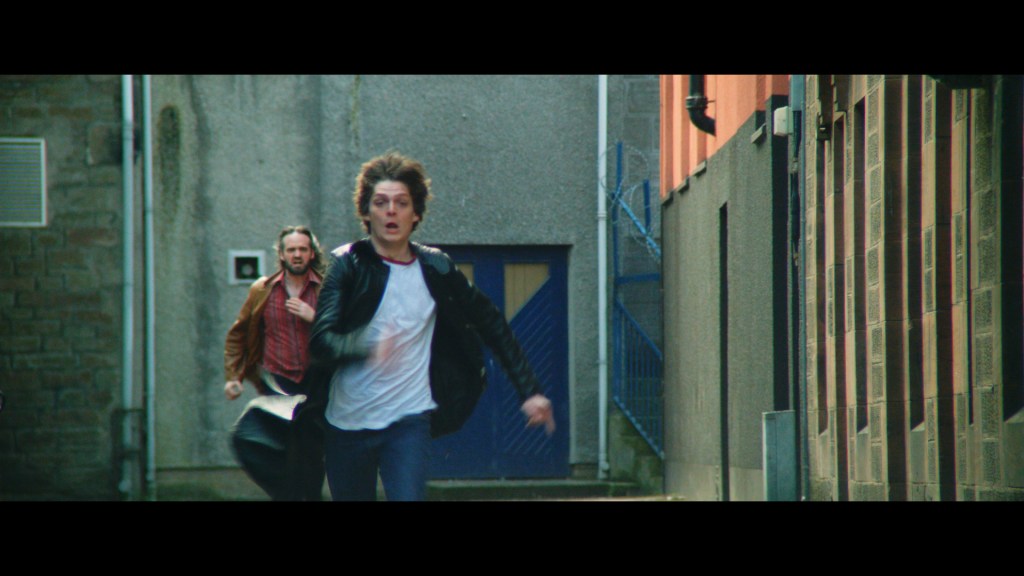
I did a wee film about my early days in the music business with up and coming bands like the Cure, Ultravox and Simple Minds. It’s about the various escapades we had getting things started back in the day.
I wrote it, directed it and produced it and did the soundtrack. It wasn’t like I was making myself out to be some Svengali genius, I was kind of taking the piss out of myself about how bad it was. It’s like, look at this huge gig I got and what a balls-up of it I made.
I think we did well to get to the stage where we made a film, it got released in 250 cinemas and we’re doing worldwide digital deals all on a shoestring budget for a first time out cast and crew. It’s a good wee story, you know.
The opening scenes are reminiscent of Trainspotting, was that deliberate?
Actually it never even crossed my mind that it was like Trainspotting until people said oh it’s like Lust for Life. The film was done in 2, well 3 shoots because we had to do the Iron Maiden shoot again. The first shoot had quite a lot of problems. We had to change a few of the actors, rewrote 12 to 14 scenes and delete a load of stuff. Because of the continuity, we couldn’t use some of the scenes shot originally, so basically, we had to do a voice over thing at the start just to make the film work.
The guy that did the editing, Khaled Spiewak he was fantastic, he did it very much in the vein of the Guy Richie thing, The Snatch and Lock Stock and all of that sort of stuff. That’s where he got his ideas.
It kind of worked well and it was nice to be compared to them as well to be honest with you. When you read your name in the Edinburgh film festival, I had to really pinch myself when I was reading the reviews and it said Danny Boyle, Guy Richie and Trainspotting. I thought that’s crazy to be mentioned in the same breath. It is like wow; I definitely don’t have any complaints there.
What films influenced you?
None really. I suppose I was going for the gentle comedy aspect of say Gregory’s Girl, which is a very old film now. I just liked the gentle humour, there was nothing abrasive, nothing sharp, not a lot of swearing or anything like that, a gentle comedy. So I was going for that kind of line.
Then on the music front I was just going for the reality of what we were actually doing. I have never actually seen a film about the music business which shows fledgling days, promoter hustling, just taking a chance; so that was all original.
Actually I wanted to make it a bit edgy rock n roll stuff. A kind of toned down RocknRolla, I’ve always liked that movie, it had a good name for a start and it had a kind of dark side to it. We had a dark side, not as dark as that. A bit of a dark side but quite a lot of comedy.
How did the soundtrack come about?
I think there was about 27 tracks on the film and maybe 21 of those tracks we’ve either managed the bands, promoted the bands or had some kind of connection with the bands. Kyle, Kyle Falconer (the View), who I managed for a couple of years, we are great friends. I started to listen to the View and thought this band should have absolutely conquered the world and that track Grace I just thought wow, what a banger to open with. It was just like boom, let’s go. So we did that, we did Shock Horror, then when we finished we did Tacky Tattoo which was awesome. I just thought wow it is Dundee, it’s really raw, its grey, it’s sad. Kyle is a genius.
The cast looked like they were having a goodtime making the film
I thought the actual chemistry of the characters Scot, Dave and Jon (Connor Berry, Sean Connor, and Grant Robert Keelan) were brilliant, absolutely awesome. That came about because they all used to come to my house in Dundee for BBQs and drinks. They actually ended up being mates and you can see that on the screen.
The first time I met Connor I got on great with him, he’s such an easy going guy. I wouldn’t say he was a mirror image of me or anything but he had that right attitude, the right get up and go and he was a great worker and he was very professional about everything. I just felt this is in good hands. He won best new actor in the New York Winter Film Awards and he got best director as well, so he had won a few awards for up and coming actors. So I was really proud to have somebody like him.
Tara I found. I was stuck in a traffic jam in Bangkok and she was in this TV thing I was watching called the Fall with the guy who was in 50 Shades of Grey. We had to recast the girl that was going to play Shona. So I was watching this thing with Tara in it and I thought that’s it, that’s the girl for me. So I looked at her name at the end, got her agent, talked to the agent, talked to Tara. I flew to London 2 days later, Bangkok to London, met her and put her in it. She was awesome, she was really good but I never realised how good she was until I saw her on a huge screen. She’s got a lot of presence, I was really happy with that.
How did you get the 80s look on screen?
I think the people that did the whole set design and costume design, considering we were on a very, very tight budget, they did a bloody brilliant job and it kind of looks no bad you know.
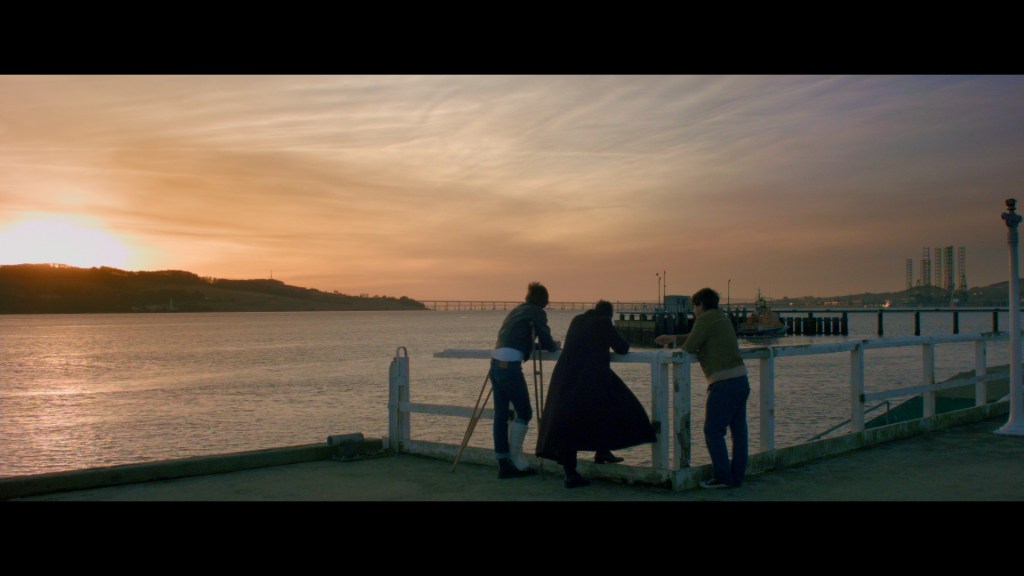
Some of the scenes were set in places that hadn’t really changed much like where a few of the gig scenes were shot it’s got all these old posters in it. There was the old bar which has never changed in 150 years so that was good. Then there was Palais Tea Rooms which has got a 50s, 60s feel to it. Then you’ve got the pier which is just the way it has always been and Caird Hall. The record shop Groucho’s hasn’t changed much as well. So a lot of the things looked the way they are because they’ve not changed much. So it all looked good and authentic. Of course there is always somebody who will say, ‘by the way that lorry that turns up at the end is actually a 1992 blablabla,’ but it doesn’t really matter, it’s the best we could do.
Were you worried people wouldn’t understand the authentic Dundee, Scottish accent?
My co-producer, my long term business partner Alex Weston, she would always say, ‘you can’t say that, nobody will understand that. It’s too Scottish.’ I don’t really care, it’s about Dundee. It’s meant to be Scottish right. So we did subtitles when we played Raindance in London and we translated it into Chinese and Russian and various other languages.
Actually my friend in Dundee, this real Dundee guy, Gary Robertson, he’s won loads of awards for Dundee dialect and keeping it Scottish and all this sort of stuff. He tweeted about the movie and on his Facebook said, ‘great movie, fantastic, go and see it,’ and then one of his friends who commented on it said, ‘I didn’t like it, it wasn’t very Dundonian, the accents were terrible.’ So you can’t please everybody. It’s hard to get the balance but I think we got the balance.
In the film you turned down U2, is that true?
We had to change the original band I turned down to U2. The actual band I did turn down was Blondie! Blondie and the Ramones as a double header. I booked Siouxsie and the Banshees instead but because there was a big reference earlier on, we had to change it to U2. In later years we did do 30 gigs with U2 so there is a tenuous link there with Placebo.
How close to the actual events was the Iron Maiden concert finale?
That’s all true. I never had any crew, I never had any catering, I never read the contract, the support act was a balls-up, we hardly sold any tickets but people turned up on the night. The only thing that is not true that should be in the movie, we actually made money on Iron Maiden and what I did was lost it all. I’d made money and then lost it all on roulette.
Your career takes off after that. What happens next?
It takes off big time. I go to London. I think I’m going to take over the music business because I’ve done big bands but I’m forgetting there is competition in London. So the sequel shows the way I rose up through the ranks. We got all these bands and we got Placebo, who every single record company in the world wanted to manage and that took off enormously. It just took off you know.
How does the music industry compare to the film industry?
The music industry is much harder. The film industry is easy to be honest with you, now that I’ve done one film. The next film we could easily film and edit in 6-weeks because we’ll have the real A-team from the start. We’ll have a good film crew, we’ll have a good editor, we’ll direct it or co-direct, we’ll work together. We know what cast we’re looking at. We’ve already got a killer soundtrack. So the next movie will be a doddle. It will be a 6-week shoot, boom, done.
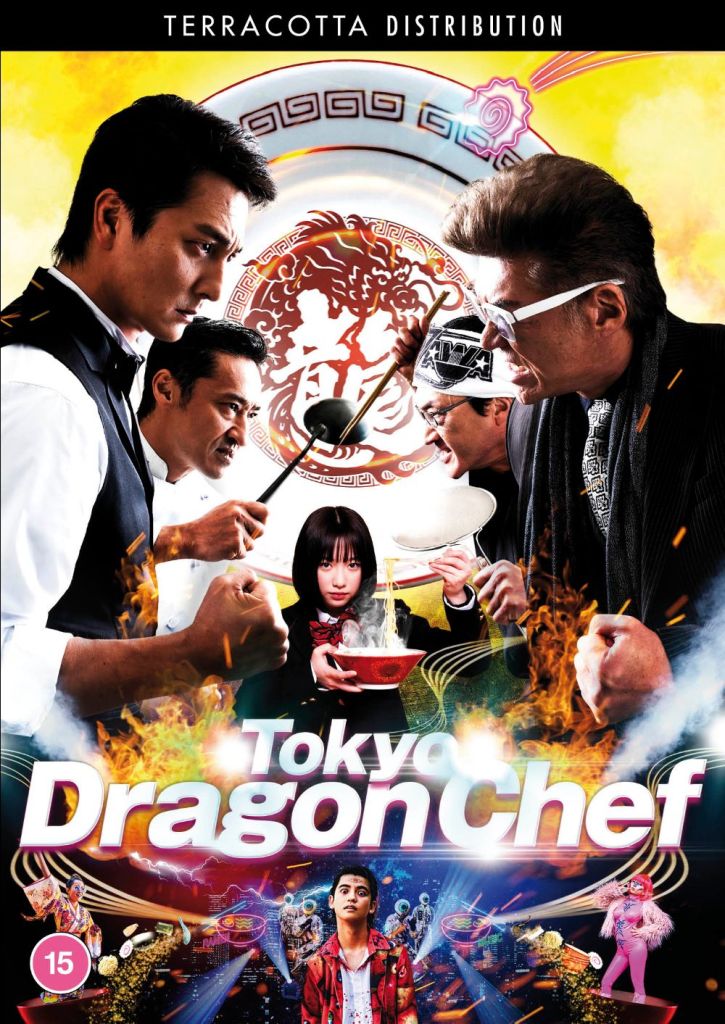
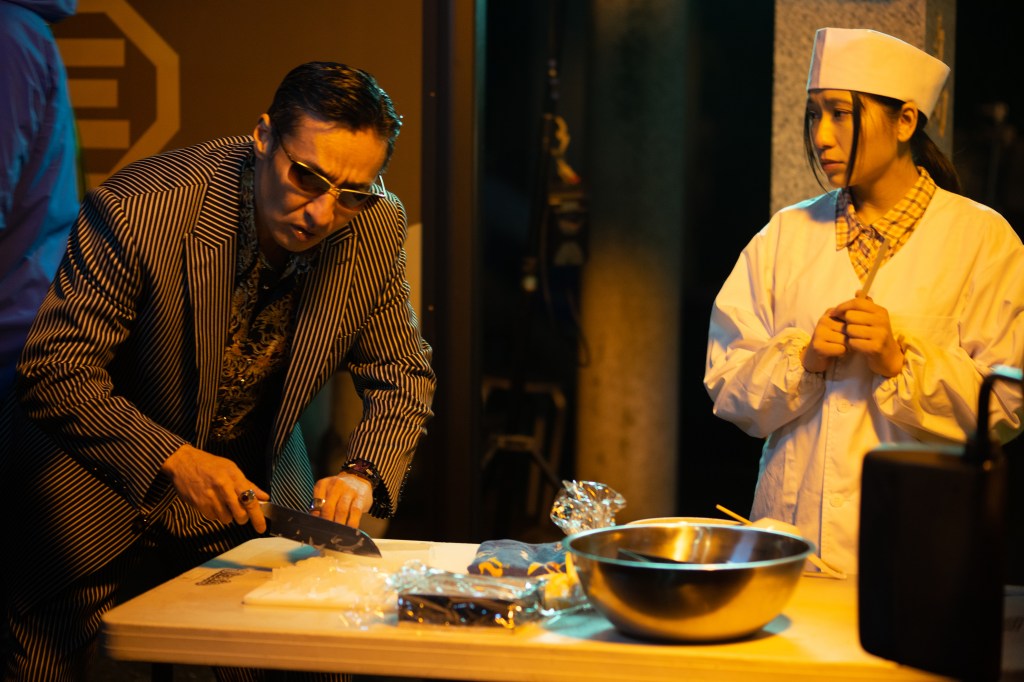
This is a Japanese action comedy on digital and DVD release from 25th January by Yoshihiro Nishimura, described as a “legendary director and effects artist” and renowned for his work predominantly in the horror genre, here he creates a crazy comedy alternative to the yakuza crime stories based on ramen noodles with little to no gore.
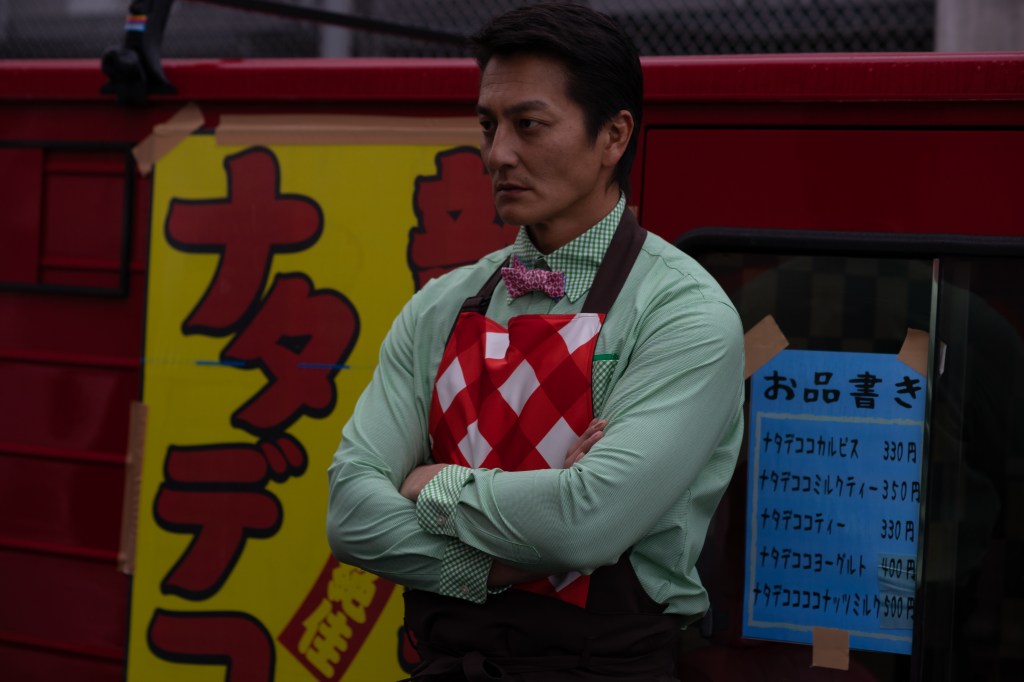
The story begins with 2 ex yakuza brothers being reunited after one of them, Tatsu, finishes a term in prison to find things are different on the outside. His brother, Ryu, is looking to put his yakuza fighting days behind him and is selling nato de coco drinks from his food truck. He has since had a message from the magical tattoo on his back, a Buddhist goddess, to start a Chinese Ramen restaurant. Tatsu is unimpressed especially with the food truck but when he gets a taste for the Ramen noodles, he suddenly sees the light and has to put his chef skills to good use to make people happy.
The idea of these violent yakuza’s starting a noodle restaurant is only the beginning of the non-stop gags and parody of Japanese films. The action swiftly breaks into a musical to really show the change in direction from the old yakuza ways. Their restaurant business takes off when they get a visit from a YouTuber (an uncanny Kim Jong-un lookalike with his sunglasses on) who gives their Tokyo Dragon restaurant sensational reviews. But it can’t last and when an old yakuza rival gang show up, the Ozawa Brothers, there is a Ramen noodle turf war hotting up.
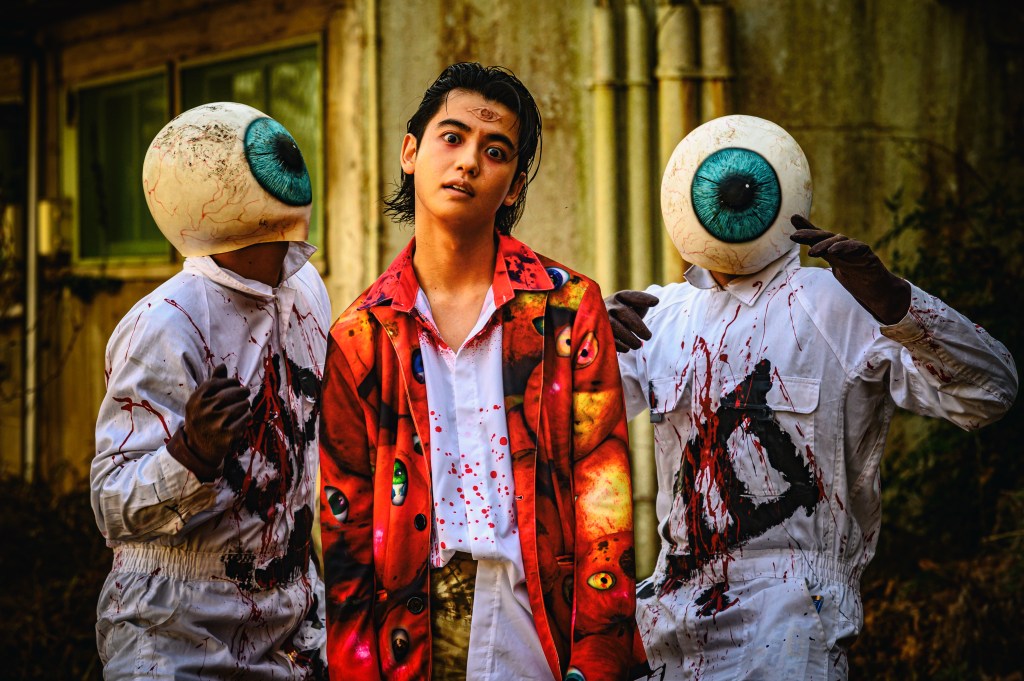
The Ozawa brothers introduce their own YouTuber, Mimi the big eating idol with pointy ears, and boy can she eat. She starts pulling in the crowds with her amazing eating ability and her provocative pink PVC outfit, which is another saucy Carry On feature of the movie. Meanwhile there is Gizumo who is the young start-up looking for revenge on the yakuza who ruffed him up. He’s now a tech whizz with a third eye and he’s on a power crazed trip, looking to take over from the old yakuza with his own gang of enforcers wearing one-eyed face masks and going around putting the competition out of business.
There are some American influences throughout the film especially with the music, the rock n roll and it seems the Blues Brothers. The songs switch between Japanese and English and a couple of scenes make a link between languages. The first, is where Gizumo has a funny turn and starts singing in English, “Merry Christmas and a Happy New Year”, in an intoxicated brainwashed trance, then the next scene shows Tatsu changing the complicated Japanese lettering outside the restaurant. Put the two side by side and they show how crazy the language differences are.
The film feels part of a trend in combining traditional stories with a food focus. Samurai Gourmet (Netflix) has a similar theme of combining the old samurai story with modern times and tempting looking Japanese food. The switch for Yoshihiro Nishimura from gore to food may not last long before a return to the more popular Japanese genres he makes fun of here. This gives a great flavour of Japanese film tastes without taking itself seriously and if you can do the same you will enjoy the madcap intense noodle tasting, which is quite special to watch.
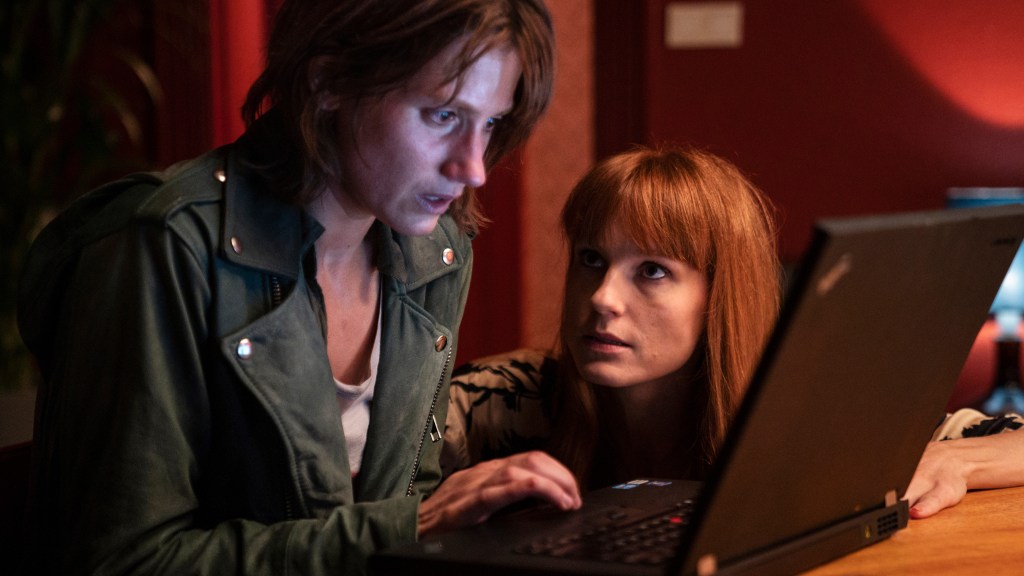
The Exception is a Danish psychological thriller based on the book by Christian Jungersen, available from 22nd January on all major UK digital platforms including Curzon Home Cinema and Chili.
The film opens with notes being written in a book the Psychology of Evil 2, a study into the profiling of evil people based on the psychological tests of leading Nazis during the holocaust. The conclusions are unnerving and set the tone for the film.
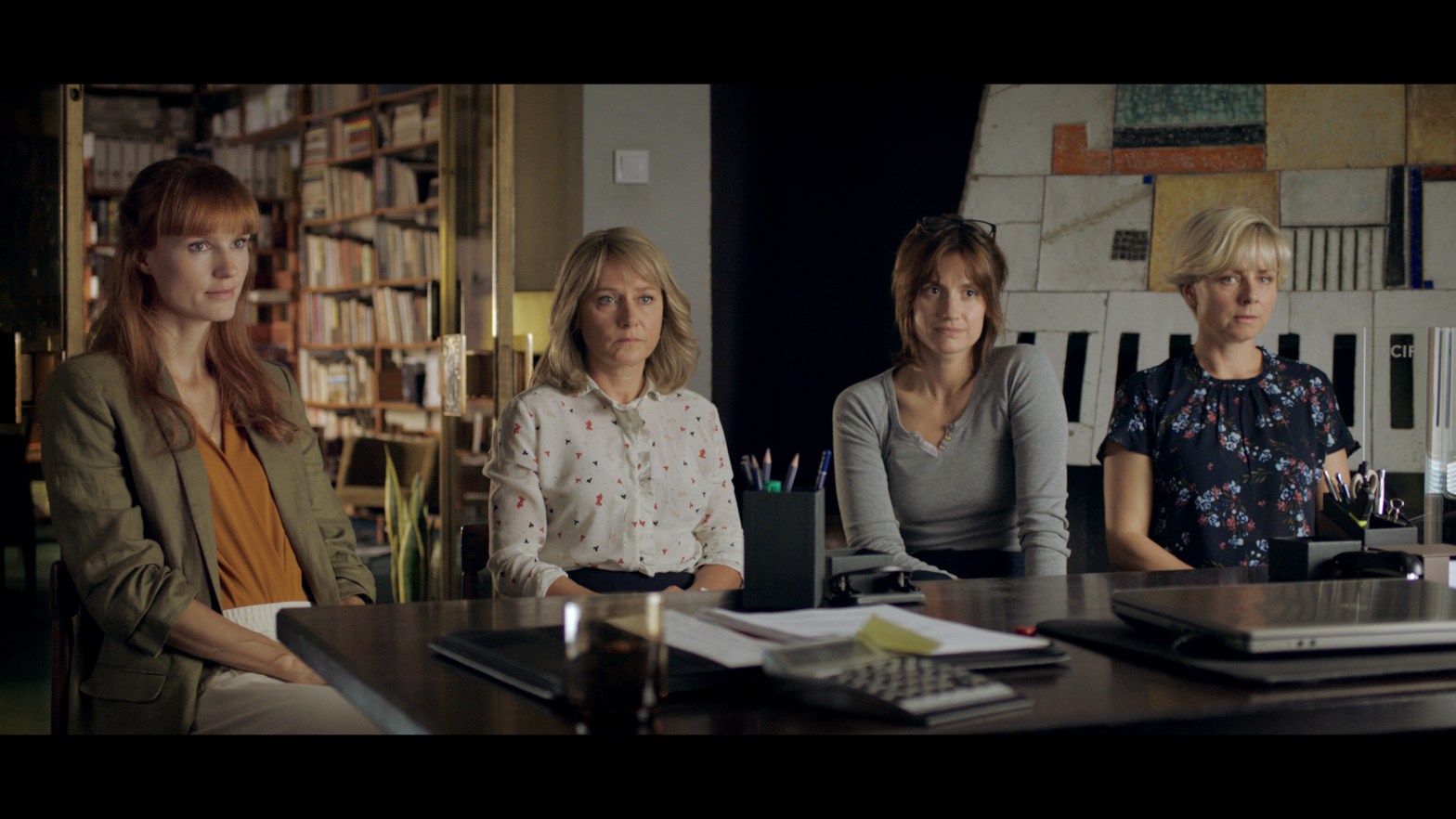
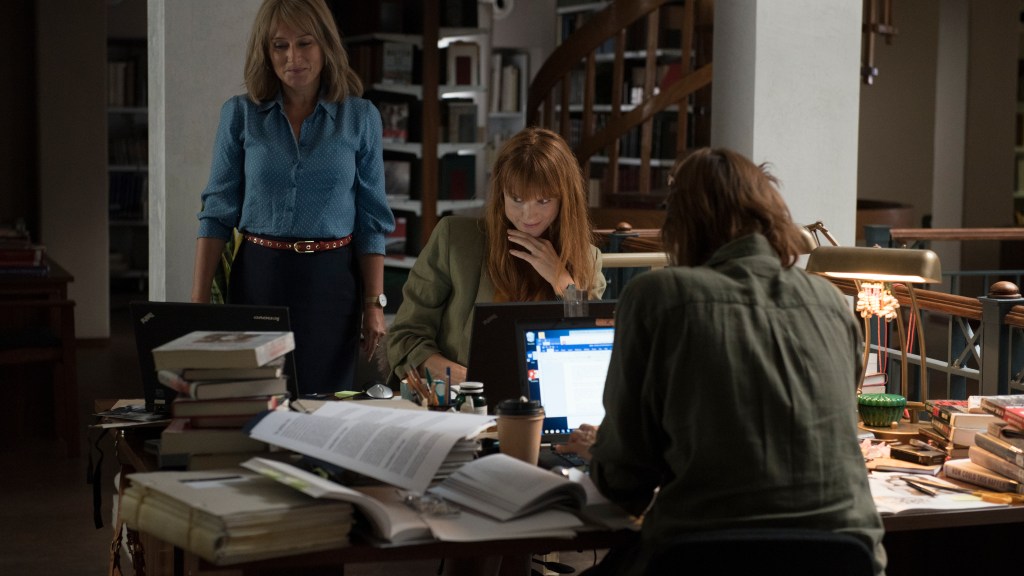
The story centres around four women working at a Danish centre for Information on Genocide, Iben (Danica Curcic) the author of the book was in Nairobi, as an Africa aid worker and after being taken hostage is still dealing with the trauma. Malene (Amanda Collin), her best friend, is the good looking one dealing with her own debilitating health issues. She is also worried about her job and thinks Anne-Lise (Sidse Babett Knudsen) is after it. Anne-Lise, their new co-worker is getting the cold shoulder treatment for this reason, making life very difficult for her at the office. Then there is Camilla (Lene Maria Christensen), the quiet one who goes along with what Malene and Iben say, except that she has a reoccurring sexual fantasy for her Serbian ex-boyfriend.
The 2 close friends Iben and Malene receive anonymous email threats from an unknown source and as the relationships at work deteriorate, they begin to suspect one and other, despite a long list of more likely suspects already under investigation. With the intrigue and tension mounting all of this is suddenly lost when the girls attempt to make a psychological appraisal of their colleague and accuse her of making the death threats and having similar personality traits to a war criminal (when her only crime so far was a poor dinner party anecdote). But I guess that’s where the message of this film lies, the actions of ordinary people doing harm to each other as their feelings and emotions get the better of them. Here, their determination to find the other one out leads them to do more baffling and illegal things.
The film’s premise based on the history of genocide and the psychology of evil behaviour is cleverly run parallel to the office politics and bullying in the workplace, comparing genocide to the ordinary everyday where all of a sudden everyone is a suspect, capable of selfishness, capable of weakness and capable of what could be considered evil in some shape or form.
Whilst the psychology is interesting and the scenes beautifully shot with some nice interiors and a classical scoring adding suspense to the proceedings, overall the link between the extreme war crimes and the quartet of lovely female office workers becomes a fragmented farce in this ‘who done it?’ Danish caper. The book maybe the better option.
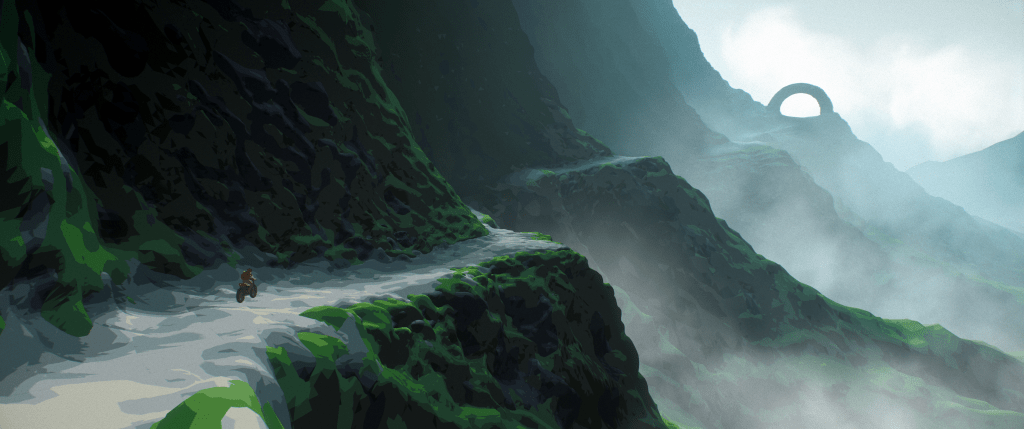
Away is available to purchase on digital platforms from 18th January as well as from Curzon home cinema from 25th January. It’s an award winning debut animation feature from 26 year old Latvian Gints Zilbalodis, a simple feel good story with a slightly dark undertone that follows the trials of a young boy who finds himself the lone survivor from a plane crash stuck on a strange island.
Told through the boy’s journey across the island and ultimately his survival, it doesn’t have any dialogue and relies upon visual images and symbolism to tell the story. It imagines a deserted island inhabited by a just a few animals, of whom he befriends a little yellow bird that becomes his companion and there’s also a giant shadow monster that seems intent on blocking his path – a path marked out with stone arches like a race course that he has to complete.
Written, animated, edited and scored by Gints, who has single-handedly created this animated world from start to finish, a feat not to be too quickly discarded when you consider the long list of credits that usually accompanies an animated feature, and so it is any wonder it took him 3 and a half years to complete.
He has managed to create an all-round cohesiveness using the animated software, zooming in and out of landscapes and close-ups to good effect. Its simplicity is its strength but it is not without a depth of meaning too that would appeal to both children and adults. The shadow monster is like the desert island’s version of the black rabbit in Watership Down, an omnipresent ghoul as a gentle allegory of life and death.
The fact that today’s cartoons and animations have never gone down the hyperrealism route with much success means that the basicness of this animation, which seems to switch between rudimentary graphics to impressive dreamscape sketches, doesn’t overly detract from its overall worthiness. The film has been divided into chapters, which provide momentary interludes but add little in the way of telling the story – perhaps a sign of the animator’s lack of confidence to deliver a silent animation feature, understandably considering today’s prerequisite for explosive action, but he needn’t have worried.
The film score like the animation itself is simple but effective, complementing the animation perfectly and is something Gints had to find out how to do from scratch. This is someone clearly learning their craft, showing a real knack for being able to build emotions through visuals and sound alone.
We can draw our own conclusions of the film’s messages but Gints himself describes it as being about his own creative journey and what it feels like working on an incredibly challenging project. It makes quiet relaxing viewing, simple but clever, it’s a heart-warming boy’s own story suitable for anyone with a challenging project ahead of them.





















 The Language of Film