Marco Werba – Film Music Composer

Marco Werba is an award-winning film composer with over 30 years’ experience in the industry composing music mostly for dramas, thrillers and horror movies although he has written for comedy and historical period dramas too. Marco has worked with and met many famous and influential film composers and film directors most notably from his adopted home, now in Italy. His father was an American reporter for Variety magazine in Madrid and his mother was a well-known abstract artist there before the family moved to Rome.

When he was young, he wanted to be a film director and made several super 8 short films, so his first love was actually film, not music. This changed when he went to see Logan’s Run at the cinema with his father. Directed by Michael Anderson the movie made such an impression on him he went to see it several more times, but it was the music by academy award-winner Jerry Goldsmith that left him spellbound and led to him wanting to study music.
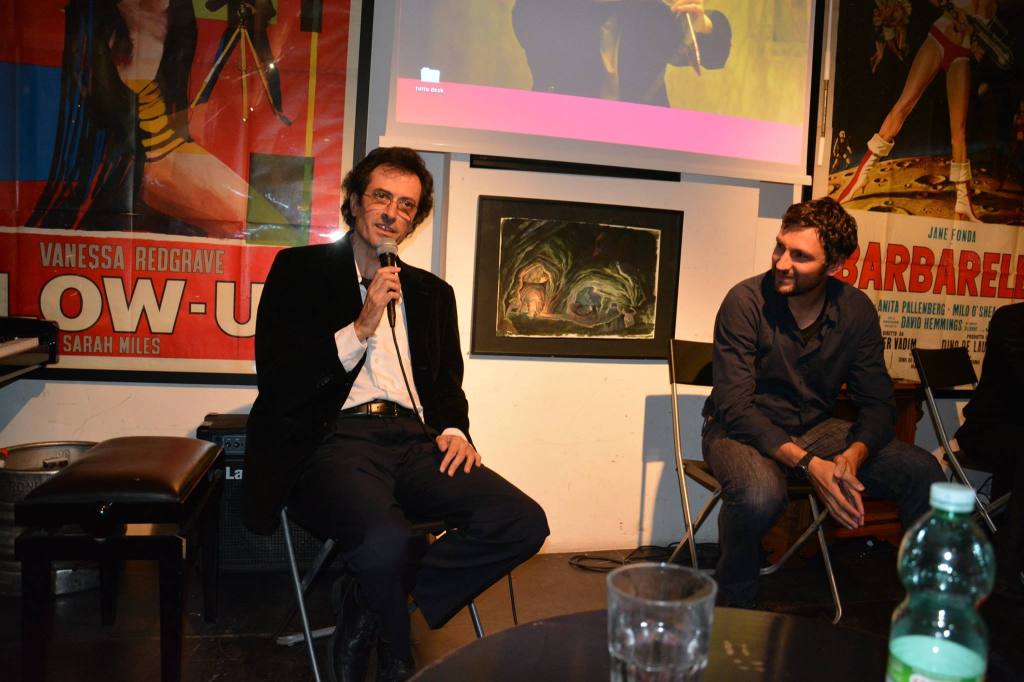
Marco Were at Altroquando

His first film score won the prestigious Colonna Sonora Award in Italy for the film Zoo directed by Cristina Comencini. A very special moment for him not only winning the award for his composition but also for the opportunity to meet fellow film composers Ennio Morricone (A Fist Full of Dollars) and Francis Lai (Love Story) who were being awarded their lifetime achievement awards. A few years later Marco Werba had the opportunity to work with Francis Lai on the music of the Italian historical feature Amore e Libertà, Masaniello (“Love of Freedom”). 

Marco would go on to win an Italian Golden Globe for his film score in Native, a low budget movie not expected to win awards but it had a song he wrote with Franco Simone that became a big hit. This just goes to show that it’s not always a big historical movie that can win an award.

Italian Golden Globes

His most successful collaboration was one with leading Italian film director Dario Argento on his thriller Giallo, starring Adrien Brody and Emmanuelle Seigner. The film score won 3 festival awards and Marco Werba felt the music for this film was even more accomplished than his previous work.

“A film composer is a strange job, in our lives every moment is not underlined by music. If we see each other with a woman or someone is killing someone there is no terror music. So why does an audience that goes to see a film accept there is music? The answer is the audience is not aware there is music at that moment. They don’t know that music is giving them the emotion. The fear, the sadness, the happiness most of the time it is given by the music. They receive music as an emotion of the overall movie, of the sound and the image.”

Finding the right balance between the music and the film is important to Marco as there shouldn’t be too much – no more than half of the film he recommends but every project is different with different demands. In the film Zoo he had to find a strange undefinable sound in the zoo, whilst in Giallo he used variations of music and sound as well as silence to help build the drama and emotion.

His influences are of course the iconic film composers who he reels off with great relish like Bernard Herrmann, Jerry Goldsmith, John Williams, Ennio Morricone, Nino Rota, Georges Delerue, Francis Lai all of whom he draws upon for a mix of classical and modern music inspiration. 

For Marco the composer needs to be involved from the beginning of the process but in his 30 year career this has happened only once or twice, often only being involved in the post-production and left just 3 weeks to write, compose, arrange, synchronize and record the music. Ideally, he says, the composer should be involved before the shooting and then, during the post-production, where he can confirm the music themes and synchronize them with images.

“There are no precise rules. With experience one must determine which scenes actually require music to increase the dramatic pathos and the emotion given by the acting of the actors and the climax of the film. Directors are usually afraid of silence and tend to use too much music. It’s important to find the right balance between sounds and images. When this balance materializes, it is truly effective. 

A composer who writes music for film needs to understand the meaning of the movie and to understand which music could help the movie, to help give the emotions. The inspiration comes from the film itself, from the story but sometimes also from the acting, from the colours, from many things and you can also have inspirations from other composers. The last word comes from the director. Not the composer or the screen writer or the editor. The director is the boss of the situation.”

Dario Argento and Marco Werba

The film L’Inverno, which Marco is now working on, is a World War II film set in Vienna, with music as a central theme. The main character is a Jewish violinist in the Vienna Philharmonic Orchestra who has a relationship with a German SS officer at a time when the Jews were being persecuted by the Nazi Germans. Vivaldi’s Winter (L’Inverno) from his Four Seasons composition is a focal point of the film, its string section expressing both the frightening hardship and vivacity of human life. It draws comparisons with Roman Polanski’s WWII film The Pianist (and Chopin), having a similar war time setting and famous classical music theme. 

“L’Inverno is a beautiful film project. The script written by Sharron Aubrey is very interesting and I specifically love films set during WWII, even if I don’t know why. The title of the film refers to Vivaldi’s Four Seasons but in the film there are other important musical references, always linked to the classical and Jewish repertoire. Sharron has given me some indication, written in the script, especially about the source of the classical music. ”

The film has been heavily researched to give as accurate as possible telling of the story during the events surrounding the timeThe classical music includes never before heard compositions from the victims of the holocaust bringing a haunting authenticity to the film and Marco has already written 2 strong music themes which he feels should fit the mood of the film.

The first one is a very dramatic, powerful music theme that could work for the opening titles and for some key moments in the film. It’s a composition for the violin and big orchestra. The main titles and important scenes give the possibility to develop the music. In other moments where there are short thematic fragments there is no possibility of developing a musical idea, but these are part of the rules of the game. A film music composer must be accustomed to respecting the requirements of the film, as well as the sound effects and dialogues present in the film. The second one is a theme related to the main female role, the main violinist character, that has a melancholy flavour, more sad than romantic, that should reflect her feelings and the tragedy she is experiencing”.

The film is a perfect project for Marco, having previously written an adagio dedicated to the victims of Auschwitz, it is a story that he has great interest in especially because it’s a story about a violinist set in World War II. 

“I worked for several years on this adagio, which initially started out as a string trio when I was a student of the “Mannes College of Music” in New York. Over the years I have developed the music and added a full strings section, solo oboe and timpani. This composition was chosen by an Auschwitz survivor (a member of the French resistance) to present his book on the internet, in which he describes his terrible experience as a prisoner of the camp, from which he survived by a miracle.

A few years ago I finally had the opportunity to perform the Adagio during a classical music concert under the direction of Lorenzo Castriota and to record it thanks to Antonello Martina’s “Soundiva Classical” music editions, with the Budapest orchestra under the direction of Péter Pejtsik.”

“Our dream or my dream for L’Inverno would be to record in London with the London Symphony Orchestra because in London they are the best musicians in the world. Amazing musicians, amazing orchestras.”

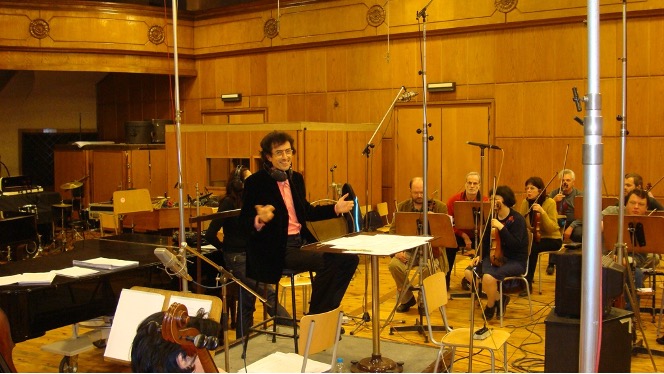
Marco Werba in Bulgaria

L’Inverno has all the properties to be a successful film and once the budget is in place the creative process can begin in earnest. Marco is very excited about working with award-winning director Roland Joffé (The Mission, The Killing Fields), whom he says it would be amazing to work with such an important director and, with a stellar cast yet to be finalized, the film has a chance to go to the Academy Awards. Something a fortune teller predicted would happen to Marco a long time ago. 

“He said I would work with a well-known Italian director on thrillers and horror movies, which happened because I worked with Dario Argento and he told me one day I would have an Academy Award nomination. I am waiting to know for which film. Maybe it will be L’Inverno.”

Marco has worked with some amazing film makers and musicians over the years that have helped him develop his mastery of his craft. He brings an assured confidence to any film and in L’Inverno, a historical WWII film with a central musical theme, he has a film waiting for his magical touch and one we will be looking forward to seeing and hearing.
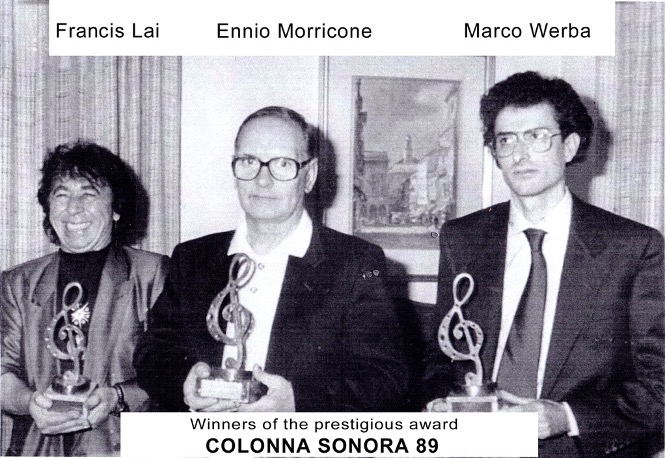
Colonna Sonora Award

December Films


Click for film reviews and film language worksheets.

Language content and exercises including reading, audio, comprehension questions, vocabulary, discussion questions, pronunciation and listening exercises

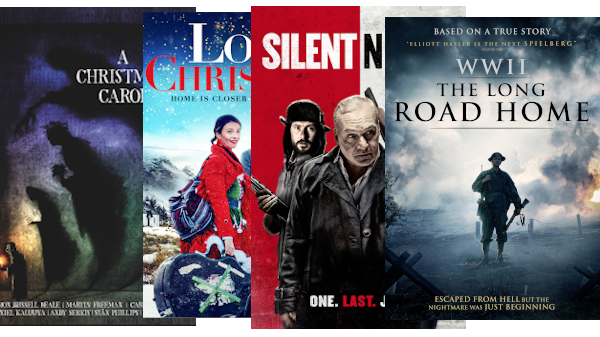
Silent Night

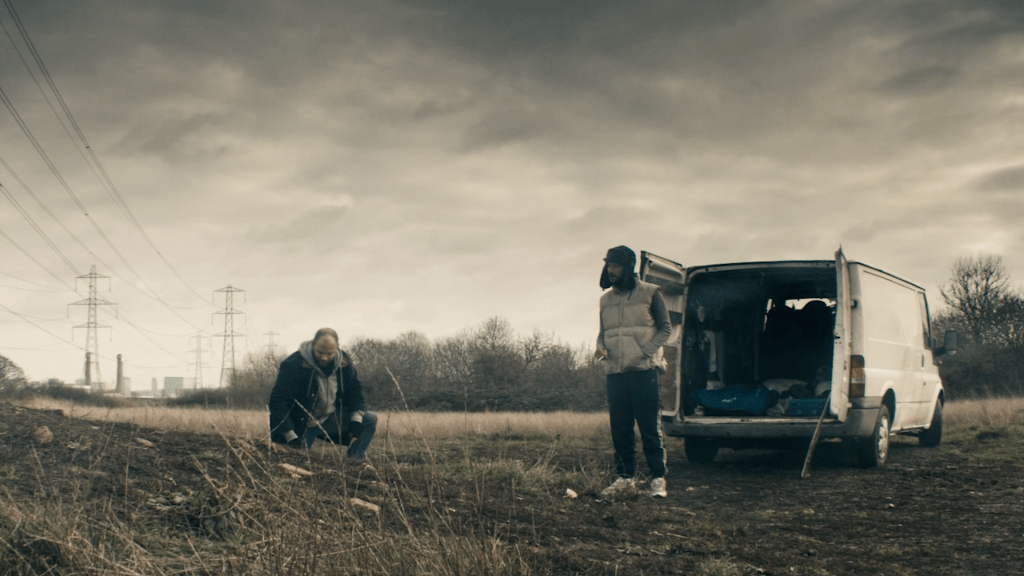
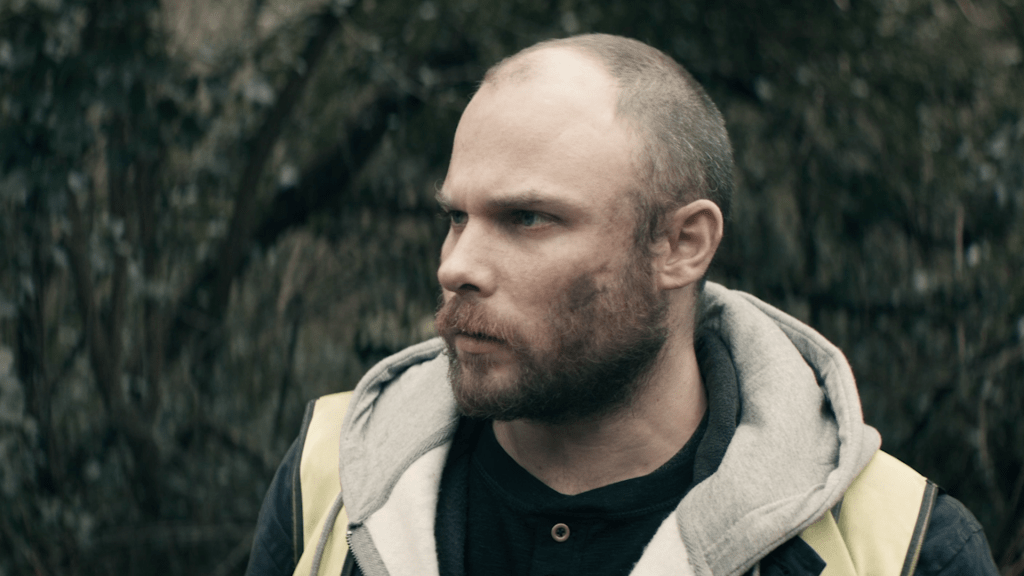
Silent Night is showing in UK cinemas from 11th December, on digital download from 18th December and DVD from 28th December. It’s a violent Christmas gangster film about a South London hitman Mark (Bradley Taylor – Surge) recently out of prison and trying to get his life straight in order to take care of his daughter. He’s doing odd jobs and living out of a van so when his old cell mate Alan (Cary Clarkson) turns up to persuade him to do one last job for some big money he finds it hard to ignore.

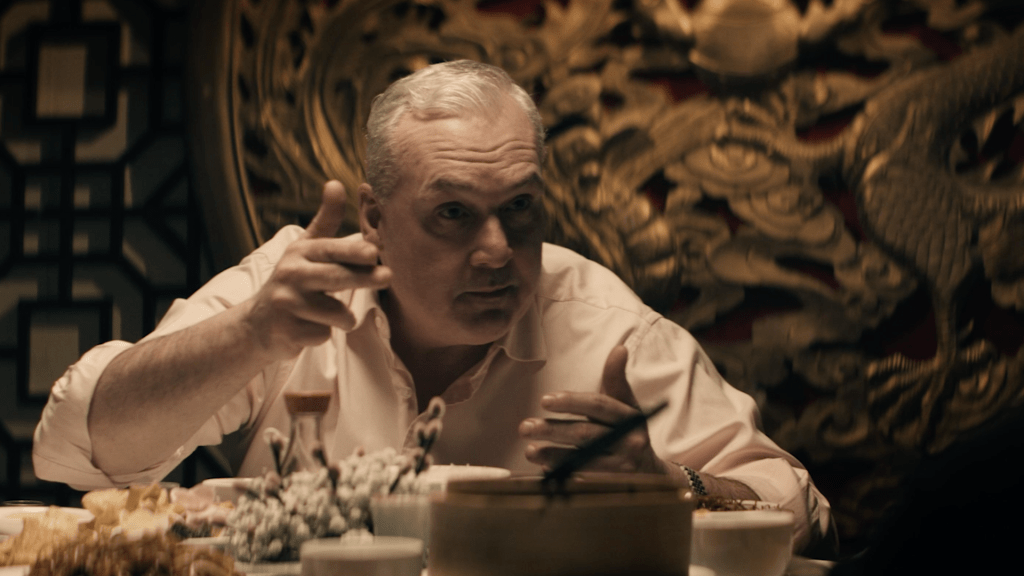
He also gets an invitation to come back to his old firm and duly accepts to see them – but to tell them that he’s not coming back. The firm is having problems and has had a visit from ‘head office’ about the instability of their crime racket and the family boss Caddy (Frank Harper – Lock, Stock and Two Smoking Barrels) is under pressure to get things sorted. Caddy is doing an entertaining Cockney Godfather impersonation whilst trying to finish his sticky spare ribs and give Mark his next job, which is to take out the Azziz brothers who are suspected of encroaching on their turf. So it’s perfect timing for Mark to be returning back to the firm to do one last job.

The lure of the cash to help his family is too much, especially under the heavy persuasion of the edgy Alan, he’s unable to escape his past. All the while Mark is facing the problem of keeping this quiet from his estranged partner Julia (Angela Terence – Wallander), not wanting to let her know he’s back into crime or tell her where the money is coming from to support their young daughter.

The hit is a big job and Mark needs the help of an old acquaintance in the guise of Pete (Nathaniel Martello-White – Small Axe / Mangrove) who’s had to take a step back himself from being a hitman to run a drug den at home having fluffed a hit for Caddy with Big Dick the Bouncer. Seamus (Joel Fry) is his stoner partner who is another member of the old firm and they’re all pleased to see each especially for Christmas showing a sentimental bond between them which is like an EastEnders reunion despite their line of business.

It’s a film that mostly steers away from the glamourising of crime and gangsters with a more social human focus on Mark’s deep desire to be there for his daughter whilst struggling to keep on the straight and narrow and adjust to life back on the outside. The violence is enough to be quite frightening and disturbing without being too visual and Mark’s partner in crime Alan carries this threat off successfully well as the unhinged social misfit with an aptitude for violence. Some of the situations are risible like openly discussing their activities at Wimpy’s where there is an equal sense of alarm and stilted laughter.

Overall as an alternative Christmas film whose only link with any Christmas spirit are the Christmas lights and dinner but despite the broody undertones and a lack of carol singers there is a slight line in Cockney Lock Stock swagger including an irreverent sequence of Royal family jokes for the genre fans to enjoy. Otherwise it’s a violent London gang dispute over clubs, drugs and prostitution, taking place outside of the salubrious bright lights of the West End and shinning a dark light on the lesser attractive corners of London’s urban sprawl.

Film: Silent Night

Director: Will Thorne

Stars: Bradley Taylor, Cary Crankson, and Frank Harper 

Genre: Crime / Thriller

Run time: 1hr 33min

Rated: 15

Rating: 3/5


WWII – The Long Road Home

WWII – The Long Road Home (originally Charlie’s Letters) is available to watch on selected digital platforms and to buy from selected UK stores. Written, directed and starring Elliott Hasler this is an incredible biopic story about his own great-grandfather during WWII and is an amazing feet of micro budget filmmaking especially from someone so young. Elliott was sixteen years old on its completion, making him the UK’s youngest person to have a film shown on Amazon, Sky Store or iTunes.

The film tells the remarkable true story of Elliott’s great-grandfather, Charlie (played by Elliott Hasler himself), told through his letters, which he wrote to his wife ‘Tup’ (Alice Rogers) after he was sent away to war during WWII. The film re-enacts his war experiences when he was captured at the battle of Sidi Nsir in Tunisia and taken to an Italian internment camp, before escaping and crossing war torn Italy, alone, in search of safety and the ally borders. His wife, ‘Tup’, was at home and faced her own dilemmas, as she was being charmed by an overseas officer back on the Homefront, not knowing if her husband would return to her and their young son. The film is even more remarkable that it was started when Elliott was just 14 years old and was filmed on a budget of less than £3,000.  

If you can excuse some of the technical imperfections, basically being shot on a DSLR camera without a full crew and with some fairly green actors, which in a way add to the film’s gritty realism. The minimal script has its poignant moments and although wooden sounding at times there is again a dogme style reality to it all as the film retraces Charlie’s steps, told through his letters and the imagination of his great-grandson.

It’s a dramatic tale of love, courage and survival that captures much of the unimaginable horrors of war told using creative visuals and sound to circumnavigate its budgetary restrictions. The locations are captured with some stunning landscape scenery giving the audience a real sense of the epic journey undertaken from Brighton to his posting and capture in Tunisia and subsequent escape across Italy. The costumes, props and extras all encapsulate the period adding to the authenticity that shows a good eye for detail and overall great cinematic potential for a young director making his mark.

As war movies go this is as entertaining and engaging as many other higher budget films despite its flaws. It’s exciting to see a gutsy film from such a young UK film director who seems to have a natural flair for true storytelling both script wise and visually. The film pays real homage to his family and hometown history as well as to the sacrifices ordinary local folk made during the war and he has even been touted as the next Spielberg.


Film: WWII – The Long Road Home

Director: Elliott Hasler

Stars: Elliott Hasler, Alice Rogers, David Aitchison

Genre: Action / Drama / War 

Run time: 1hr 16min

Rated: 15

Rating: 4/5


The Glass Man

The Glass Man, originally released at Frightfest (2011) to critical acclaim is finally getting its long awaited UK release on UK digital download platforms from December 7th. It is a dark psychological tale from director Christian Solimeno (I Made This For You) that tackles the breakdown of Martin (Andy Nyman – Ghost Stories) after he loses his job and the impact it has on his relationship with wife Julie (Neve Campbell – Scream). 

Directed and also featuring Christian Solimeno the story focuses on an affluent middle class businessman Martin and his beautiful wife living in their lovely home, but after he loses his job he can’t face telling her about their financial problems and gets himself deeper and deeper into trouble. He receives an unexpected call from a debt collector heavy, Pecco (James Cosmo – Braveheart), and realises he doesn’t have much choice in doing what the heavy wants to clear his debts, which is to go on a job with him that evening.

The film shows the easy disintegration of the perfect home lifestyle and the lengths people will go to in order to maintain their way of life. Inside the couple’s lovely home we see Martin getting ready for work, having breakfast with his wife, but on opening the mail there’s the first sign of the financial trouble looming and whilst wanting to show a strong exterior, the bills keep coming in. At work, the rejection from his colleagues is chilling and he is unceremoniously given his marching orders by his boss Anton (Don Warrington – Rising Damp) and it begins to look like a dark version of The Office as things start to unravel for Martin.

With a largely UK cast, both Nyman and Campbell play their roles believably well, although recognising Campbell as the horror icon she is from Scream there seems a slight mismatch here playing the doting wife to Nyman’s failing business exec. James Cosmo (Braveheart) is brilliant as the menacing London tough guy Pecco and Don Warrington plays a great cameo appearance as Martin’s incensed boss. The film looks to bring some lighter comedic moments with an air of inside gags especially from director / actor Christian Solimeno having fun with the medium’s boundaries playing Martin’s actor friend Toby, who’s having stalker problems whilst still insisting on fussing over Martin and whether he wants a cup of tea or not.

Its strength and weakness lies in its understated chilling tone in showing the psychological problems arising through financial difficulties and the effects they can have on individuals and their family, friends and work. The director, Christian, who recently released the film I Made This For You about suicide, seems to be a crusader for highlighting mental health problems through his film projects and this is another timely release that brings to light mental health issues in an understandable and entertaining way.

Film: The Glass Man

Director: Christian Solimeno

Stars: Andy Nyman, James Cosmo, Neve Campbell

Genre: Drama / Thriller

Run time: 1hr 48min

Rated: 15

Rating: 3/5


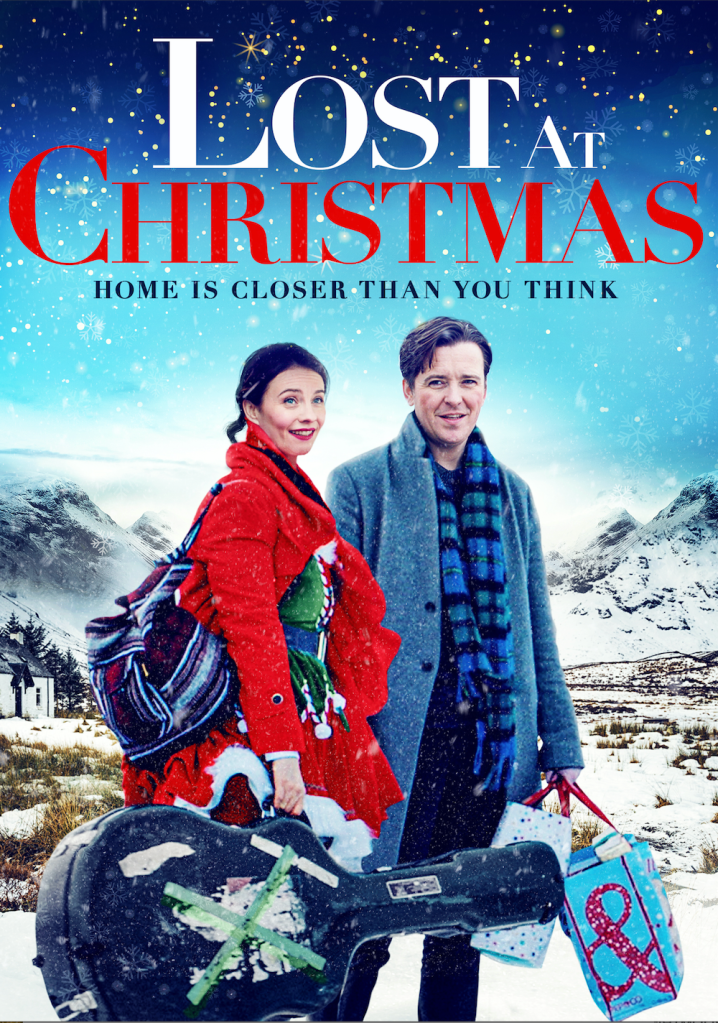
Lost at Christmas

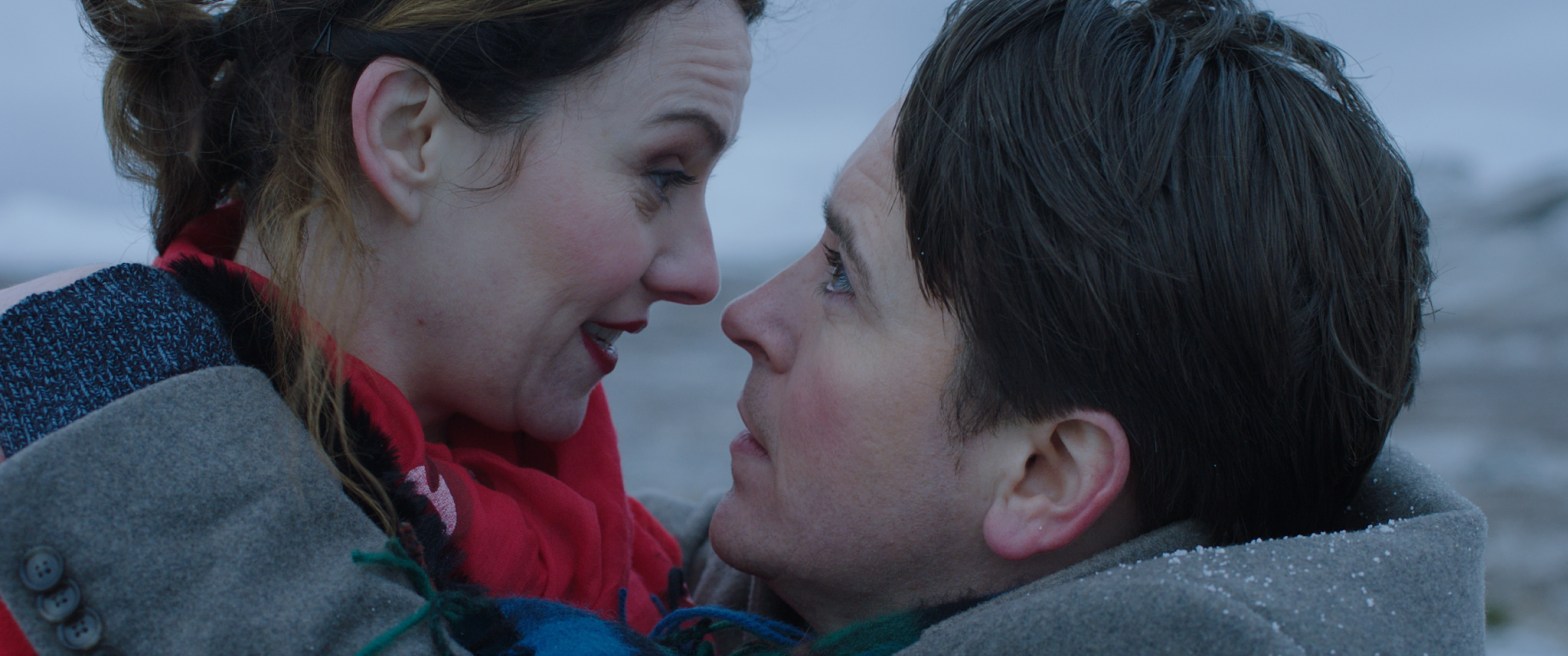
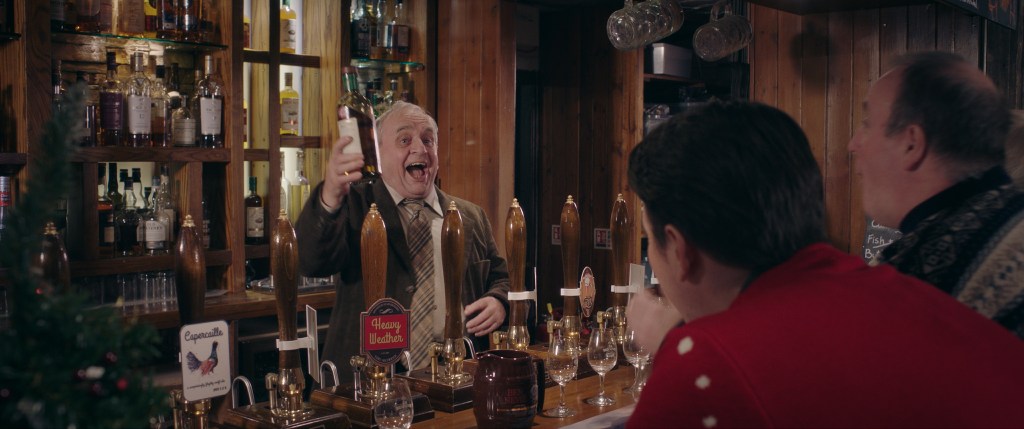
This is Scotland’s first ever Christmas movie coming to UK cinemas from 4th December and is available on digital platforms from 7th December. It’s a quirky romcom that looks to bring a bit of Christmas cheer to our screens whilst taking in some wonderful Scottish Highland scenery.

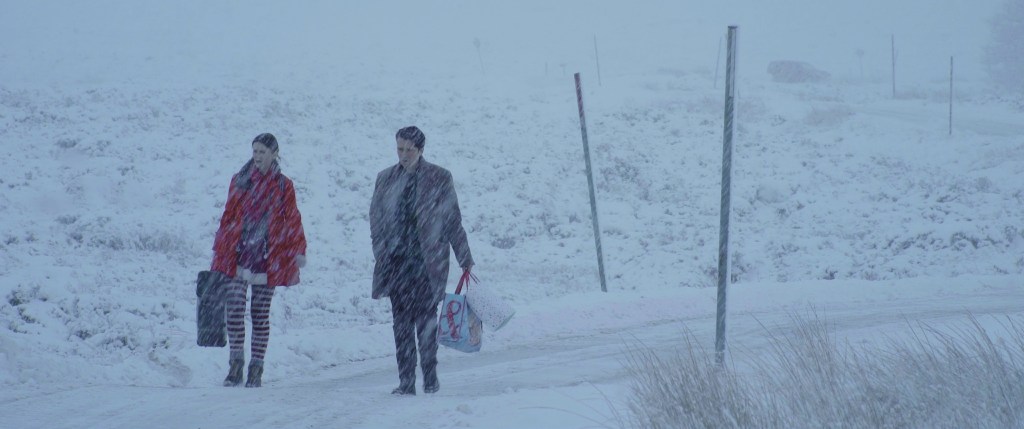
Director Ryan Hendrick has made a feature length film of his successful short film Perfect Strangers bringing together a collection of Scottish actors in the wonderful surroundings of Fort William and Glencoe. Starring Kenny Boyle as Rob, a foppish Hugh Grant lookalike and Natalie Clark as Jen, the ditsy Christmas romantic dressed as an elf; the two are thrown together as their Christmas Eves end in heartbreak and they decide to team up to help each other get home for Christmas but things don’t go to plan.

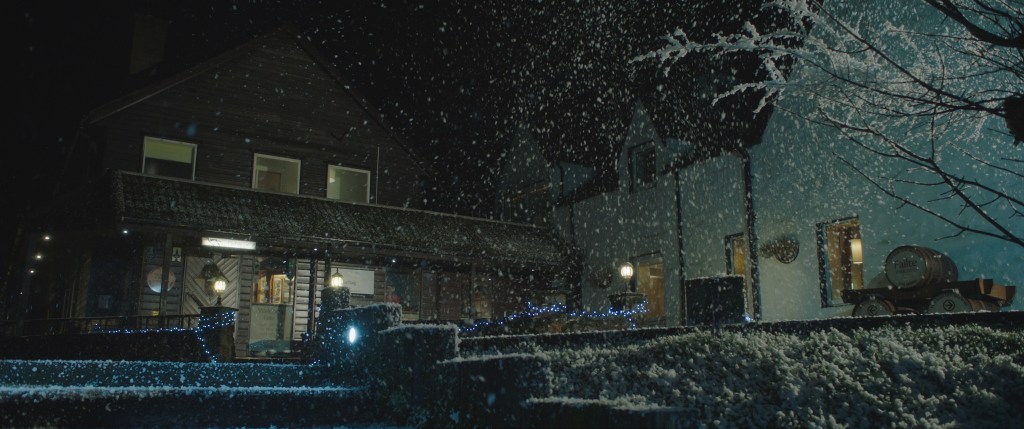
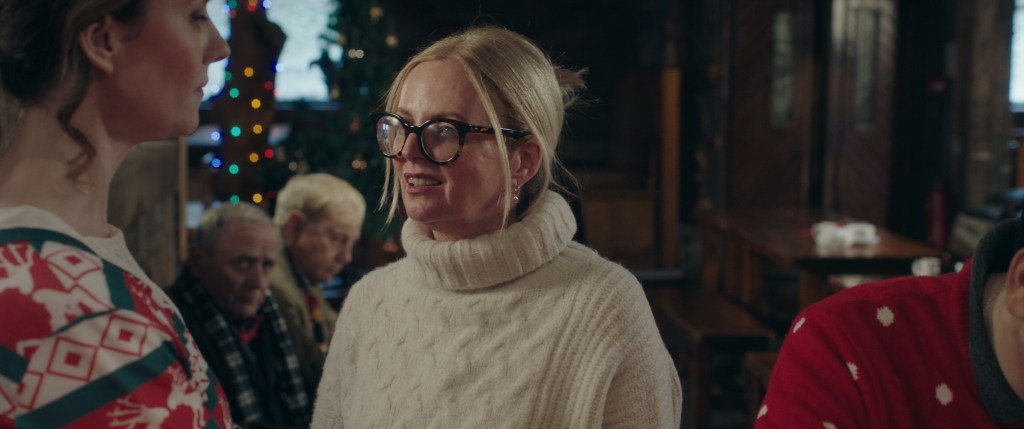
Having “borrowed” Jen’s now ex-boyfriend’s car, they get stuck and end up having to cross the moors wearing only an elf’s outfit and lace-ups in treacherous snowy conditions, and whilst the scenery looks stunningly beautiful, it’s a relief when they find a guest house before dark, even for hardy Scots. Here they find the other guests getting away for Christmas and there are star turns from Sylvester McCoy (Dr. Who, The Hobbit), Clare Grogan (Gregory’s Girl) and Sanjeev Kohli (Still Game, Stan & Ollie) who plays the welcoming but slightly beleaguered Scottish guest house owner.

The film can’t help looking like a Highlands tourist board commercial with its smattering of product placement in tweed, tartan, whiskey and general Scottish patter, whilst the script also requires an element of acquiescing some of its eccentricities, where the sentiment is missed or the humour remains undelivered but there is plenty of Scottish wit and charm to enjoy.

It’s a delicately twee Christmas romcom and despite all the heartbreak and sorrow of seemingly everyone staying at the guest house, it is still capable of raising the spirits this Christmas time albeit in a slightly low-key manner. It doesn’t chase the happy ever after too much which is refreshing, although perhaps it falls slightly between the two stools.

Film: Lost at Christmas

Director: Ryan Hendrick

Stars: Natalie Clark, Kenny Boyle, Sylvester McCoy

Genre: Romance / Comedy

Run time: 1hr 40min

Rated: 12

Rating: 3/5


A Christmas Carol (2020)

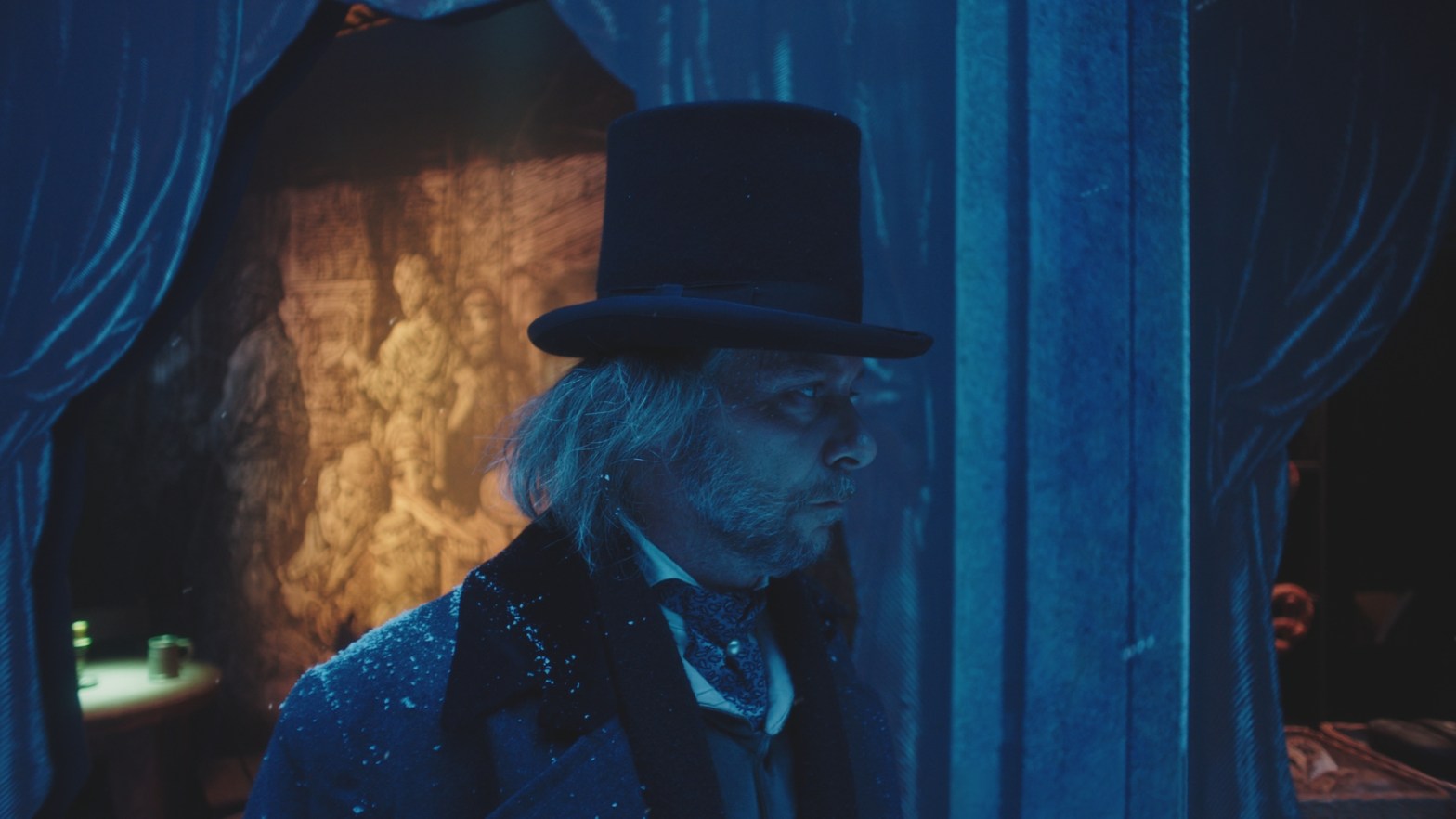
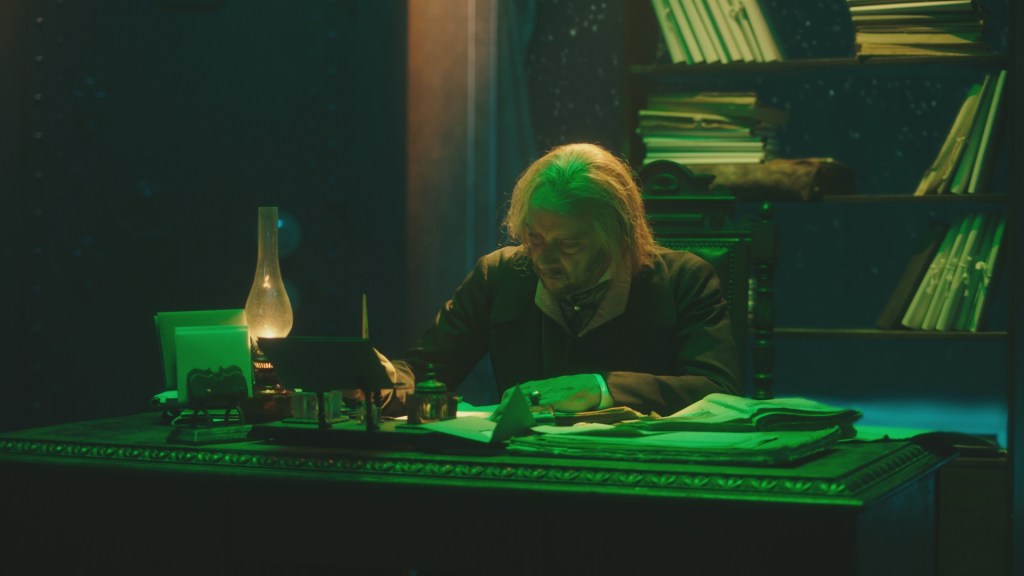
A Christmas Carol will be coming to cinemas and select theatre venues in the UK from the 4th December and Ireland from the 11th in a masterful remake of the ultimate Christmas ghost story by Charles Dickens, but with a difference. Combining film, theatre and animation it is as ambitious as its planned opening release date.

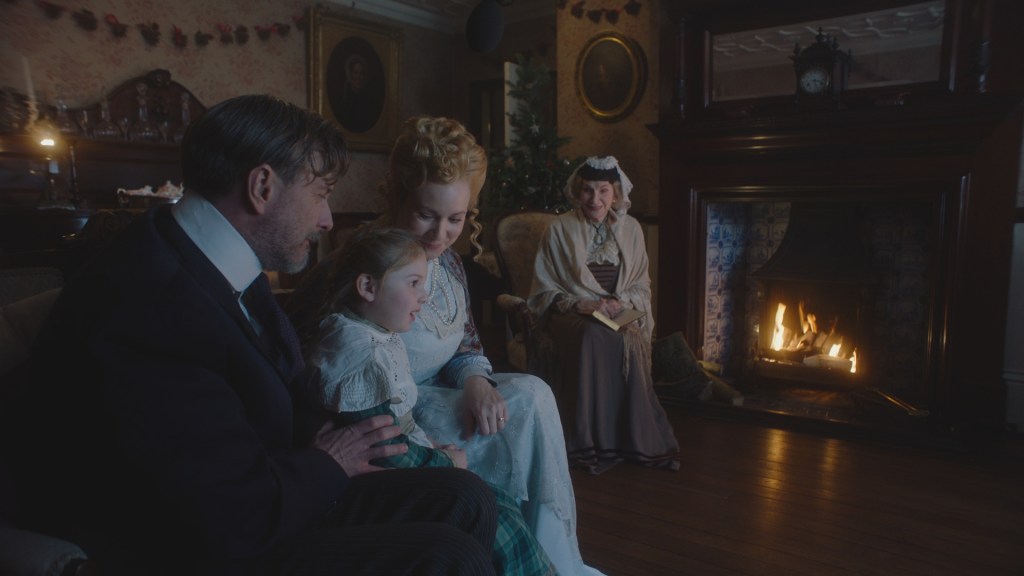
The story begins in a Victorian sitting room with grandma and the family assembled by the fireplace readying to be entertained. We magically enter the children’s play house into the Dickensian London setting and the time-honoured story of Ebenezer Scrooge, as the mean business proprietor, who is visited by the ghost of his business partner, Jacob Marley and the 3 spirits of Christmas: Christmas past, Christmas Present and Christmas Yet to Come.

Behind A Christmas Carol are the exciting creative British film director siblings Jacqui Morris and David Morris (McCullin, Attacking The Devil) who have put together an extraordinary film that brings together the different mediums of film, theatre and animation to effortlessly portray a dream like world, using music and dance, where the cast are played by dancers and are voiced by an array of star studded actors that includes Martin Freeman and Carey Mulligan. This is all perfectly executed without anyone moving their lips, which somehow works incredibly well adding to the ghostly drama, most notably by thespian Simon Russell Beale as the feared and fearful Scrooge, danced by Michael Nunn (Ballet Boyz).

The script so faithfully resembles the original Dickens novella that this is like your very own celebrity audiobook put to a musical ballet. And what a script, with its contemporary visual updating, that the prose more than equally matches. It is as fresh as the day it was written, so fresh you have to check the book for verification. The musical score takes you back to the past, bringing it to life with a contemporary twist and the choreographed dialogue elevates this with its incredible psychic medium. This is all played out in a theatre set that could be a studio, but all the while sucks you in to a believable ghostly reality, as we follow Scrooge as he is transported away by each of the Christmas spirits.


Film: A Christmas Carol

Director: Jacqui Morris and David Morris

Stars: Simon Russell Beale, Martin Freeman, Carey Mulligan, Daniel Kaluuya and Andy Serkis

Genre: Drama / Animation

Run time: 1hr 36min

Rated: PG

Rating: 5/5


Audiences will be able to catch A Christmas Carol in cinemas and selected theatre venues nationwide from December 4th. Listings are available here:

https://www.achristmascarol2020.film/?country=united-kingdom

Theatres wishing to explore screening A Christmas Carol as part of their festive programming can contact Executive Producer Clare Lee Davis via clare@frithstreetfilms.com

Finding Steve McQueen

Available on digital download from 16th November Finding Steve McQueen is based on the true events of the biggest bank robbery in US history when an organised gang broke into the United California Bank in 1972 to steel an alleged $30 million from the President’s secret funds of illegal campaign contributions.

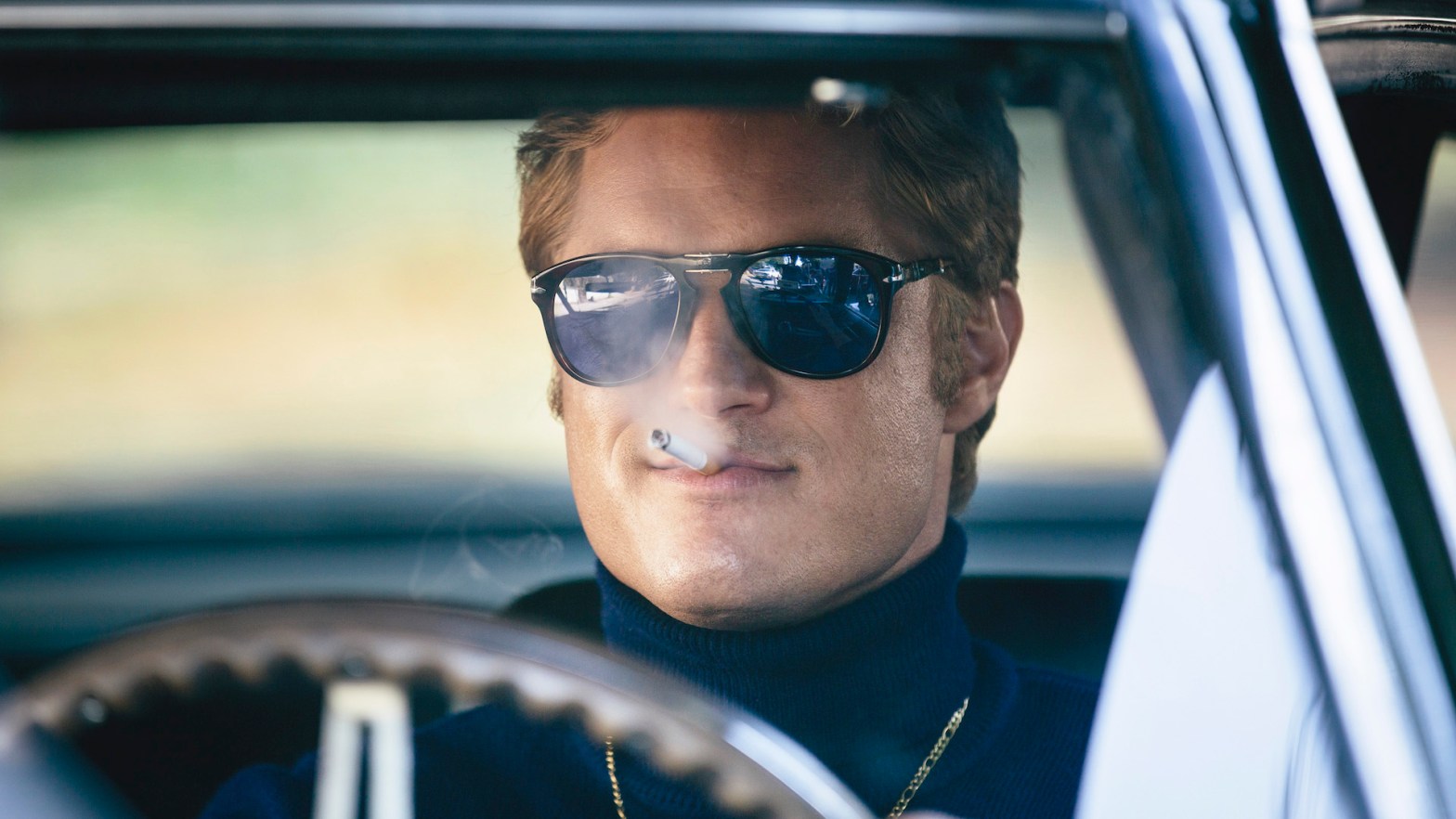
Harry Barber (Travis Fimmel) plays an average Joe factory worker, but with a penchant for stealing fast cars whilst going under the alias of Steve McQueen, named after his favourite actor and living legend at the time. He shares a similar passion for driving at high speeds and whilst the filming sequences draw comparisons with Bullitt there’s more of a Dukes of Hazard comedy element to them here.

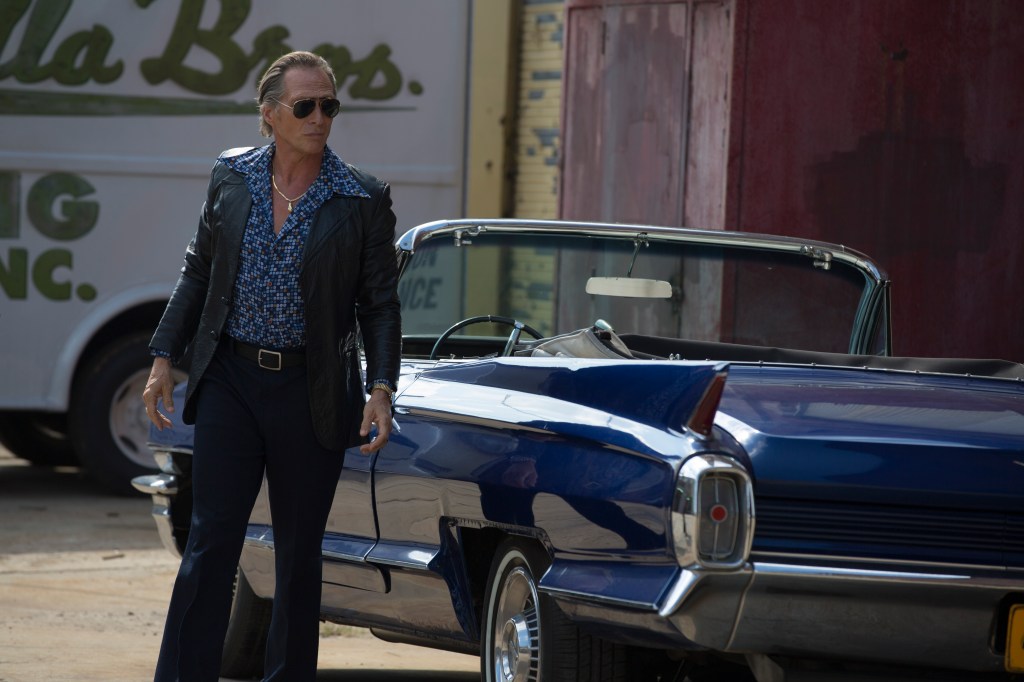
He works at his uncle Enzo’s (William Fichtner) vending machine factory and his uncle receives a tip off about President Nixon’s questionable stash of money in a Californian bank which is too great a lure for him and so he masterminds a plan to steal it aided by his hometown mob that in real life included his brother James, brother-in-law Charles as well as his nephews Harry and his brother Tommy who is freshly back from Vietnam, making this quite the family heist.

The story is told retrospectively with Harry trying to explain exactly who he is to his girlfriend Molly (Rachael Taylor) as they sit in a cafe some 8 years after the event. The action chops back to the robbery and pieces together how they met, which brings a romantic touch to the story whilst acting as a useful narrative platform.

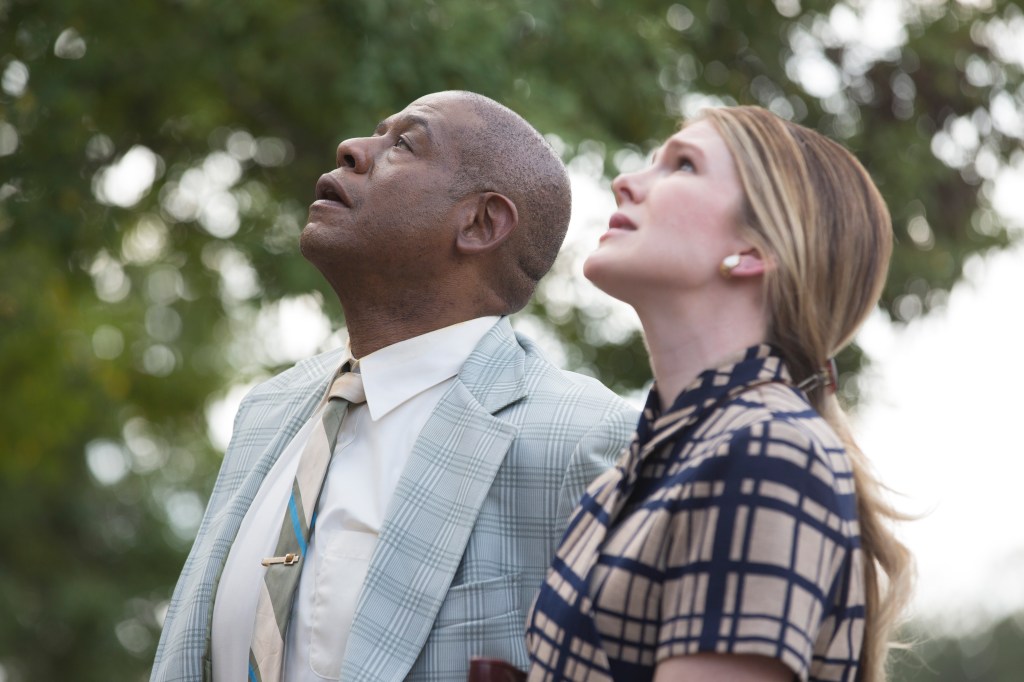
Detectives Howard Lambert (Forest Whitaker) and Sharon Price (Lily Rabe) are put in charge of the case and have a trail of clues to investigate, not least the massive hole blown through the roof of the bank and a pile of smashed deposit boxes. How the story unfolds has some genuinely astounding moments and the robbery is as sensational as any Ocean’s Eleven Hollywood story; one of several nostalgic movie references during the film.

In a way it plays like a strange testament to the audacity of organised gangs, their ingenuity and bravery as well as their stupidity. Overall it’s a fun heist movie based on real life events that doesn’t take itself too seriously, a sentimental look back at a crime with a weird kind of moral heart that actually started the biggest FBI manhunt ever known but if you’re waiting for Steve McQueen to show up you’ll be disappointed – although you will find a nice country and western soundtrack.

Film: Finding Steve McQueen

Run time: 1hr 31 min

Director:  Mark Steven Johnson

Stars: Travis Fimmel, Rachael Taylor, William Fichtner, Forest WhitakerLily Rabe

Genre: Thriller / Crime

Rated: 15

Rating: 3/5


RENT-A-PAL

RENT-A-PAL will be available on Digital Download from 16th November, a disturbing psychological thriller about David (Brian Landis Folkins) a lonely bachelor caring for his ageing mother suffering from dementia (Kathleen Brady). Set in the 1990s, David is seeking a girlfriend via a video dating agency Video Rendezvous, which isn’t going well but he stubbles across Rent-A-Pal an interactive video tape where he meets Andy (Wil Wheaton) his ‘new best friend’ triggering a deterioration in his well being.

Taking care of his mom and living in her basement, David plays his Rent-A-Pal tape over and over and is totally absorbed by Andy’s charming coercive friendship but soon things get a little weird as the video interaction becomes more interactive, which starts to affect David whilst he is looking after his mother. Things actually take a turn for the better as he gets lucky at the dating agency and is introduced to a perfect match, fellow carer Lisa (Amy Rutledge), but this surprisingly causes a problem for David as he ends up in an awkward 3-way tryst.

Written, directed, produced and edited by Jon Stevenson, it’s an unnerving take on the oddball mother and son relationship, which automatically conjures comparisons of the most famous one of them all at the Bates Motel and it almost feels like a creepy horror homage to VHS (PAL) video tapes, with its intricate close ups inferring sinister inner workings of a now almost forgotten medium.

Film: RENT-A-PAL

Run time: 1hr 48 min

Director:  Jon Stevenson

Stars: Wil Wheaton, Brian Landis Folkins, Kathleen Brady, Amy Rutledge

Genre: Thriller / Horror

Rated: 18

Rating: 3/5

Voodoo Apocalypse

Available on digital platforms from 9th November, Voodoo Apocalypse is a tribute to the 70s grindhouse movies, it’s packed with cheesy dialogue, cheap gags, badly choreographed fights, terrible special effects, plenty of swearing and a splattering of extreme violence, and as the strap-line says it’s got cops, kung fu, masked wrestlers and zombies!

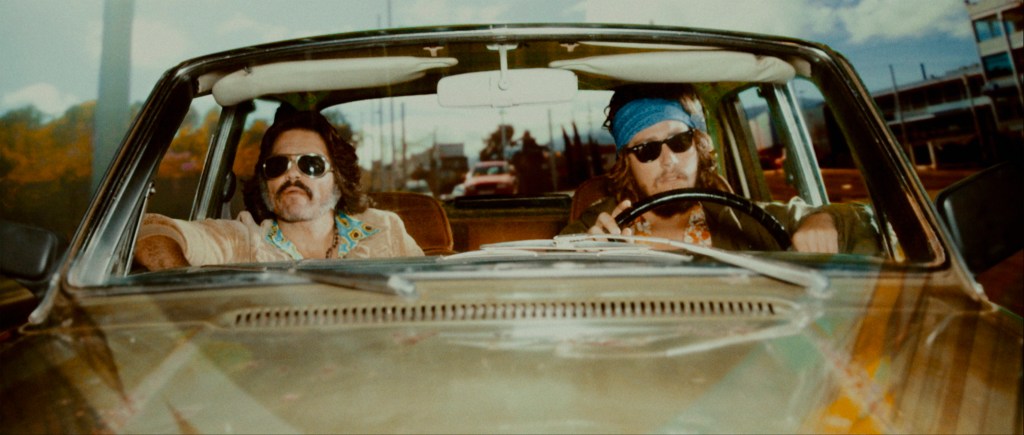
The film uses a grainy 70s film look and has music, moustaches and wardrobes to match. It starts with the flip flop wearing cop White Chocolate (Sergio G. Ramos) sent to Mexico to track down fellow cop gone AWOL Charlie Vargas (Jose J. Ramallo) and he finds him in Mexico wrestling as a masked lucha libra wrestler.

Vargas returns to Los Angeles and under the orders of shouty boss, Lieutenant Blackman, they are to go after the drug trafficker and murderer of Vargas’ former partner, Jimmy Vanilla (Victor Hubara), and so ensues the hunt for Jimmy who turns out to be Papa Voodoo capable of turning people into zombies through playing his rock music. This of course cannot happen until Vargas and White Chocolate become kung fu masters.

If that all sounds a little hard to follow, the film doesn’t help matters with its difficult to pick up dialogue and it’s not entirely clear whether this is down to deliberately awful Spanish / Mexican accents or just plainly inaudible speech.

Written, directed and performed by a collaborative team, it feels like a film made by a group of friends out to enjoy themselves. If you’re looking for a complete escape from the usual Hollywood blockbuster then you could be interested by this B-movie tribute, but whilst the gags resemble what might go into an outrageous grindhouse style movie, overall it lacks a cohesive magic spell.

Film: Voodoo Apocalypse

Run time: 1hr 35 min

Director:  Vasni Ramos

Stars: Jose J. Ramallo, Sergio G. Ramos, Jorge Galvan, Victor Hubara

Genre: Action / Comedy / Horror

Rated: 15

Rating: 2/5