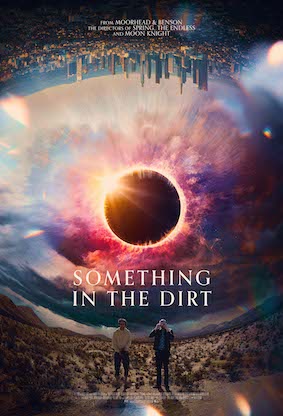
An eerily entertaining supernatural sci-fi comedy from directors Moorhead and Benson where two new neighbours stumble across some supernatural activity in an L.A. apartment and are determined to get it on camera to make some money regardless of the unknown danger of the paranormal powers at work.
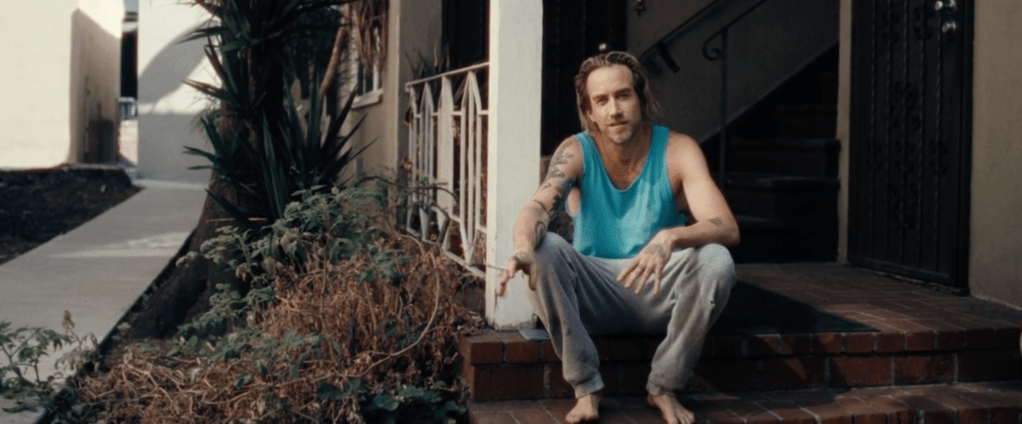
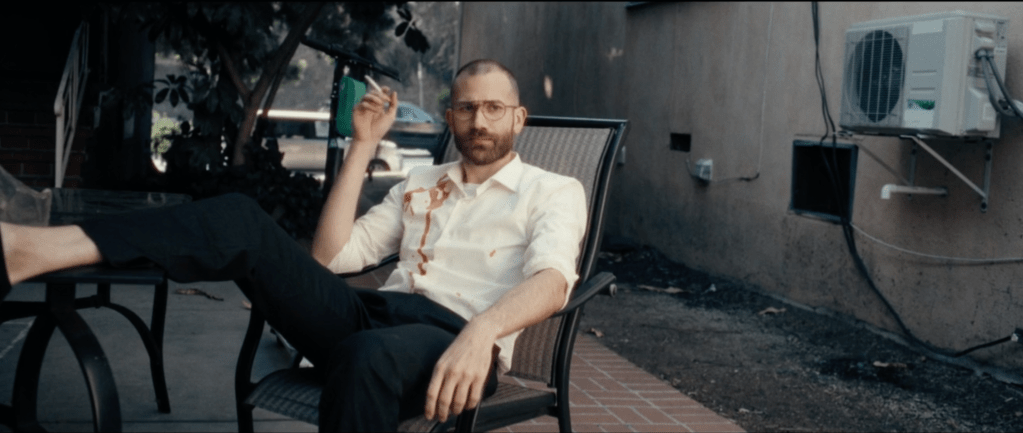
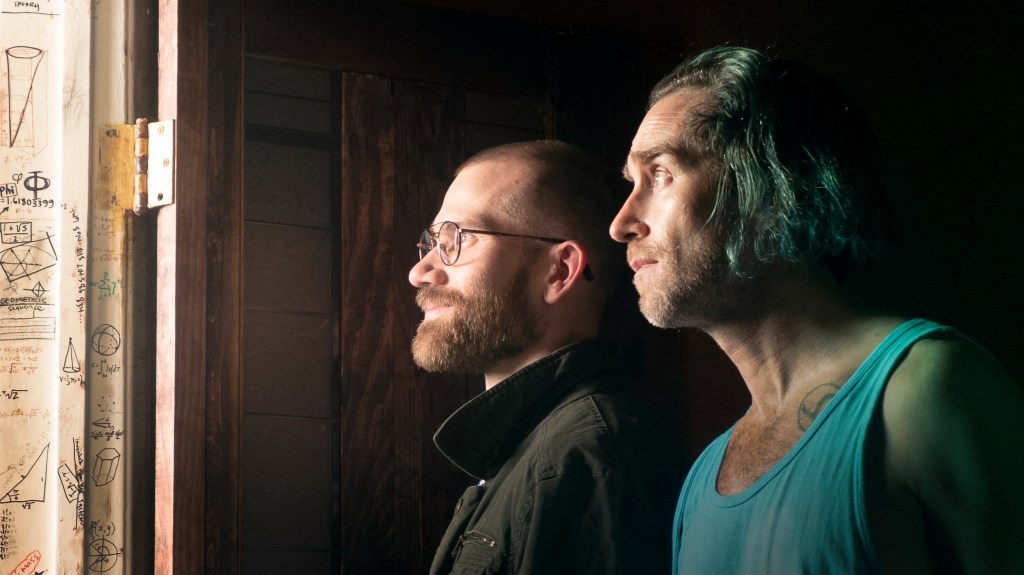
The story begins with Levi (Justin Benson) waking up on the floor of his new, dilapidated, apartment. He’s just moved in and there’s a strange creaking sound and a dripping ceiling. Things aren’t all what they seem. He sees John (Aaron Moorhead) his neighbour sitting outside and goes out to chat to him. They’re kind of opposites, Levi is the grungy long haired barman type trying to make it in L.A. and John is the more clean-cut photographer relying on his second job to make ends meet, but they do share the same unfulfilled work-life experience.
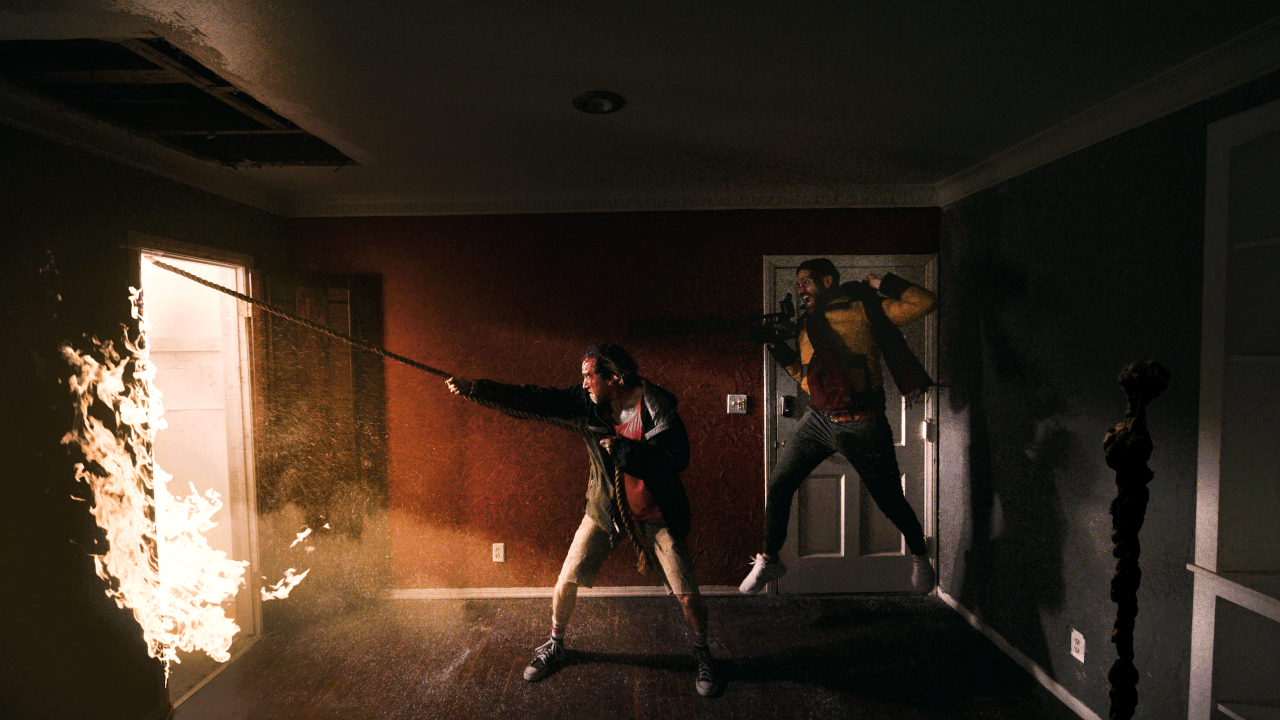
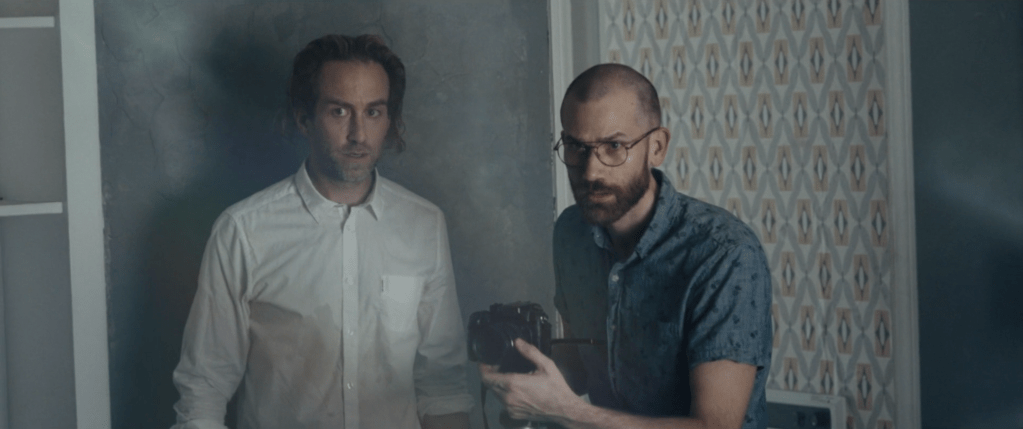
John helps Levi move in and they discover the strange paranormal activity happening in the apartment (some floating objects and strange reflecting lights). Both are keen on filming the supernatural activity to profit from it. As an ex-maths teacher John has been reading up on some mathematical theories and when he discovers some identical symbols all around the city he starts to develop a theory this could be a much wider city phenomena. This sets the two of them off trying to join the dots between various conspiracy theories about aliens whilst all the while trying to capture the evidence on video. The film meanwhile cuts to documentary style interviews talking retrospectively about what happened and it quickly transpires that things don’t turn out well for both of them.
Written, directed, produced and performed by Aaron Moorhead and Justin Benson the story makes for a quirky sci-fi comedy with some interesting layers to it. The film within a film idea, having the guys making a documentary, provides plenty of opportunity for some indie filmmaking in-jokes, whilst the mockumentary style interviews cleverly give the audience the impression this could actually be a true story. All the while the two main characters bounce off of one another, both are a bit edgy and you’re never really sure how scrupulous either is as the growingly bizarre events unfold.
The cinematography builds the atmosphere brought together with lots of quick edits. Not afraid to shoot into the light to capture the interior apartment shots and the L.A. sunshine along with the glaring paranormal activity, the guys even suggest the name for their documentary should be “Something In The Light”. The visual effects subtly create the illusion of the paranormal activity without ever going overboard. Who needs a flying saucer when you’ve got an equally impressive flying crystal ashtray. Similarly the sound design is quietly efficient in adding tension when needed reaching a rousing crescendo with a uniquely performed rendition of Beethoven’s 9th.
‘Moorhead and Benson’ are fast on their way to gaining a cult indie status as writers and directors, if they weren’t there already. Here they show their diversity by playing the two main characters, showing the kind of manic chemistry on screen that suggests they have a lot of fun making movies together.
It has a ‘Close Encounters of the Third Kind’ sensibility that builds the suspense and tension. Entertaingly humorous, loaded with good visual gags it manages to draw you into the supernatural mystery despite its convoluted assortment of theories.
Something In The Dirt will be on Digital Download + Blu-ray from 5th December.
Film: Something In The Dirt
Director: Aaron Moorhead & Justin Benson
Genre: Sci-Fi, Horror
Stars: Aaron Moorhead, Justin Benson, Sarah Adina Smith & Vinny Curran
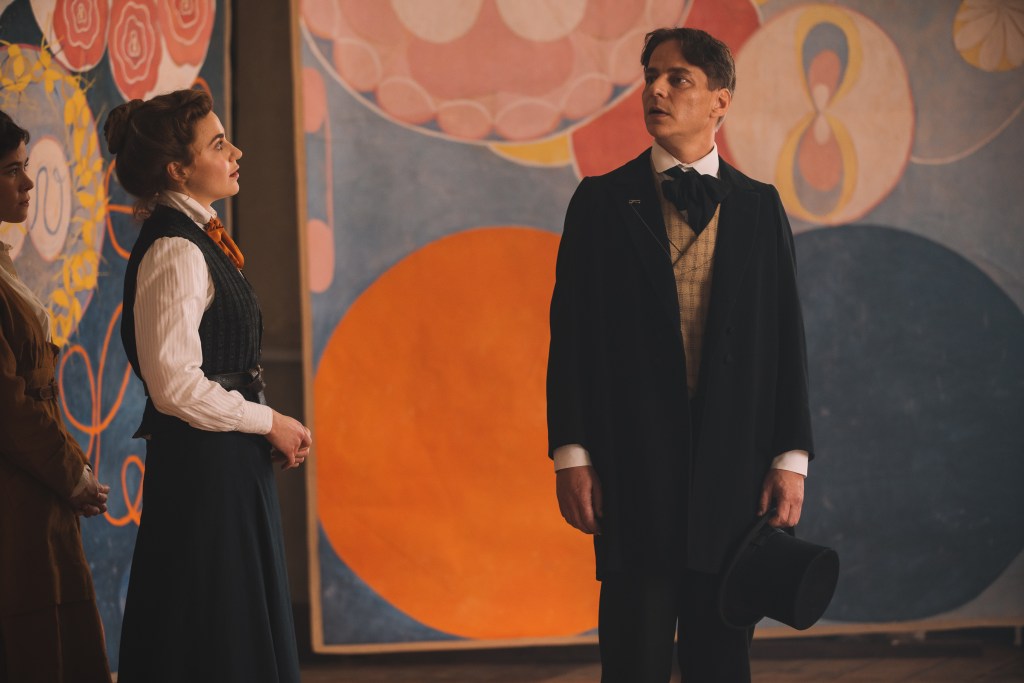
Hilma is the biopic of Hilma af Klint the relatively unknown Swedish artist of the late 19th and early 20th century whose abstract art, locked away for 20 years, famously channelled the spiritual world. Directed by Academy Award-nominated Lasse Hallström (What’s Eating Gilbert Grape, The Cider House Rules) it’s a fascinating journey into the life of an artist with radical ideas fighting for recognition in a male dominated era.
The role of Hilda is played in two parts. We see the older Hilma af Klint (Lena Olin) on a tram in the city of Stockholm reflecting back on her life picturing herself growing up in the countryside surroundings of the family home. The young Hilma (Tora Hallström) has developed a close affinity to nature and science and as a talented artist uses painting to examine life in greater detail. One of four siblings we see her loving relationship with her youngest sister (Emmi Tjernström), who also shares her passion for science, but sadly she passes away at a very young age, which becomes the catalyst for Hilda’s journey into the spiritual world.
Hilma’s artistic talents get her a place at the Royal Swedish Academy of Arts despite a very female prejudiced society that restricted women’s opportunities – highlighted here by the fact that women had to use the back entrance to the Academy. She meets her friend and later lover Anna (Catherine Chalk), who together with their circle of other female artists and writers (of a spiritual publication) make a formidable socialite clique in Stockholm. Keen on seances to communicate to the other side, when Hilda meets Rudolf Steiner, a spiritual philosopher of great esteem, her mission to paint the spiritual world is further ratified.
Director Lasse Hallström has lovingly assembled a troupe of female talent who dominate this historical piece in all their splendid period costumes radiating with a gentle warmth despite some of the darker aspects of the story. Lena Olin (the wife of the director Lasse Hallström) plays the older Hilda who although having been affected by her intense pursuit of the spiritual world still manages to maintain a dignified elegance, even as she quietly mumbles to herself on a packed tram. Tora Hallström, as the young Hilda, completes the film’s heartwarming family trinity of father, mother and daughter carrying the exuberance of a wide eyed artist passionate in pursuing her beliefs. Also making up the female spiritualist collective is Lily Cole as Mathilda, who alongside Catherine Chalk, pulls off the Swedish upper crust artist with ease albeit with a Geordie like accent.
Lasse Hallström has a knack for pulling off the other worldly behaviour of others and here manages it without going overboard by doing just enough to suggest there is more going on for some people than meets the eye. He could have gone much darker on the spiritualism and bustier on the corsets but has made this good clean family fun in what is a Swedish homage to a unique artist who warrants further investigation.
Credit: Hilma will be released in UK cinemas on 28th October. Early 2023, Hilma will also be available on Viaplay UK, Viaplay’s streaming service set to launch in the UK this autumn.
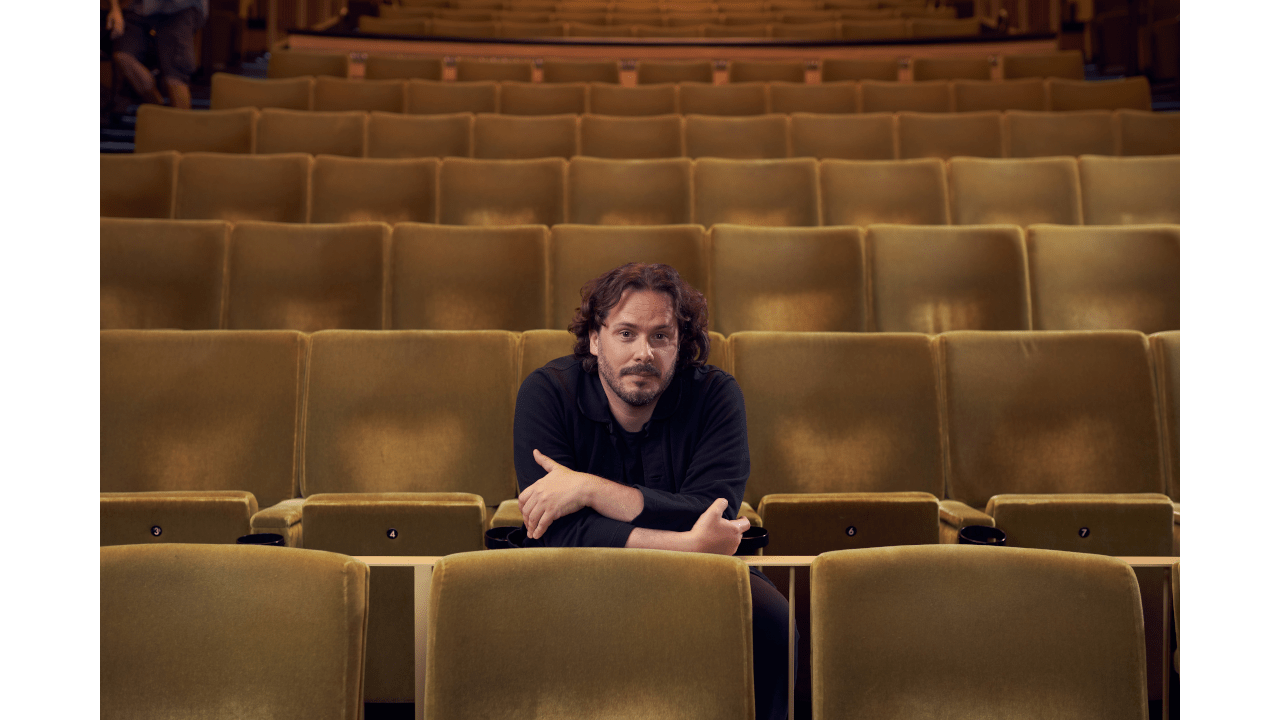
The BBC Maestro series (www.BBCMaestro.com) introduces Edgar Wright Teaches Filmmaking. UK film director Edgar Wright delivers 27 lessons with over 4 hours of expert tuition taking you through every stage of the filmmaking process from writing, directing, casting, location scouting, funding, distribution and plenty more, making this the perfect way to pick up all the tips and tricks you need to get your film made.
Edgar Wright’s credentials are second to not many in filmmaking. The UK film director’s credits include Hollywood smash Baby Driver (which took $220 million dollars at the box office), Scott Pilgrim vs the World, cult indie successes Shaun of the Dead, Hot Fuzz and The World’s End and his most recent outing Last Night in Soho, making him the perfect choice as your filmmaking tutor.
Beginning with a brief history of film, Edgar Wright’s fascination with old black and white silent cinema is commendable. His keen interest in the early inventors and innovators of cinema is a noteworthy lesson on its own. Here we have a contemporary director openly sharing the influences of the past that he has been so heavily inspired by and has readily used in his films.
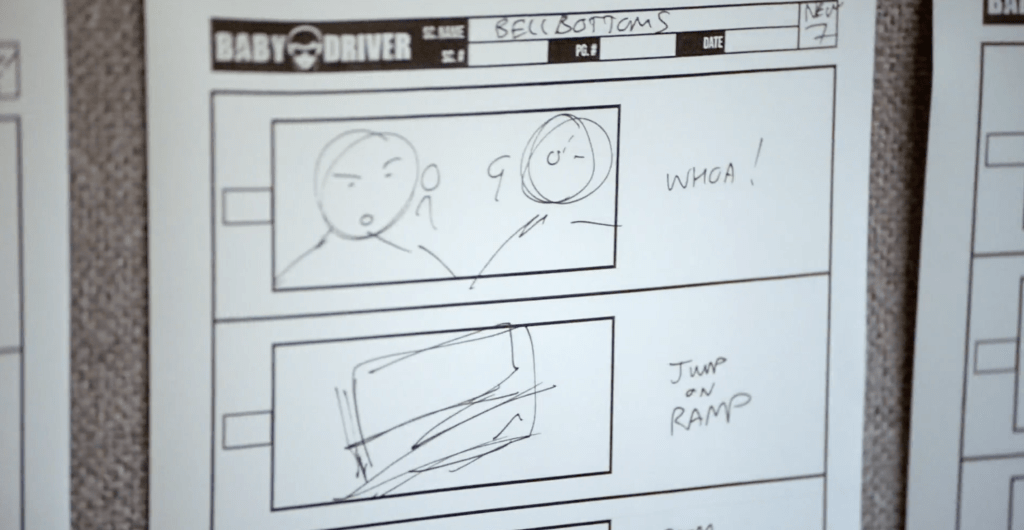
Other highlights on the course include his Story Boarding and Animation class. This might not come as a shock to fans of his but at the same time might make uncomfortable viewing for those wishing to emulate his successes. The level of meticulous preparation would be hard to match – but there’s no need to be overly concerned, he does at least hand over his frame by frame sketches to be finished by a professional storyboarder (his brother Oscar) and reassures that this level of storyboarding is not a prerequisite demanded by all top directors.
Writing on the other hand he confesses is not his favourite part of the filmmaking process. For him it’s about 1% inspiration, 99% procrastination (he won’t be alone on that one) but as he says, he at least tries to be a creative procrastinator watching and reading around his chosen subject as much as possible and gives invaluable tips on the methods he uses to keep his script on track.
A part of filmmaking he finds especially enjoyable is the collaboration with people and talent. Here he talks through some incredibly complicated shots that may appear common place in the big budget movies nowadays, that he casually surmises as looking “effortless” in his film before finishing, “…which really means it was an enormous amount of hard work by many many people.”
Pristinely captured in 4K, this video tutorial is a polished production as you’d expect from the BBC with a cool backbeat sound design, alongside the now customary multi camera angle interviews to aid cutting between edits and accentuate various moments during the interviews.
Edgar Wright makes an amiable tutor whose love of film and filmmaking is palpable. Fiercely proud of his indie filmmaking roots, he’s able to pass on his wisdom for low budget filmmakers as well as take you into the private filmmaking world of a director at the top of their game.
This is a director happy to share his secrets, drawing upon his enviable catalogue of films to share what he’s learned about filmmaking. The tagline on the BBC Maestro website is “let the greatest be your teacher” and whilst Edgar Wright may not quite be the greatest, he’s considerably worthy of the maestro label.
The course costs £80 for lifetime access to Wright’s 27 lessons and comprehensive downloadable notes.
Tomorrow Morning is a big screen adaption by Nick Winston of the off-Broadway smash hit musical. Set in London, it simultaneously looks back at two significant moments in a couple’s relationship where 10 years have passed. With an all-star cast from the stage and screen featuring Samantha Barks (Frozen The Musical, Les Misérables) and Olivier Award nominee Ramin Karimloo plus cameo performances including film and TV icon Joan Collins. Tomorrow Morning will be in UK Cinemas from 6th September.
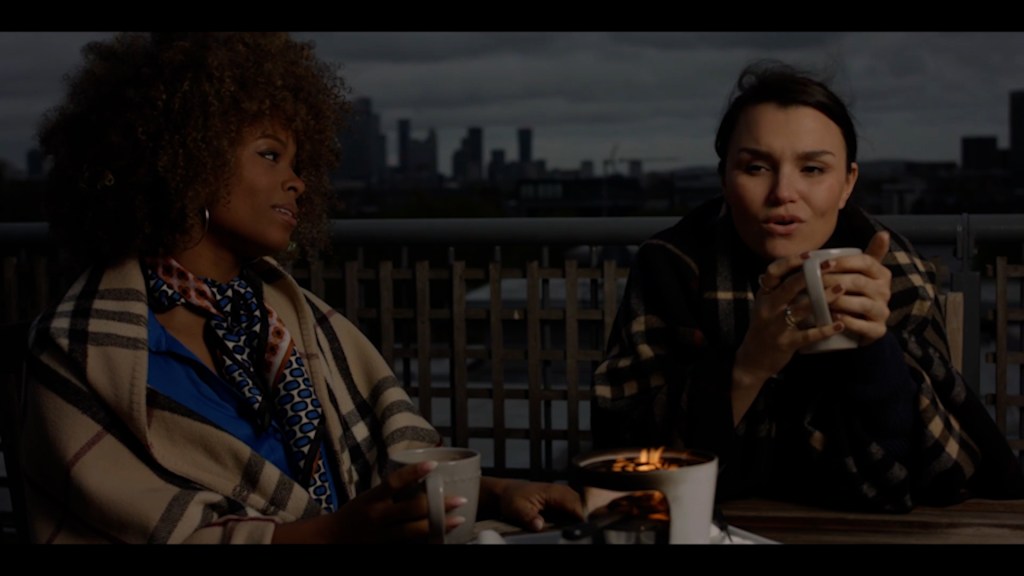
The film opens with a swooping aerial shot of London’s skyline as the music starts up and the actors go straight into song for this musical film. We see the lead actor Bill (Ramin Karimloo) leaving the flat of his ex-partner Catherine (Samantha Barks), whilst she sits with their sleeping child and they begin to sing together the opening rousing ballad ‘Tomorrow Morning’. Is this a song full of hope or dread? It turns out both. As Bill looks back across London’s Thames waters we jump back in time 10 years as he visualises the beginning of their relationship from that very spot – before they were married and before they had a kid and so the story unfolds in duplicity looking back to simultaneously countdown towards two momentous moments in their relationship – getting married and getting divorced – all to music and some dance too.
As an award winning musical you can expect some touching songs being performed by two of the West End’s biggest stars, Samantha Barks and Ramin Karimloo, who make the transition from stage to the screen look effortless. Samantha is supported amiably by Fleur East (X-Factor) who plays her best friend India whilst Ramin’s character teams up with his best man played by George Maguire (Billy Elliot), both injecting some vibrant sequences as they reminisce about the couple’s relationship in the build-up to the wedding. It’s not all fun and laughter though as the film flip-flops back and forth in time between the wedding preparations but also the breakdown of the marriage looking back at the tell-tale signs of how they grew apart leading to the day of the divorce proceedings.
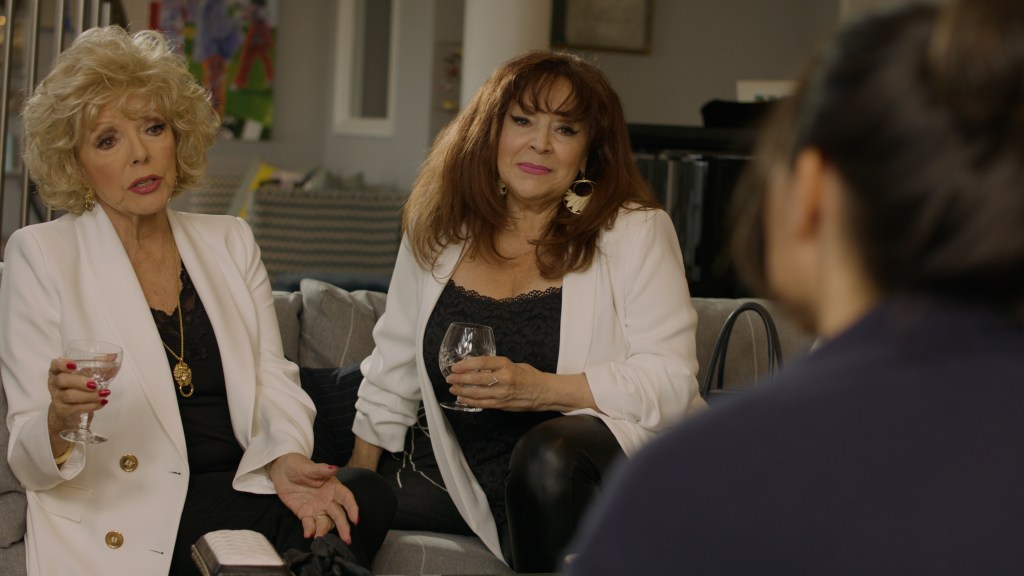
The all-star British cast includes cameo appearances from film and TV royalty Joan Collins, who revels in giving some ironic marriage counselling, whilst comedian Omaid Djalili provides some alternative fatherly support and Anita Dobson channels her Eastenders’ feistiness as the demanding advertising boss.
The mix of acting and musical performance needs some adjusting to as conversations burst into song at short notice using the unmistakeable intonation of musical dialogue and especially elongated syllables, but the musical format isn’t without its successes, like Oscar winning La La Land and should be slighted at your peril.
Enjoy the London backdrops, West End performances and cameo appearances in this British rom-com style musical of converging worlds that could just go to show how much better life would be if it were a musical.
Film: Tomorrow Morning
Director: Nick Winston
Genre: Musical, Romcom
Stars: Samantha Barks, Ramin Karimloo, Joan Collins
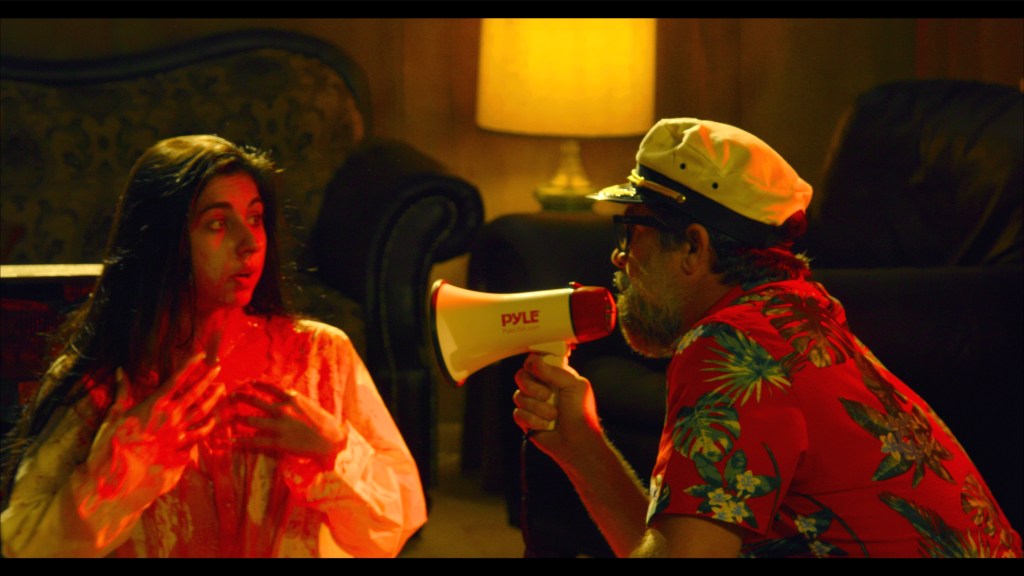
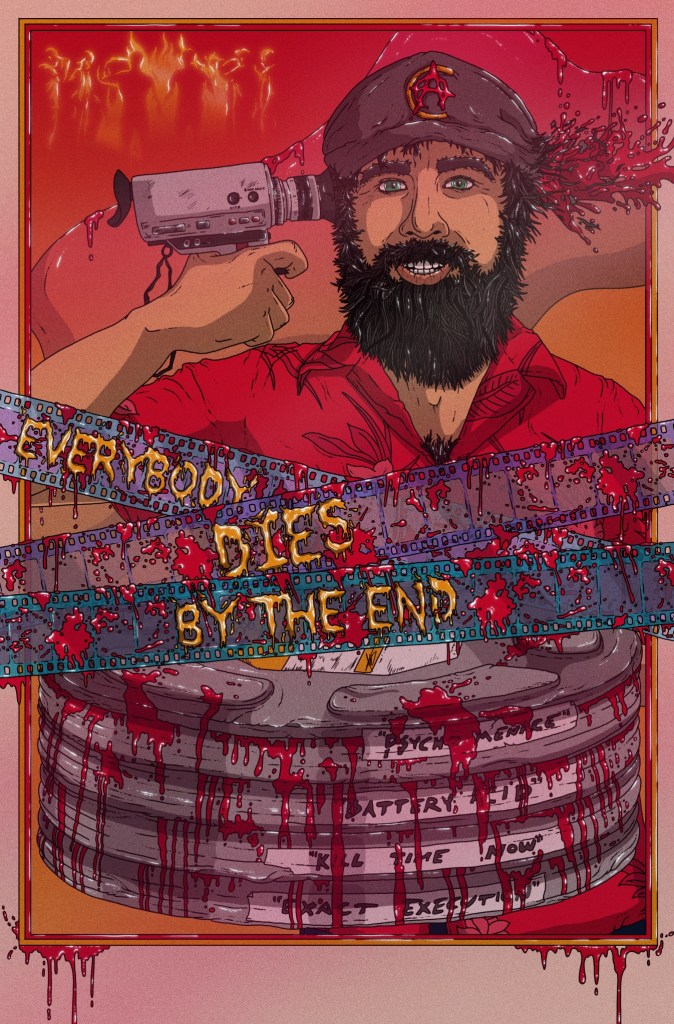
Ian Tripp and Ryan Schafer are the US co-directors and first time feature filmmakers of the film ‘Everybody Dies by the End’, one of the closing acts at this year’s FrightFest, the UK’s No.1 horror and fantasy film festival.
Please introduce yourselves and your movie
Ian Tripp: I’m Ian Tripp one of the co-directors and I wrote the movie. Our film is called “Everybody Dies by the End“.
Ryan Schafer: And I’m Ryan Schafer the other co-director.
How did the film come about?
IT: The dream has always been to make feature films so the short films career was always for practise and just to be up to stuff, come up with ideas and be happy with them. The idea for Alfred Costella and the making of his movie I have had in my brain since 2012 and after meeting Vinnie (who plays Alfred) and a couple of other things happening in life, it kind of just hit, we wanted to make this movie and so we did.
Can you give a synopsis of the movie?
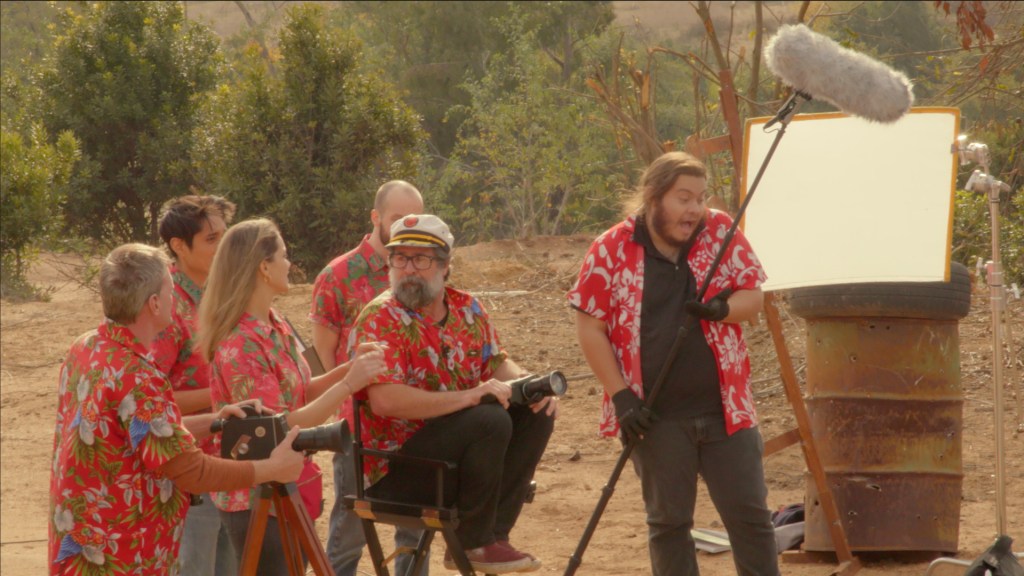
RS: Acclaimed horror director Alfred Costella has a bit of a mental breakdown on a public access interview show. Sort of has his artistic integrity questioned and goes into hiding for like a decade until he suddenly comes out of the woodwork to work on his new project, his ‘magnum opus’, “Everybody Dies by the End”. He hires a documentary crew to film the BTS (behind the scenes) of it and that’s who we see going in and we get to learn that not everything is as it seems at the Costella Ranch.
IT: I play one of the documentarians, so the angle of the movie is through the POV of our character chronicling the ‘disc 2 making of featurette’ to the actual movie.
What are some of the themes the movie is about?
IT: I’d say it comes down to bullshit artists.
RS: …artistic integrity, what it means to make real art, quote unquote. Real art being genuine and raw.
IT: …and how that can lead someone down a misguided path. Madness in a sense. The movie is a kind of descent into madness.
RS: …and how some directors will push the boundary to pretty messed up extremes to try to coerce a real raw performance from actors with no real regard for their well-being.
IT: …if it makes the movie better, it justifies that.
RS: …it’s worth it.
IT: Which is not our opinion in real life!
RS: That’s not how our sets look like!
How much of the film reflects your own experiences in the film industry?
RS: Most of our experiences are just independent, working on our own sets. Thankfully not too similar. We’re able to be different but you hear stories. There are all the famous ones with Kubrick and Hitchcock and the things they’ve done.
IT: Or even down to, it’s been a bit of a hot topic recently, to sort of denounce method acting.
RS: …what’s that quote “no one ever method acts a good person.”
IT: Right, Robert Pattinson “No one ever method acts a good person.” They are always method acting an arsehole.
RS: So you feel like you have this free pass to…
IT: …release your inhibitions.
RS: Be Jared Leto on the Suicide Squad set.
Does it also look at how violence in film potentially influences society with copycat violence?
IT: Less a theme and more a perspective of following a character who is questioned from that outlet. You’ve definitely seen interviews of Tarantino getting questioned and flipping his lid.
RS: …and the interviewer coming at it from a gotcha perspective to try to devalue the art. To try to put this perspective that this is just a snuff film.
IT…or fetish.
RS: I mean it’s primal. Who doesn’t fear death. Fear being hurt. It’s a very primal instinctual thing that is just inherently ingrained in us.
IT: I think as humans we do celebrate death in a way, to dance with death is to accept it. We celebrate the day of the dead, halloween etc. These are all examples of us getting together and celebrating the dread of our existence as a way to embrace it.
RS: It’s the one thing we all have in common. We all die by the end.
IT: Since the beginning of time, we’ve been afraid to be out alone in the woods because if a highway man or a wild animal comes, you can get fxxxxd up. A lot of our stories are based around the simplicity of primal existence.
How did you cast the lead actor Vinny Curran as Alfred Costella the cultish film director?
IT: I first saw him in a movie called “Resolution” which was shot in our home town of San Diego and so that was really special to see a movie that we really liked come out of our home town. That was very influential and so we ended up getting to meet those filmmakers just vicariously through screenings around town and ended up being friends on Facebook. I thought I had the character Alfred Costella in my head but after meeting Vinny the image of Alfred Costella faded away and I could only see Vinny Curran. So when I wrote the script, I wrote it for Vinny and we just boldly hit him up, “we wrote this for you and we hope you’ll do it, if you don’t do it, we’ll probably move onto a different movie.”
RS: But luckily he said yes.
Where did the script and the funny lines come from?
IT: Honestly, the idea was there but then movies like “What We Do in the Shadows” really influenced the tone we wanted to go for. There’s a bit in “What We Do in the Shadows” where they’re like “you can’t kill any of the cameramen…maybe one cameraman”. Ideas like that you are like ok, you’re working dangerously on the edge with someone who could be malicious potentially. Have you seen the “Creep” movies with Mark Duplass? Those were another influence and some of the more underground movies “Man Bites Dog” is a mockumentary about a film crew chronicling an assassin, but the assassin is really funny and quirky but then will shoot people in the head whilst they sleep. So it is like shocking the turn over but it is still the integrity of the character; he is that. Then also “Street Thief” is another one where a camera crew is chronicling a professional safe cracker; so the perspective of mockumentaries following sociopaths were big influences on this movie.
The location on a ranch looked like a filmmakers dream
RS: We got very lucky in terms of the ranch location, a lot of the locations we were looking for beforehand were so expensive.
IT: We were looking at a cowboy set and they wanted way too much money for a place that wasn’t being used that much.
RS: Or at least we are not at that level to have the financing for getting locations for a full wild west town.
IT: We hit up a family friend whose dad owned a ranch. So she contacted a bunch of ranch owners and we met Jose the property owner of that ranch and he took us in like family. He loves us. We’re going to shoot a ‘cabin in the woods movie’ on his property and he’s going to build a log cabin for us.
RS: He’s down with the cause. We’ve been really lucky with all of the people we’ve met on this film.
IT: The movie is secretly in 3 different locations that we’ve stitched together. The interiors of Alfred Costella’s house is my mom’s house in San Diego and then the exterior is the ranch and the basement studio is a basement in downtown San Diego.
How does Calvin, the BTS documentary character, drive the movie?
IT: The idea with that was because we were having a BTS documentary camera, it is not narratively shot, you literally have a conscious camera. Someone’s POV is making emotional decisions of what they are filming and that comes with biases and so this is a character who has a bit of voyeuristic tendencies and also Calvin in particular is a fan boy of Alfred Costella and that is something Alfred acknowledges and plays on and makes a particularly interesting character.
Did you use held POV footage throughout the film?
IT: There is some blocking in terms of the camera movement even though it does feel run and gun. What we would do is, the first few takes of a scene would be let’s dance it out, let’s go slow, make sure everyone hits their marks, feel it out, try things. Then after the first 3 takes we would just go, ok let’s make it snappier, make it louder, make it faster if things are running too long, just crunch it in and make it a little more crazy.
What would you recommend to any filmmakers wanting to make a film?
RS: Not to say going to film school is a bad thing, not to talk down anyone who’s gone to film school, but because we didn’t, we don’t have that debt. Instead any money that we would have put into going into film school, we could instead just put it into the film itself and learn by creating and that is a pretty big benefit. Not saying that that is the way to do it, we are not saying that but it’s definitely not a necessity film school.
IT: It is something you have to ask yourself personally. Do you work best in an educational environment. Is that where you flourish? Is that where you can best meet people?
RS: I’d say what we are doing that was our film school. Neither Ian or I went to film school. We are both very passionate about filmmaking. We love movies so for a few years we were just making short films and learning from that and basically doing at home film school, just getting the skillset to be able to finally do this – make a full-fledged feature film.
IT: With the internet today you can put yourself through film school. A big part of what Ryan and I did was … the first thing we did in 2015 was a short film called ‘Philip Finds Love’ and it was made with just Ryan and I basically. Ryan was the lead actor and I was the director and I was shooting it myself. We shot it over 3 days. It was a great experience and we felt the partnership between us and so it evolved from actor and director to being creative partners.
I’d say, don’t be afraid to make something just for practise. A big part of what I see holds people up is the inadequacy traps of not being good enough to make what you want. So I would say make things for the attempt to learn how to make bigger things. That short we were talking about it had no onboard audio. It just had Ryan talking to a cam girl on the internet.
RS: I don’t think I said a single thing.
IT: So we dubbed the whole movie basically. It was just focusing on shots, compositions, editing, flow and then we started making more things like 20 minute movies until we felt versatile enough to carry a feature.
RS: Also, I feel like a lot of people are scared of that first project because they really want it to be good and perfect. You end up just kind of waiting and procrastinating when it’s best to just bite the bullet and get it done. You can see where you fell short and what you can improve on. Being able to actually look at your work and see where you can expand.
IT: Another thing, we dabbled with attempting to work with different people on the movie but we eventually just did it ourselves. So many people were telling us that we needed to make it for a bigger budget and we were seeing the movies that they made and it felt unnecessary. I didn’t see the end quality in what they were putting into it and so it kind of just gave us the influence to say fxxk it, let’s just go and do it our way. We don’t need to make movies with these people who are bringing us down.
RS: You’ll see million dollar films that look like they were filmed for $10,000 and $10,000 dollar films that look like they were filmed for a million.
IT: There was a movie that a lot of people in San Diego worked on. It was like a horror movie and it was a horror production. Like everyone was fed up with the movie, it ended up bloating into half a million dollars and I’ve seen great filmmakers like Benson and Moorhead make movies for less than one hundred grand that look like they cost millions of dollars. Jim Cummings latest film ‘The Beta Test‘. I think it was made for less than $300,000, and it looks like it was made for $3 million. So it isn’t about the abundance of resources. It’s about what you can do with what you have and so I would just say, don’t feel like you have to hold yourself back by what you don’t have. Make what you can make now the coolest thing you can make.
RS: Realise what potential scale you can work with in your story. If you are an indie filmmaker your first film should not be some crazy sci-fi ‘Star Wars‘ epic. Realise the scope that you can potentially work with.
From script to screen how long did your film take?
IT: We wrote the movie in 2018 and then December of 2018 we shot that opening scene and then we basically took all of 2019 to just read through all the scripts and to make it the best thing we could make it and then we started shooting again in March of 2020. We shot a couple of days and then covid hit and we shut down. We didn’t get back to shooting until October and so we filmed a week in October, a week in November and a week in December and each of those weeks were each of those locations.
You’re closing the London FrightFest 2022. How do you expect the film to be received at its world premiere tomorrow night?
RS: So far people have been pretty positive about it. I don’t want to go in with any expectation. Just go and see what people think. Hopefully they enjoy it. Hopefully the take away is that they had a good time with it.
IT: There seems to be like this taboo thing of being a filmmaker and wanting to entertain people, but we do just want to entertain and so we hope that people are entertained. I hope you laugh. I hope you cry. I hope you sweat a little bit.
RS: Maybe having a few of these conversations that we are having right now about artistic integrity and what makes real art.
Film: Everybody Dies by the End
Director: Ian Tripp, Ryan Schafer
Stars: Vinny Curran, Brendan Calahan, Bill Oberst JOR
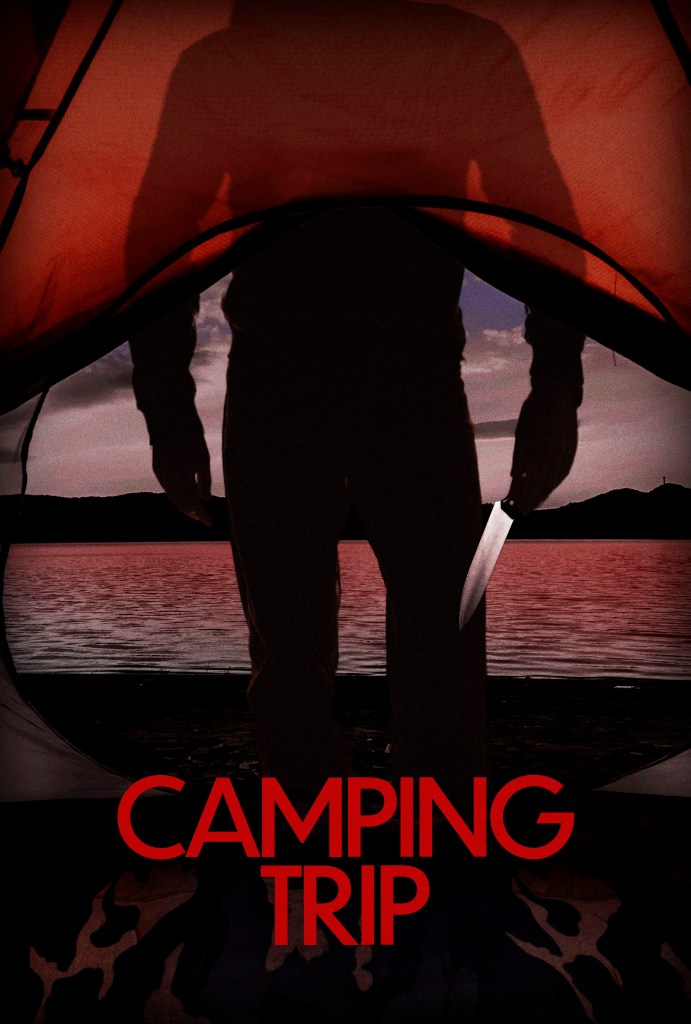
Making their feature length debut in English, Leonardo and Demian Fuica have made a pandemic camping horror, which sees two couples look to getaway from the lockdown restrictions only for their trip to go sinisterly wrong. Available on digital download in the UK, USA & Canada and Australia and New Zealand from 16th August and available to pre order here.
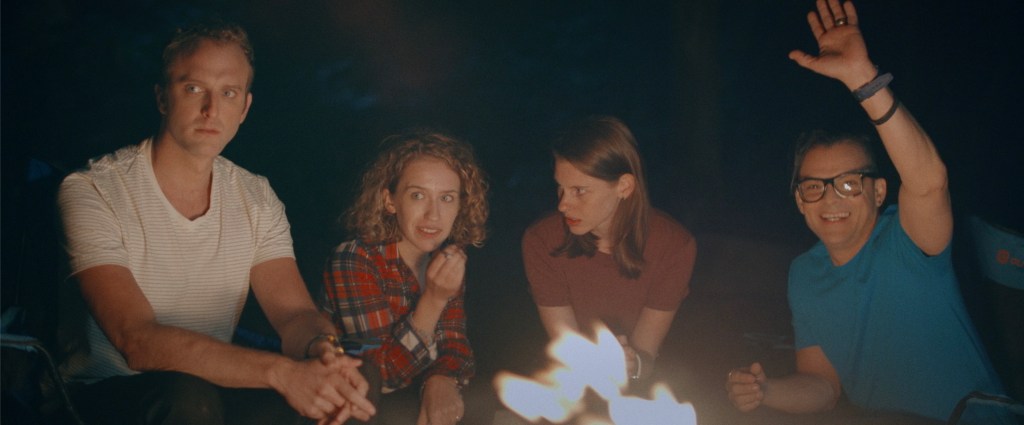
Best of friends Enzo (Leo Zola) and Ace (Alex Gravenstein) have organised a camping trip with their partners Polly (Caitlin Cameron) and Coco (Hannah Forest-Briant). Fed up with the pandemic and wanting to forget about their money problems they head off to a remote lake together. Here they are finally able to embrace one another for the first time and our merry campers enjoy this regained freedom telling stories around the campfire and showing a surprisingly open side to their friendship.
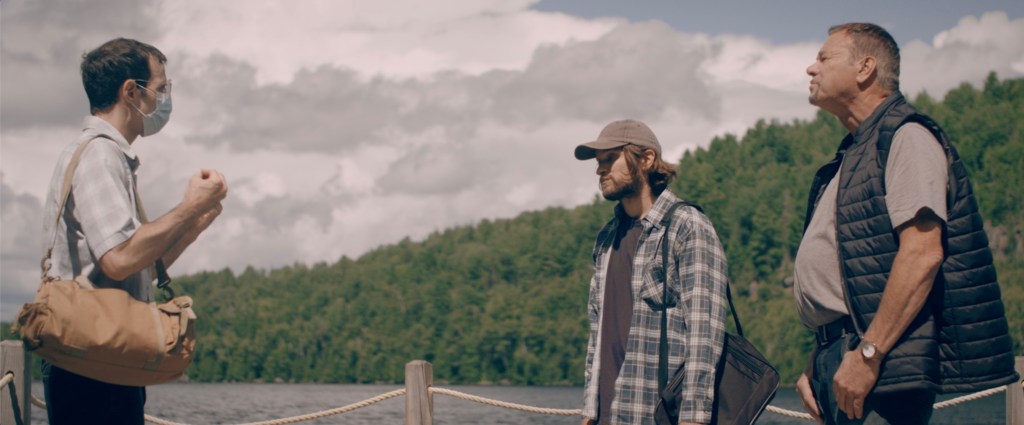
Meanwhile there is a mysterious man in the forest, he is meeting with a couple of shady hoodlums to carry out a pandemic scam involving lots of money and a new lifesaving vaccine formula. The campers become unsurprisingly caught up in the deal that goes wrong and have absurd difficulties trying to make the right decisions to get out of the situation, albeit at a time when nobody seems to be thinking straight.
As first time English language filmmakers the dialogue is a mix of natural disjointed interaction between native and non-native speakers but also just bad dialogue. There are some pretty incoherent ramblings especially from Enzo, who seems to be the group’s chief decision maker and so it’s no wonder that everything begins to unravel for this hedonistic group of campers. The plot is equally disjointed with some derisible moments of stupidity, largely brought about presumably by the necessity of the story, as it would be generous to say it was all down to the impact of the pandemic on people’s behaviour.
The cinematography and post production look to heighten the peculiar pandemic effects most interestingly through a dizzying rotating 360 degree camera movement. There are some other experimental post effects introduced like the slow mo fight sequence which has mixed results in its gory detail, but all added together do create a sense of something happening outside of the norm, sharpened by an original music score by Michel Demars, that is low key but nonetheless atmospheric.
Screenwriter Leonardo Fuica was inspired during Covid-19 and the lockdown period to write a film to include the things he observed and he takes this opportunity to make fun of the masks, the fines, the social distancing and the frenzied survivalist nature that went on. He’s put together a family production and maybe it is this that shines through and allows you to enjoy some of this generally goofy pandemic horror with all its peculiar nuances and clichés.
Film: Camping Trip
Director: Leonardo and Demian Fuica
Genre: Horror, Thriller
Stars: Leo Zola, Caitlin Cameron, Alex Gravenstein, Hannah Forest-Briant
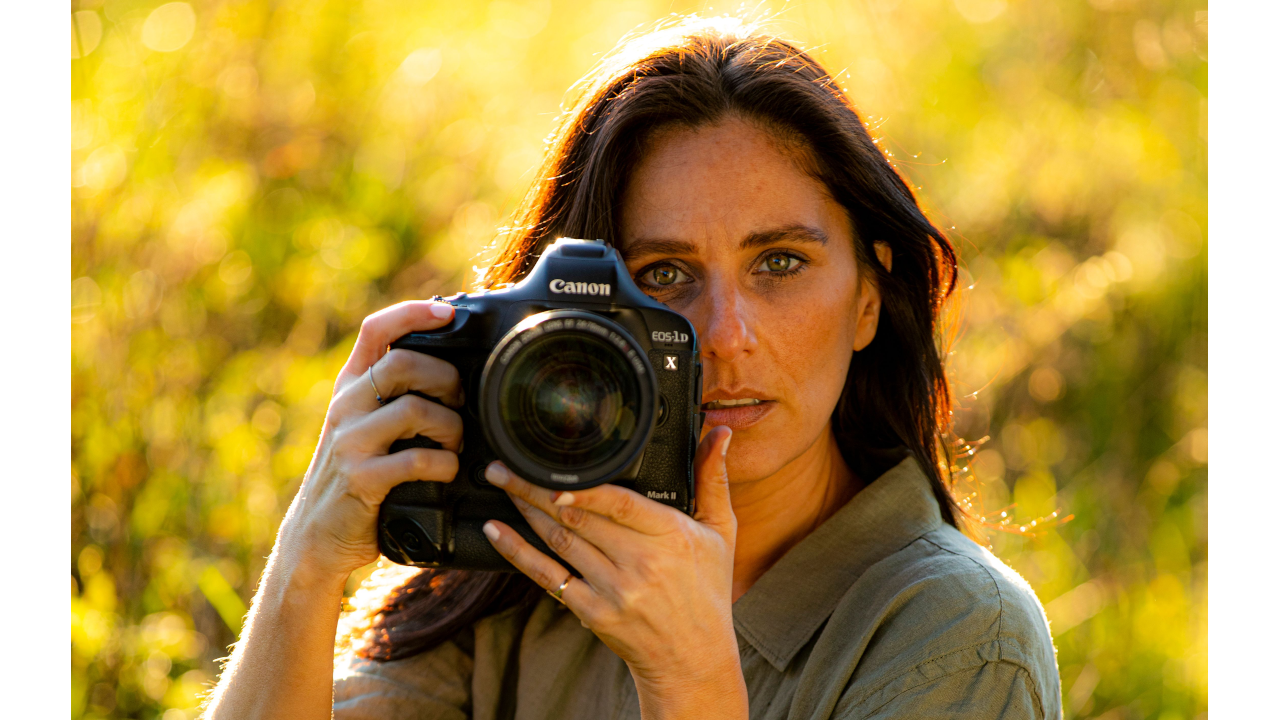
Filmmaker Rogue Rubin puts her own safety on the line to uncover the extent of the still legal trophy hunting of endangered lions in Africa. Available on all major digital platforms from 1st August.
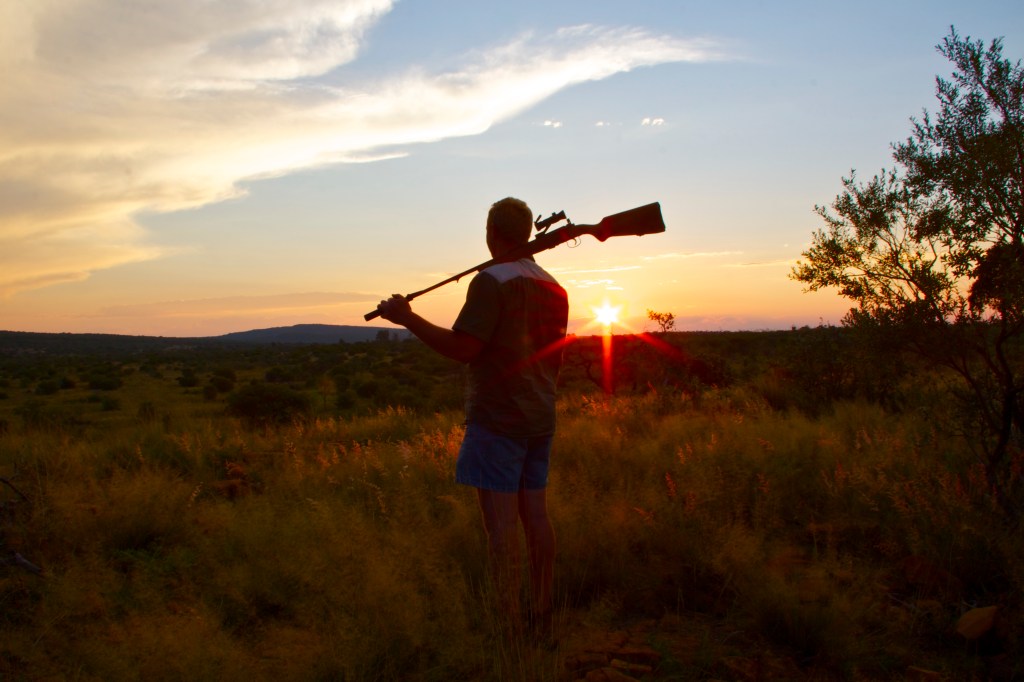
Born in Cape Town, South Africa, Rogue Rubin is on a mission to save the lions in Africa from being hunted for sport as she goes deep undercover creating a fake social media account to promote herself as a photographer of big game trophy hunters. She manages to gain the trust of a trophy hunting organiser who allows her on his safari hunt enabling her to photograph the trophy hunters paying big bucks to come to Africa to shoot and kill lions.
With some disturbingly graphic images of lions and other big game wildlife being shot, this hard hitting conservation documentary gives a real sense of the lions’ struggle for survival. With telling statistics, their ever dwindling numbers (largely impacted by human encroachment on their habitat, the bush meat trade and lion bone trade) have decreased by 85% in the past twenty-one years. It is trophy hunting here that Rubin has picked out as the ‘smoke screen’ for all the other contributing factors, perhaps because it is the most visually startling to witness.
Watching the tourists come on these hunting expeditions reveals a peculiar mix of families with hunting in the blood to the pleasure seekers ‘bored with too much money.’ For most people it’s hard to understand this blood sport unless it’s part of your everyday life. America is singled out as the largest importer of trophy hunted lions, a country which recently made it illegal, only for it to be quickly re-introduced – underlining its political and economic influence that divides opinion.
Rogue is prepared to go into the wild, with men and guns, to get the footage that shows these adventure thrill seekers killing in the cold light of day where even the most blood thirsty of hunters has a mixed look of glee and horror when face to face with their prize – although not all.
It seems unfathomable that a tourist industry is allowed to continue the practice of killing these majestic creatures especially in today’s world of environmental activism. Anyone brave enough to enter the lion’s den and tell their story must surely have a just one and Rogue’s message is to enjoy the wildlife like most tourists do from the safety of a safari truck where the only shooting required is done by a camera – but, as she also shows, you’ve still got to be careful not to get your arse bitten.
King Knight is a new US comedy parodying religious cults. Good witch Thorn (Matthew Gray Guble) faces up to his high school past, which jeopardises his future in a witches coven and his relationship with his fellow witch partner Willow (Angela Sarafyan). Available on all major digital platforms from 8th August.
Set in modern day California the story begins like a fairytale, but is quickly turned on its head as it’s made clear that this is going to be a silly and absurd ride. Thorn and Willow are two lovers, as predicted by the tarot cards, symbols of the magical arts being drawn upon. They are the head witches of a couples coven in the Californian hills with a following of dysfunctional witch couples who come to them to have their relationship problems resolved.
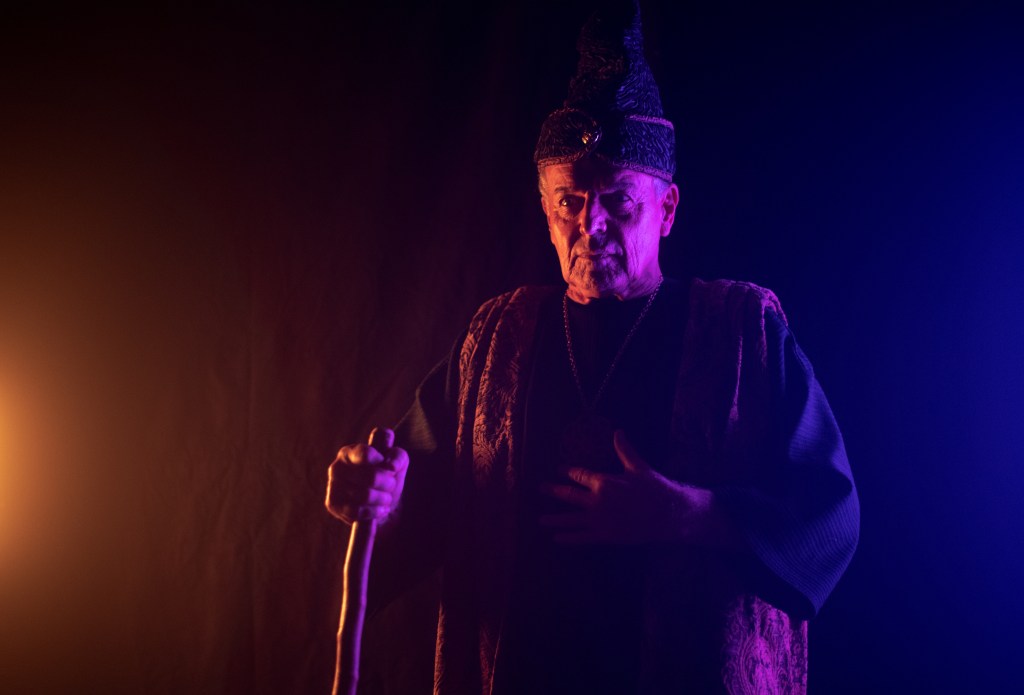
Thorn receives an invitation to his old high school reunion, which Willow finds out about and consequently discovers something quite unforgivable from his high school past. Needless to say it’s silly and absurd but leaves the coven no option but to banish him. Left to walk alone with only a talking pine cone and a pebble for guidance he receives a visitation from a popular Wizard to help him on his journey of discovery.
Will Willow and the coven forgive Thorn his high school past (successes) and come to support him in his hour of need? Will Thorn have the strength to make it to his high school reunion on his own? The stakes don’t seem to get much higher than this.
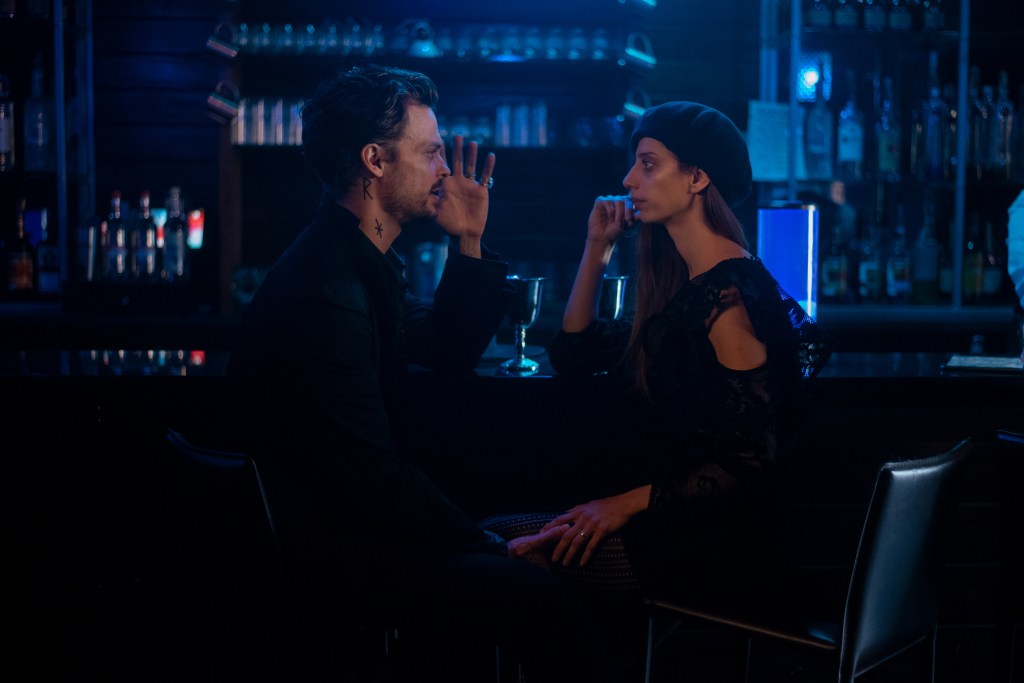
Written and directed by Richard Bates, it’s a farcical story from start to finish. Matthew Gray Guble plays Thorn, heavily tattooed and dressed in black, he manages to pull off a cool witch like decorum. His onscreen partner, played by Angela Sarafyan, is Willow, who brings a young Morticia like seductive authority to the witches coven and pours out the spiritual nonsense that attracts the Californian misfits for relationship guidance.
This coven of disenfranchised yet all American witch couples try hard to deliver an edgy comedy script, working the spoof elements of a religious cult, and not without some successes, like when they leap over a small candle in the garden to celebrate a pagan festival. Some psychedelic animation is thrown in to help with the cosmic vibes, whilst the bad taste gags along with some taboo LGBTQ references test the censors but without ever being threatening enough to lose a mainstream audience.
The anarchic spoof fans will get some spiritual fulfilment from this in a film that celebrates the disenchanted outsiders of society in a witches coven that makes for a goofy gothic retreat.
Film: King Knight
Director: Richard Bates Jr.
Genre: Comedy
Stars: Matthew Gray Gubler, Angela Sarafyan, Barbara Crampton
Daniel Glenn-Barbour is the writer and director of a new UK independent crime film Yes Man available to download from 13th June on all major digital platforms.
Please introduce yourself and your film
Hi there. My name is Daniel Glenn-Barbour and my new feature film is called Yes Man.
How did the story come about?
It took a long time. I’m not a writer to be fair. I’ve done cinematography and video editing much longer than I’ve written anything. It being my first feature film, I told myself to write what I knew and don’t try to write what I think the world wants to see. So, I took influences from the first 30 years of my life and put it in a film.
The film is focused on a young man’s struggle to find his identity amongst his friends mixed up in the local gangculture. How is it different from other UK crime films?
If you’ve ever felt you want to be part of a group, it can be considered a gang and I mean that to be any group. You can be a football fan, you can be a police officer, you can be in your group hanging out on the street. The word gang was a word before the urban streets took it on, it existed long before it. I regretted for a long time spending so much time trying to impress other people. I never saw the greatness in myself unless someone else saw it and a lot of us live like that and that’s why we’re on social media the way we are and we care about followers. It’s kind of the fabric of our society. Everyone belongs to a social group, but it can be seen as a gang and everyone is part of this social group that is oppressed. Everyone is now.
In the film, the lead, he’s not even from the hood, he lives in Braintree with his mum in the countryside. Going into the film, if you notice you never really see a knife. When you actually watch the film, you don’t actually see a knife at any time at all in this film. I knew if you did someone would call it a gang film and I had to get away from that.
Tell us about the title of the film Yes Man.
Why Yes Man? We’re all yes men. You got a wife, you got a husband, you’re going to do what they say sometimes just to make life a little easier for what you want in life. The term yes man is seen as a very extreme thing, just do whatever someone says, but I think there are levels to it. Someone said it to me after they watched the preview that the main guy is not the only yes man in the film. I know, I did that on purpose. When it’s easy to judge someone you actually realise that you identify with them in the film. We’re all yes people and I was a yes man for a very long time, a very long time. If the group’s not doing it, then I’m not doing it.
How did you do the casting for the film?
In my experience trying to get an actor to play a role that seems very different to theirs, method acting, completely transforming, it takes time to be able to do that. I’ve learnt that if I based the characters on their natural personality they won’t have to go too far in their performance. Not that Ryan sells drugs or anything, but I knew he couldn’t play Darrell. I spoke to everyone and I knew who could play certain roles. I knew when I created it who I had in mind. Ben, Kirk Smith and Keon Martial Phillip they were all cast to do it before I wrote it, so I already knew who their characters were going to be, so it was easy.
The script is full of authentic urban youth language. Were you worried people might not understand what was going on?
There is always a stigma when telling these types of stories, these street stories and what ends up happening is that they get watered down, so words get used that we would never naturally say and you can always tell when somebody outside of the community is telling this story. My thought process was not to water down the language and to keep it real and if it is a good film, and you don’t know the words, you are going to want to know the words.
Funny enough, in the premiere I had a list of words and translations for the audience and everyone laughed at the beginning of the film. I knew I had to be authentic but you can watch a good film and not necessarily understand everything. I could speak much deeper in my slang if I wanted to but I made sure not every character did that. So when you are watching the scenes with the parents, they don’t speak that way. When you are with the ladies, they don’t speak that way, when you are in the office they don’t speak that way. It’s only when you are amongst the fellas and even then I think you can understand, I think it can be translated.
There’s some interesting cinematography throughout. Where did you get the inspiration from?
Do you know what, going into this I didn’t think anyone would care, I didn’t think anybody would enjoy it. I thought everyone would stereotype it and dislike it. I kept thinking that. However, I never stopped thinking that I need to find every moment for this to standout. Every moment. Don’t get me wrong, I’ve got my team Adrian Grant who is my 1st AD, Angelica who is the producer, I always seek advice from them if I’m not sure about something. But I went with how I felt, I think I’m lucky because some people are directors and writers but they are not cinematographers.
How important was the soundtrack to the film
I’m not going to lie, everything was a strategy. I thought if I put all these people in a bucket. 20 actors, 20 artists, all these different people the network would be massive, the promotion, even if half these people promote it to 10 people, it will be massive. We might not make any money but at least we will be a step further in people recognising us for what we are trying to do. I did have to enjoy the music to some extent but not every song is on my playlist on my phone. I knew a lot of people and I wanted to help a lot of people if they wanted a platform to produce their music.
What would you recommend to any filmmakers wanting to make a film?
I’d say, we all have stories that are very special. Every filmmaker has their own story. The easiest story to write is our own story. I had very little support trying to make this film but I had a lot of time and a lot of drive. I had a lot of dark days and a lot of tears making this film. It’s a little bit easier for me because I’m from this world, I do cinematography and I do video editing, direct and write, but I write because who was going to give me a script? You have to believe your story is worth being told, don’t be afraid and write it because no one else is going to do it for you.
Film: Yes Man
Director: Daniel Glenn-Barbour
Stars: Kieton Saunders-Browne, Keon Martial Phillip, Kirk Smith
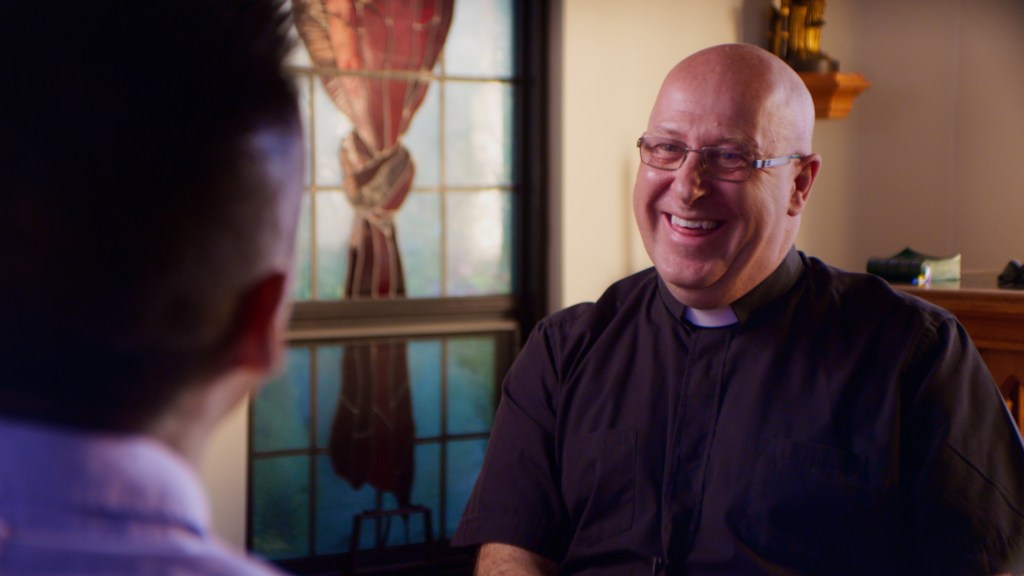
Alex Liu is a science and health reporter, he’s 36 years old and grew up during the 90s in an average Asian-American family, receiving a good American education. But, having suffered with repressed sexual feelings since childhood, he wants to free himself from the inherent shame of the politics and religion impeding him, to get further in touch with his queer sexuality.
A Sexplanation screened at 32 film festivals on 4 continents, 8 countries, and 18 states, winning 9 festival awards.
Liu’s major hang up seems to be the lack of information and education he received as a child, that never satisfied his rampaging hormones. He sets out on a fact finding mission beginning with his parents. Unsurprisingly, all this conversation reveals is an even larger generational gap, with his parents receiving less information than him and his grandmother even less so. In contrast his friends are all confident speakers on the subject and, as presumably fellow sexual health workers, why wouldn’t they be? So if Alex wants more answers he’s going to have to look further afield.
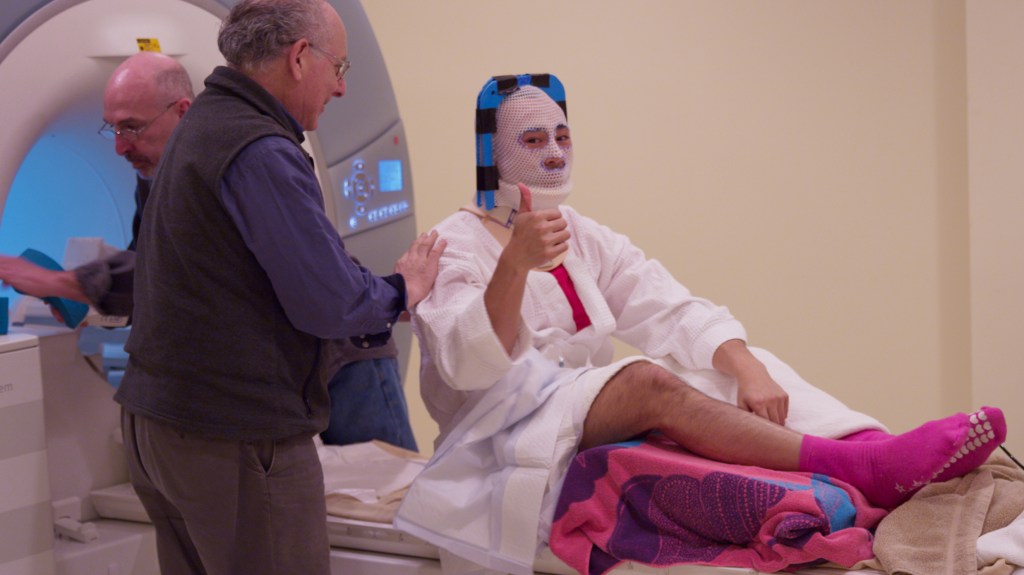
Written and directed by Alex Liu, who as a sexual health educator has his own award-winning YouTube channel on sex and drug education, and as a molecular science graduate, he combines thorough research with an ordinary gay guy looking for answers approach to the subject. He finds lots of credible participants that try to give a rounded view on sex and sexuality and, whilst it’s an opportunity for Alex to find answers, it also seems an opportunity for him to push the boundaries on what he probably knows he should or shouldn’t say in public.
Driven by his oppressed emotional guilt, that almost made him commit suicide, caused mostly by his growing pains around his sexuality and coping with a society coming at him from all angles, he seeks out the sex therapists, scientists, porn sites and priests who all try to put Alex’s deviant mind at rest (although there is a long secondary glance at his fantasy references).
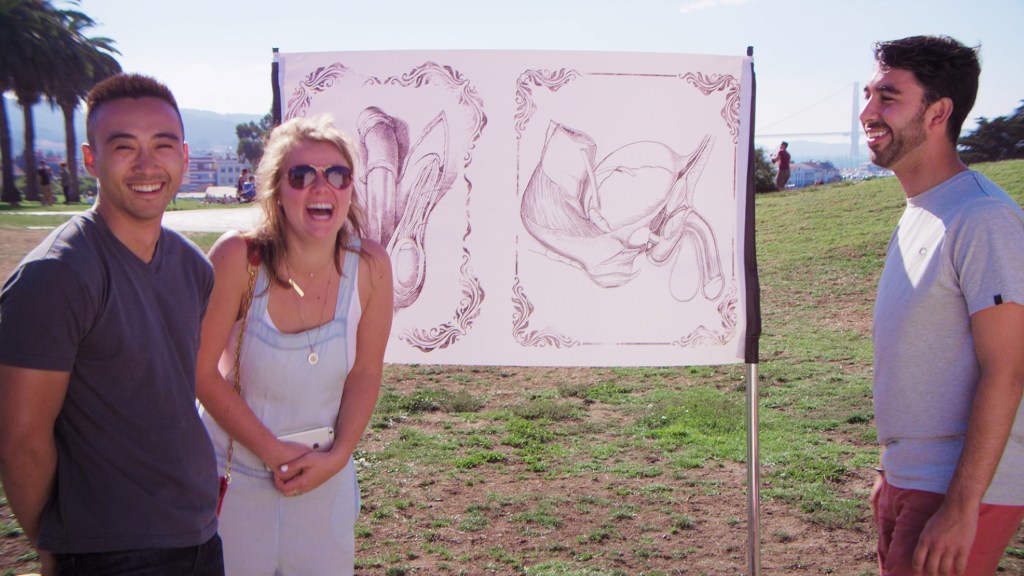
Contributors include Dr. William Yarber, a leading author on the subject of sexuality and a member of the famous Kinsey Institute, named after Alfred Kinsey, who did the 1st extensive research on sex in America during the 40s and 50s. The political viewpoint comes from a respectable state senator chatting about his happy marriage choice, who Alex genuinely says he could recommend some porn to, that would make the relationship even happier (this was prior to the UK’s recent Houses of Parliament tractor porn scandal!).
Overall, it makes for a fun educational ride, albeit one with a strong gay bias, which would unfortunately put off most heterosexual audiences. But mixed up with the adult LGBTQ tendencies, delivered with Alex’s high energy, sexually liberated attitude, there are a broad range of important educational sex topics covered – ones that will still remain taboo for most and a conversation best avoided.
A Sexplanation is a festival award winning documentary available on Digital Download in the UK from 6th June on iTunes, Apple TV, Google Play, YouTube and Amazon.
Film: A Sexplanation
Director: Alex Liu
Genre: Documentary, Sex Education
Stars: Alex Liu
Run time: 1hr 21min
Rated: TBC
Rating: 3/5
Film reviews, interviews & language worksheets for film and language lovers

























 The Language of Film