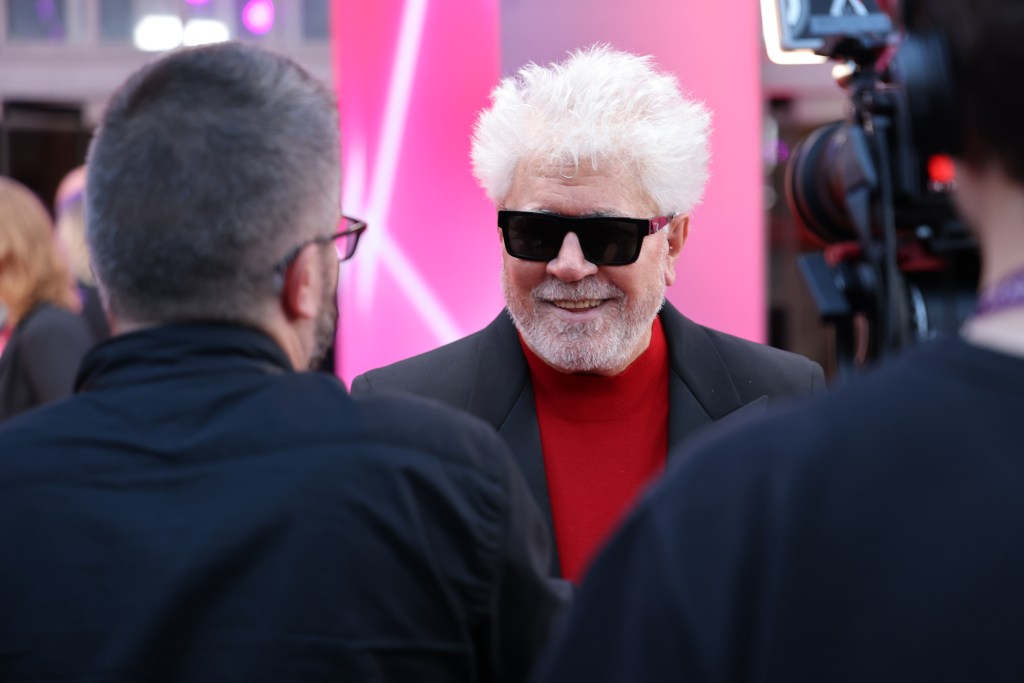
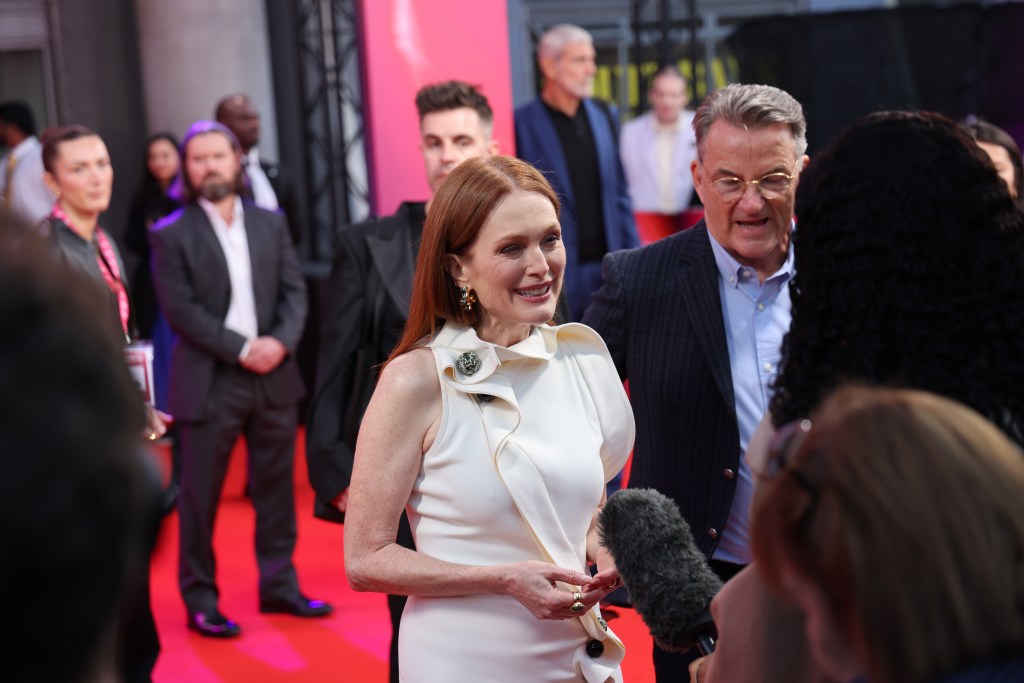
The Room Next Door is Pedro Almodóvar’s Venice Film Festival winning direction starring Tilda Swinton and Julianne Moore. Adapted from the book What Are You Going Through it’s Pedro Almodóvar’s first film written in English. Now showing in UK cinemas.
BFI London Film Festival / Photographer: JG
BFI London Film Festival / Photographer: JGBFI London Film Festival / Photographer: JG
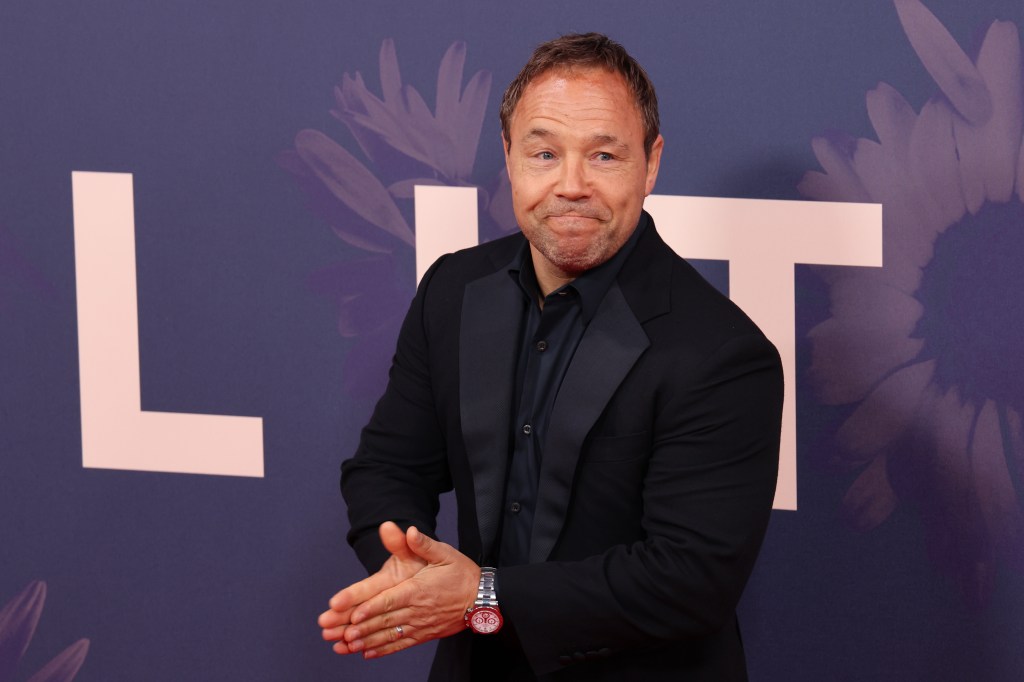
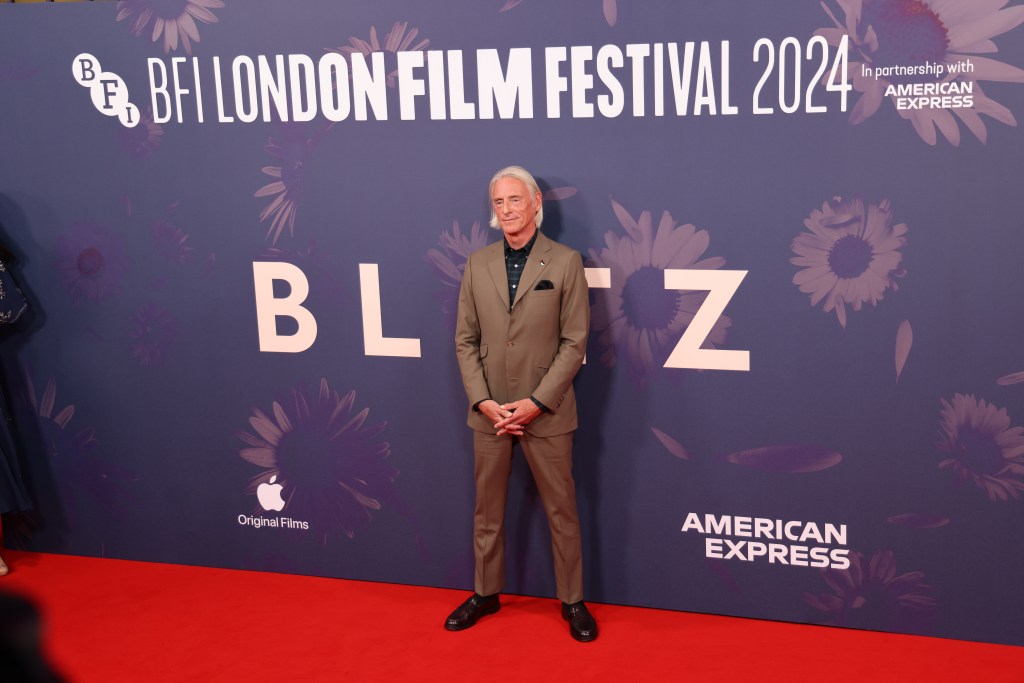
The opening Gala night of the BFI London Film Festival got off to an epic start with Steve McQueen’s Blitz, the story of the World War II bombings of London told through the eyes of a young boy. The film features an eclectic ensemble of stars including Saoirse Ronan, Stephen Graham, Kathy Burke, Harris Dickinson, Benjamin Clémentine, Paul Weller and a fledgling starring debut from Elliott Heffernan. In UK cinemas from 1 November and on Apple TV+ from 22 November 2024.
BFI London Film Festival / Photographer: JG
BFI London Film Festival / Photographer: JGBFI London Film Festival / Photographer: JGBFI London Film Festival / Photographer: JG
Part of the spring season programme at the BFI O Dreamland! Lindsay Anderson’s Dark British Cinema is dedicated to the unflinching director and influential film critic whose ground breaking work is told through his shorts, documentaries, features and televised theatre that continues to reverberate through British film today.
Interview with the BFI Curators James Bell and William Fowler
Speaking with the programme’s curators James Bell and William Fowler they gave their thoughts on the significance of a British director, who has possibly had more of an influence on British film than people give credit, in a career spanning 45 years from 1948 to 1993.
James Bell: “I’m the senior curator of fiction at the BFI, which means looking after the archives collection of fiction titles, primarily British, but the archive is truly international.
Before I joined the curatorial team here at the BFI I worked for years at Sight and Sound, I was working as an editor there involved in publishing and criticism, and of course Lindsay Anderson wrote for Sight and Sound famously. Some very famous articles. Most famous ‘Stand Up Stand Up’ where he took British cinema and British criticism to task for being parochial, lazy and treating film as mere mass entertainment not art and other things.
I’ve got that background as well, that’s why I find Lindsay Anderson a fascinating figure because he’s a filmmaker, but he’s a filmmaker who emerged through criticism and that critical engagement with film culture and he was always nothing if not opinionated. As well, what makes him fascinating there’s all the film work running alongside that. There is a commentary that he offers us from the writing he did for different magazines.
He started writing ‘Sequence’ which he co-founded with Gavin Lambert and Peter Ericsson when he was in Oxford in the late 40s. This was a really pioneering film magazine, that almost for the first time in Britain took film seriously and inspired Sight and Sound to change and become more engaged in that culture.
William Fowler: “My professional specialism is on artists and experimental films and trying to understand what that means in the context of the BFI national archive. My personal interests, which I’ve been able to incorporate into that is around independent film, alternative film culture, and counter culture; and how they relate to cinema. Myself and Vic Pratt set up and programmed the Flipside strand which was first at BFI Southbank and I feel that relates to something of what Lindsay Anderson has done.
What interests me is that he is an alternative independent filmmaker. There are these thorny, tricky subjects and tonal approaches to think about when you look at his work, yet at the same time he was a successful filmmaker and a well-known filmmaker if you know about historic cinema. He also worked with major American studios. So he’s quite an interesting figure in British cinema.”
Why a programme on Lindsay Anderson now?
WF: “Most crudely it was his centenary last year of when he was born.
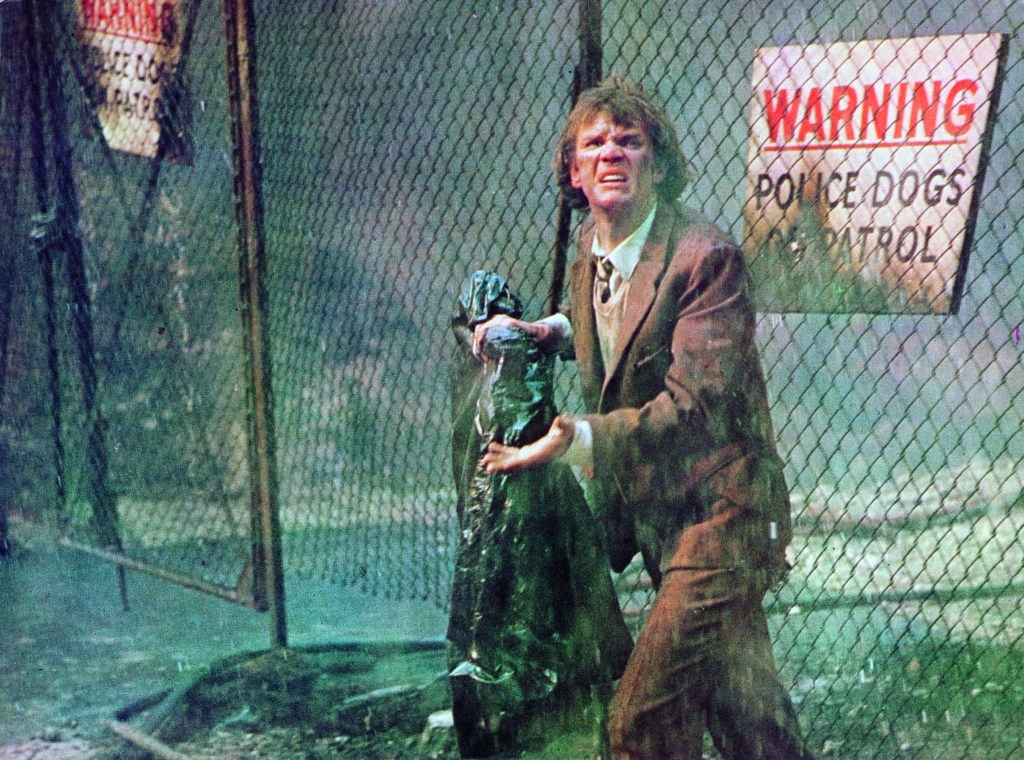
O Lucky Man! – BFI National Archive
His films are very varied, with theatre, within the different themes and strands they explore. There is this sense of looking at the state of the nation.He’s very interested in, not so much in a Ken Loach overtly left wing political perspective, he is interested in British politics and social politics. What life is like on the ground and how that relates to larger forces that govern our lives, particularly within the British context.
There is something interesting about his political positioning, he’s neither really clearly right or left. Having that slightly left leaning but being ambiguous politically and this preoccupation with the state of the nation and this kind of bleakness of his films feels like aspects of where we’ve gone in this country in the last few years.”
JB:“He does feel very timely, in an age when there is so much polarisation. You’re this, you’re that; you’re right, you’re left; you’re these things. Lindsay Anderson was absolutely an iconoclast. As soon as he felt pegged, politically, he would resist that.
I think that goes back to that he’s Scottish. His dad was wholly Scottish, his mother was half Scottish, South African Scottish. But he was born in India and then his parents separated and he moved back to England. He had this sense of being an outsider and in a sense that always stays. He went to Cheltenham College, a big private school known for a gateway or pathway into the army and then he went to Oxford University so he had this very elite education and this very traditional upper-middle, lower-upper class background but he chaffed at any of those pegs always.
He would talk about his time in the war, the clash of the class strata that he observed in the different levels of the army and how absurd the British class system was and how Britain suffered from having all of these traditions, these codes of conduct.
So that spirit, famously when he was at Cheltenham, he wrote: ‘I am a rebel’ on the blackboard and he proposed a motion that the British public school system is not fit for purpose. He resisted all along whilst also being a member of that. He’s a fascinating, contradictory questioning figure and that all comes through in the films.”
WF: “In a similar vein, after he died his friend at college, Gavin Lambert, who subsequently fed him to Sight and Sound and knew lots of filmmakers, who kind of grew up with him, he had access to his diaries. He knew him at school and he knew that Anderson was gay but Anderson had never disclosed this publicly and so this book came out after he died, kind of revealing it, probably many people implicitly knew or it was just unsaid. I’m sure that contributed in some sense to him as an outsider or questioning how things fitted together. To what extent is there a queer lens going through his work is a question that hasn’t really been pondered about a huge amount.”
JB: “If you’re new to his name, he didn’t make that many films, he certainly didn’t make that many features. But in his lifetime he was a major cultural figure in Britain. Each film was an event. He was known for directing at the Royal Court, his theatre productions were hugely acclaimed and as a critic he was known as a voice, a cultural voice and he was so opinionated, so clear with those opinions that people were aware of him. He was a big cultural figure and we shouldn’t forget that. He was an outsider but absolutely central and known.”
Britannia Hospital – BFI National Archive
WF: “Someone said, relative to his output he’s had the most books written about him or by him, more than any other filmmaker, which says something about his standing, his opinions and this desire to understand him.”
What was Lindsay Anderson’s impact on British cinema and should he be more widely known?
JB: “He famously was one of four people who launched the ‘Free Cinema’ (with Karel Reisz, Tony Richardson and Lorenza Mazzetti).
He wrote a manifesto in the mid 50s called ‘Free Cinema’, this was a series of screenings at the NFT, now the BFI Southbank, proposing a different cinema. Through ‘Sequence’, the magazine talked about before, that was highly critical of British cinema, which he and the other writers there attacked as middle brow, suburban was the pejorative they used to throw at things, and just lacking ambition; he would say what we need is a more truly independent cinema.
Through ‘Free Cinema’, the manifesto argued that no film could be too personal and the whole idea was to create personal filmmaking that was aimed for the poetic rather than just the parochial. It wasn’t about making films about the right subjects, making films as mere entertainment, it was expressing something poetic, whatever you were making.
So through the 50s he made documentaries, very inspired by the 1930s and 40s British documentarian Humphrey Jennings, he alone among that era of documentary filmmakers he saw as having that poetic, artistic sensibility. But he saw this as a whole separate seam to the mainstream of the British industry.
In the mid 80s, I think 1985 was the year of British cinema, Alan Parker made a documentary arguing that the British film industry needs to be more commercial, needs to ape the Hollywood model a bit more. Lindsay Anderson filmed a reply basically saying, no, there’s this whole other side to what film can be and what British cinema should be and that’s personal and poetic.
So if he hasn’t had that acclaim it’s partly because he stood in opposition, in conflict with what a central idea of what British cinema often has been.”
WF: “In many ways, he only made three films which had true visibility, ‘If…’, ‘O Lucky Man!’, ‘Britannia Hospital’ …and ‘This Sporting Life’. Four films. Almost a film for each decade. His screen time presence is quite small. There is more work than that but that’s the stuff that got wide release and had financial support.
In Celebration – BFI National Archive
There’s definitely plenty to discover. We are showing ‘In Celebration’, which is a filmed theatre play that he shot, that was facilitated through American television, which had Brian Cox, Alan Bates and James Bolam in it.” Brian Cox of ‘Succession.’
JB: “Brian Cox did Radio 4s Great Lives, where they nominate someone they consider has had a great life and Brian Cox chose Lindsay Anderson because he had an absolutely profound effect on his life as a young actor working with him on ‘In Celebration’. He said he could be difficult, he was very sharp but it was because he was the most principled man he ever met and he lived by those principles.
He was famously acerbic and difficult. He had this prickly persona, which comes through in his criticism and it made him often unlikeable but everyone that worked with him said it was always about the work. Actually he was an extremely compassionate, kind person but he had absolutely unshakeable convictions and principles.”
How did the industrial documentaries come about?
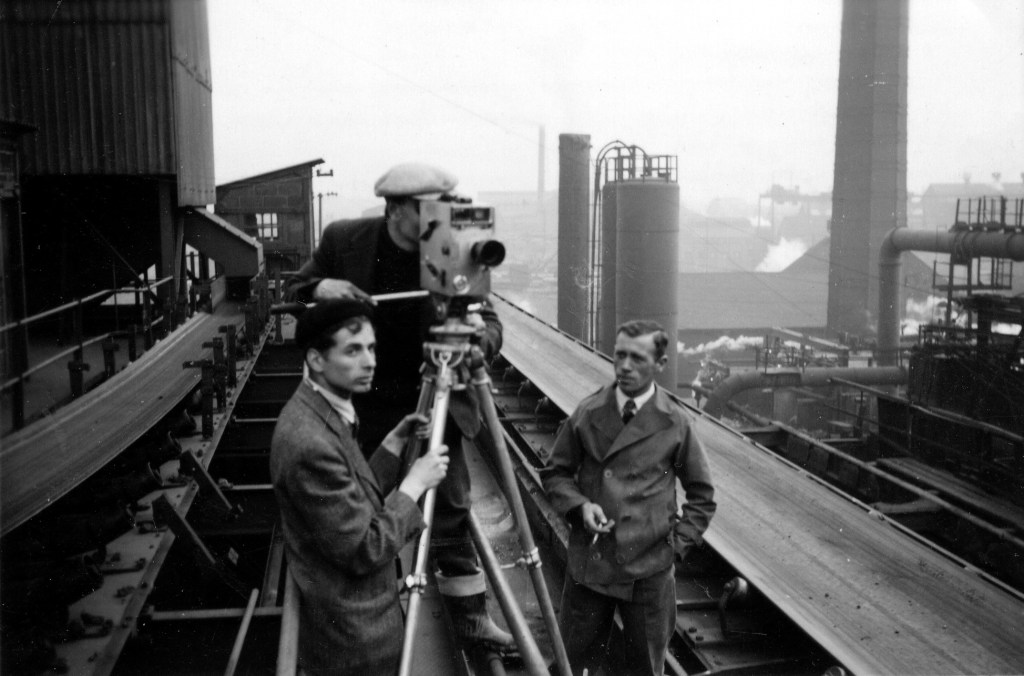
JB: “He gets into filmmaking by being commissioned to make films for industrial companies. ‘Meet the Pioneers’, ‘Idlers that Work’ he makes for the Sutcliffe Company, but even then, we talked about poetry, when you watch there’s a lovely poetic quality to it. It’s not just telling you the information, it’s finding some kind of poetry in the rhythm of the machines. Then in ‘O Dreamland’ it’s very very dark and disturbing but it’s quite poetic. There’s more going on than what you see on screen. It’s not just here’s a slice of social realism, there’s something disquieting about it, it’s hitting at some other quality and that’s true all the way through.”
BFI National Archive
WF: “What’s interesting with those industrial films, those were the first films he made and he hadn’t made home movies or played around with ideas or learning how to use a camera beforehand, he was literally asked to make those films off the back of ‘Sequence’. He really learned from making and looking at film. So, not going to film school, not trying stuff out, right on actually doing it, there’s that sense of presence in the film that reflects that, which is quite interesting.”
JB: “It was through working on ‘Sequence’ which was self-run, self-published with Gavin Lambert, who would go on to edit Sight and Sound and write with Nicholas Ray, who directed ‘Rebel Without A Cause’. Lindsay Anderson and this guy called Peter Ericsson published out of their flat in North London after coming down from Oxford. This Lady called Lois Sutcliffe, who was married to someone running the Sutcliffe company, she had read ‘Sequence’ and been so impressed by what she read and took a punt. She met him and was even more convinced. This is someone who had these absolutely clear principles, this clear sense of direction and she thought this person is interesting, he will bring a perspective to the films we want to make.
That was the break-in, it wasn’t that these commercial opportunities opened up, it was on the strength of his convictions and his work in criticism.
What was his connection with the theatre?
How he got into the theatre, this was the time of the ‘Angry Young Man’, in the late 1950s. He would say it was almost impossible at the time to break into filmmaking, unless you went through the studio route. But in the 50s these opportunities opened up through cinema and then the Royal Court. The great success of the play ‘Look Back in Anger’ opened up all these opportunities for new voices that would tell working class stories or stories that hadn’t necessarily been told on film before and Anderson was part of that young generation that was questioning the old.
This Sporting Life – BFI National Archive
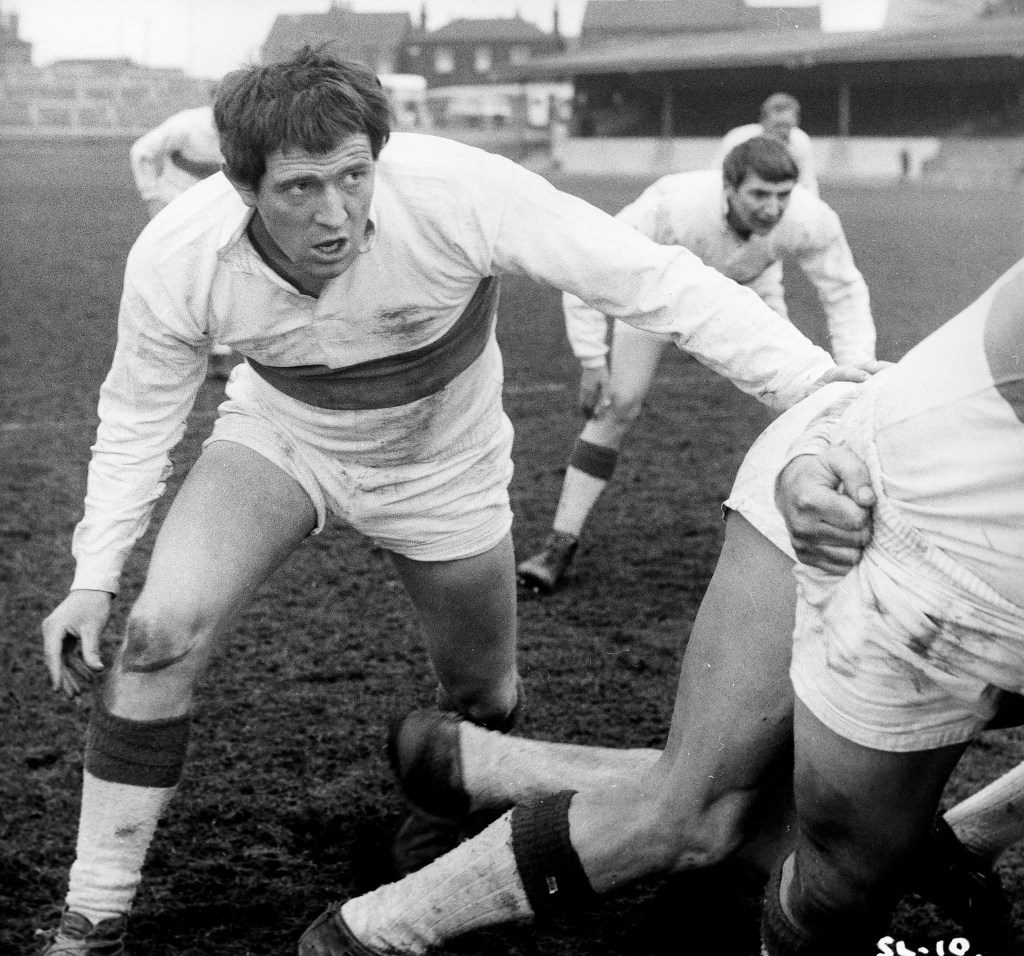
He made ‘This Sporting Life’, which is his first feature, but that is usually considered the last film of the British New Wave in the early ‘60s and it has a lot in common with those films, like ‘Saturday Night and Sunday Morning’ and ‘A Taste of Honey’, in that it is set in the north and it is about working class characters but it has some different qualities to it, it’s much more psychological, it’s much more poetic.”
WF: “His films are much more brutal to me. The very beginning, there is this rugby match, there are these huge guys that are slamming into each other, it’s almost extreme in a way.”
What was Lindsay Anderson’s influence on Malcolm McDowell?
JB: “Malcolm McDowell credits Lindsay Anderson…well… he discovered him for ‘If…’ and made him a star. He did this lecture at the end of a film festival on Lindsay Anderson, which was then filmed and released ‘Never Apologise’ and he talks about what an influence Lindsay Anderson was on his life.”
Never Apologise
WF: “’If…’ was immediately positively critically acclaimed in all the different papers but it was also very financially successful. I don’t want to spoil it for you but it’s almost like revolution at public school. Mark E. Smith from the Fall, the band, was a long term Lindsay Anderson fan and even though he had a working class background, Lindsay Anderson was effectively upper class, this experience of this brutish school environment, Mark E. Smith could still relate to and he completely loved this film. It’s curious it’s this elitist milieu, but it appeared to have this almost universality about it that spoke to different classes, but also at the time, because it came out in 1968 when there were riots and would be revolution all around the world, so it’s incredibly timely.”
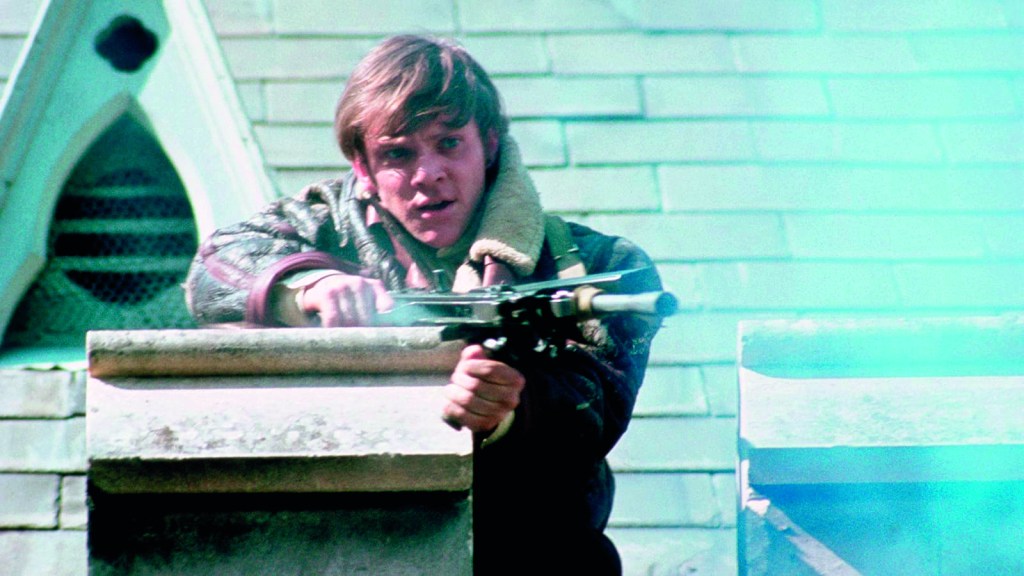
JB: “I think it was a generation defining film. It was hugely important in the way ‘Easy Rider’ was in America. It captured a certain moment, it was 1968 and it anticipated that anti-authoritarianism, youth against tradition. It had a huge impact and real influence on a lot of people.”
If… – BFI National Archive
What else can be expected from the programme?
WF: “There are lots of different things to engage with. One thing I would mention is there is an artist called Stephen Sutcliffe, not connected to the Sutcliffe factories that Lindsay Anderson made films about, but he’s a long term Lindsay Anderson fan who made a film about Anderson’s relationship with Richard Harris. He’s made a compilation of clips of Lindsay Anderson films sort of related to things thematically from television at the time, cameos in various films, he’s in Chariots of Fire for example, and it includes some adverts Lindsay Anderson made. It’s this seamless block of Lindsay Anderson stuff that draws out quite a lot of what he’s talking about. He has a real talent for this collage montage kind of thing, I think it is a fun and special thing to engage with.”
JB: “We try to organise stuff so that you don’t chronologically trudge through the films. We tried to make some sense of themes or collaborations. Key collaborations in Lindsay Anderson’s life. There’s one section which is the trilogy, the ‘Mick Travis’ trilogy. The Malcolm McDowell films effectively, which are these kind of satirical, darkly comic state of Britain addresses and then there is this other strand. He worked with the playwright David Storey on adapting and staging many of his plays at the Royal Court and other theatres. David Storey wrote ‘This Sporting Life’. He wrote the novel and adapted it for Anderson’s first feature as well as the plays ‘Home’ and ‘In Celebration’. They are effectively filmed plays. ‘In Celebration’ is slightly more cinematic.
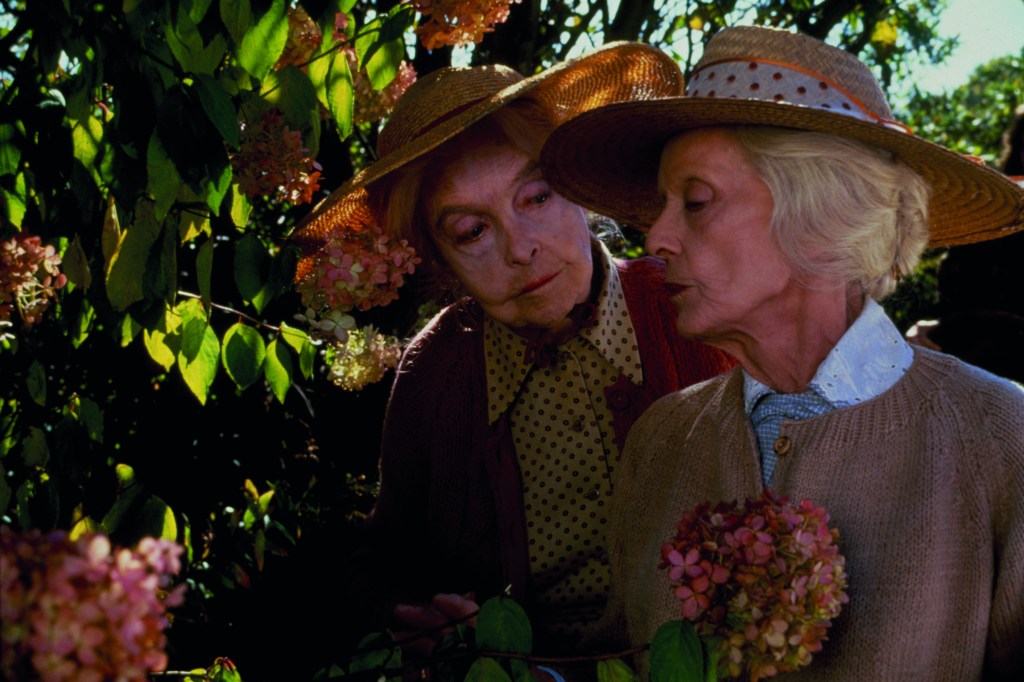
The Whales of August – BFI National Archive
These are two crucial collaborations. There’s the David Storey ones and the Mick Travis ones written by David Sherwin. Then we’re looking at the early shorts like the Free Cinema films, the industrial films separate to that and then towards the end of his life after ‘Britannia Hospital’, Anderson went to America and made a film called ‘The Whales of August’ with Betty Davis and Lillian Gish. Real Hollywood veterans.”
Why should people go and see the Lindsay Anderson programme?
WF: “I think it makes you look at British cinema in a different way. It’s not necessarily things you might see, there’s a more acerbic bite and there is the sense of the unpredictable around them but something very poetic and combative going on. There are few other figures that work in that way and at that level, so he’s iconic and singular in that sense.”
JB: “It’s interesting he worked quite a lot and was fascinated by the filmmakers in Eastern Europe in the 1960s working in Czechoslovakia and Poland, who were obviously working under real censorship and restrictions. People like Miloš Forman and Ivan Passer and others who made really individual personal films but they made them under real restrictions. They cited Anderson as a real example to them because of his absolute principle and his individuality and refusal to compromise.
So I think there is a valuable lesson to be taken from his example and the example you find in his films for us today, for filmmakers today to stay true to your convictions, to question constantly, to interrogate your own work and to interrogate those of others and maintain a critical relationship with culture and with everything. So I think that’s why now and why the programme.”
O Dreamland! Lindsay Anderson’s Dark British Cinema is on at BFI Southbank from 1-31 May.
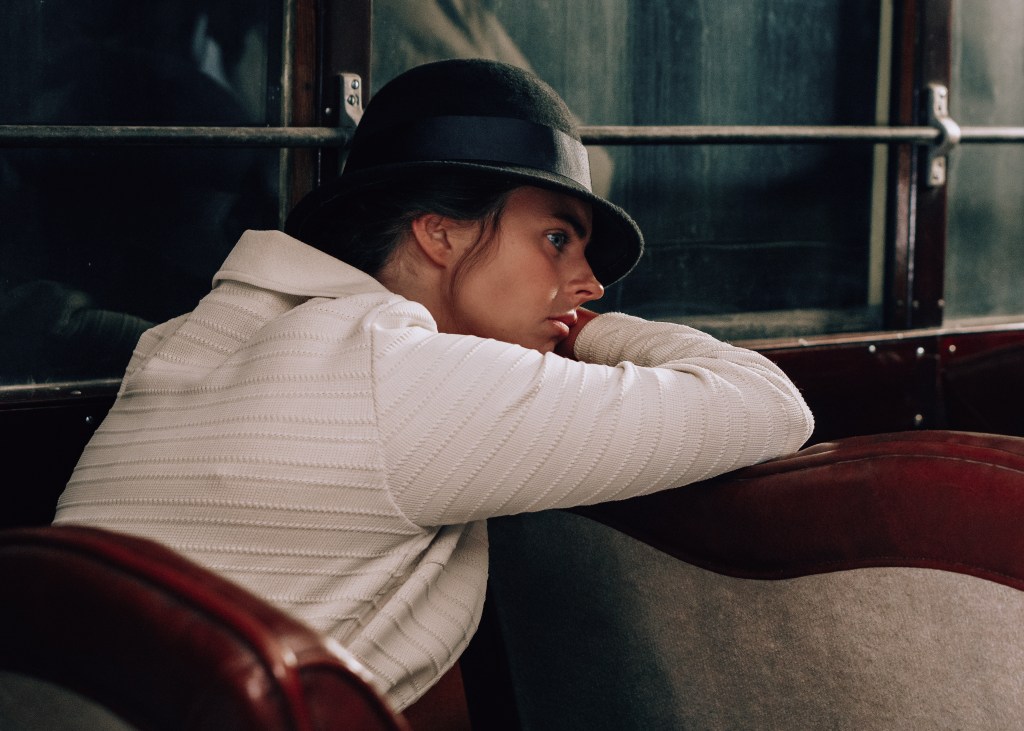
A truly epic independent film on a scale never seen before, Vindication Swim is the biopic about the first British woman, Mercedes Gleitze, to swim the English Channel in 1927. A forgotten story of one of women’s sports most incredible endurance achievements, that became almost as challenging out of the water as in it. In selected UK cinemas from 8th March on International Women’s Day.
The story begins with memories from Mercedes Gleitze (Kirsten Callaghan) as a young girl on a Brighton beach gazing out to sea, with her father, a German immigrant by her side. The nostalgic shots fast forward to October 1927, where, as a grown woman, she faces the glare of the paparazzi’s flashing bulbs and accusations of being a liar and a cheat. What could she have done to be so badly taunted?
One year earlier, Mercedes is following the news of US swimmer Gertrude Ederle being named the first woman to swim the English Channel. Disappointed to be beaten to the post, she watches on with a quiet determination that one day she will match the achievement having come so close on seven previous attempts of her own.
Focused on her goal, she looks for funding from the British Swimming Association, but discovers she has been overlooked by the Association in favour of her arch swimming rival, the svelte Edith Gade (Victoria Summer).
Feeling somewhat dejected by her rebuffing as an unsuitable candidate based on her single status and national identity, she’s nonetheless undeterred in the pursuit of her dream, and, whilst working as a typist and stenographer in London, she looks to fund the swim herself.
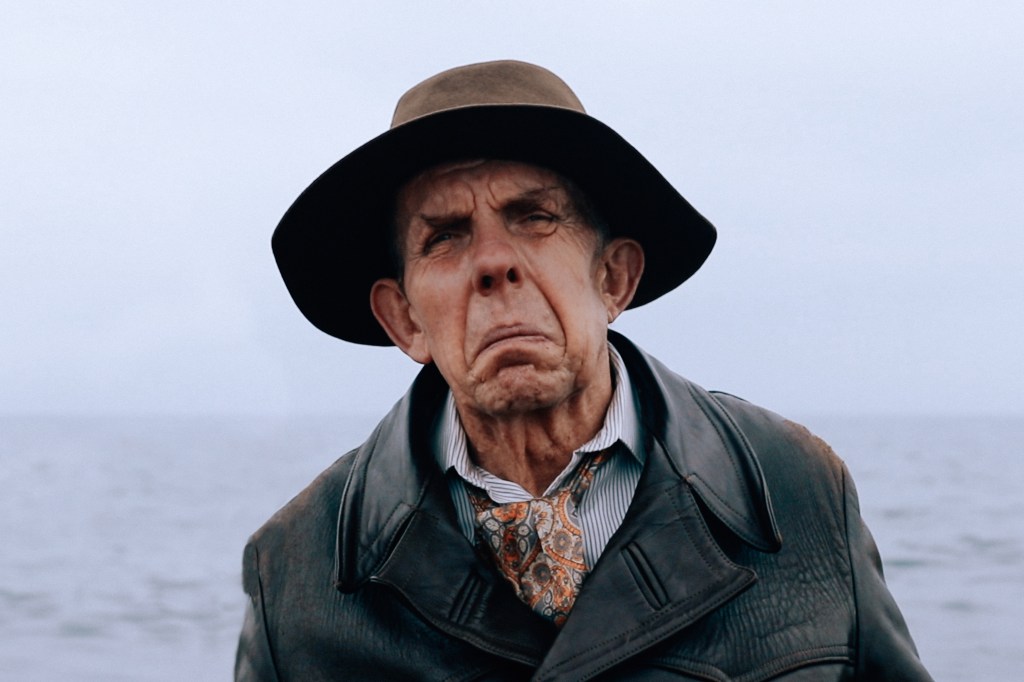
She’s pointed in the direction of a swimming coach, Harold Best (John Locke), a Channel swimmer himself, but finds him a washed up old drunk, drinking his sorrows away in a bar. Grumpily he tells her to ‘sling her hook’ because he doesn’t train anymore… ‘especially not girls’, to which Mercedes gutsily replies he couldn’t train a fish to swim in his present condition.
Thankfully, a more sober Harold turns up at the swimming baths to give her the once over, and whilst not totally convinced, agrees to take her on. So ensues the Mercedes Gleitze Rocky montage of her training to swim the Channel, complete with 1920s iced baths and swimming along the Thames to the cheers of the dockers.
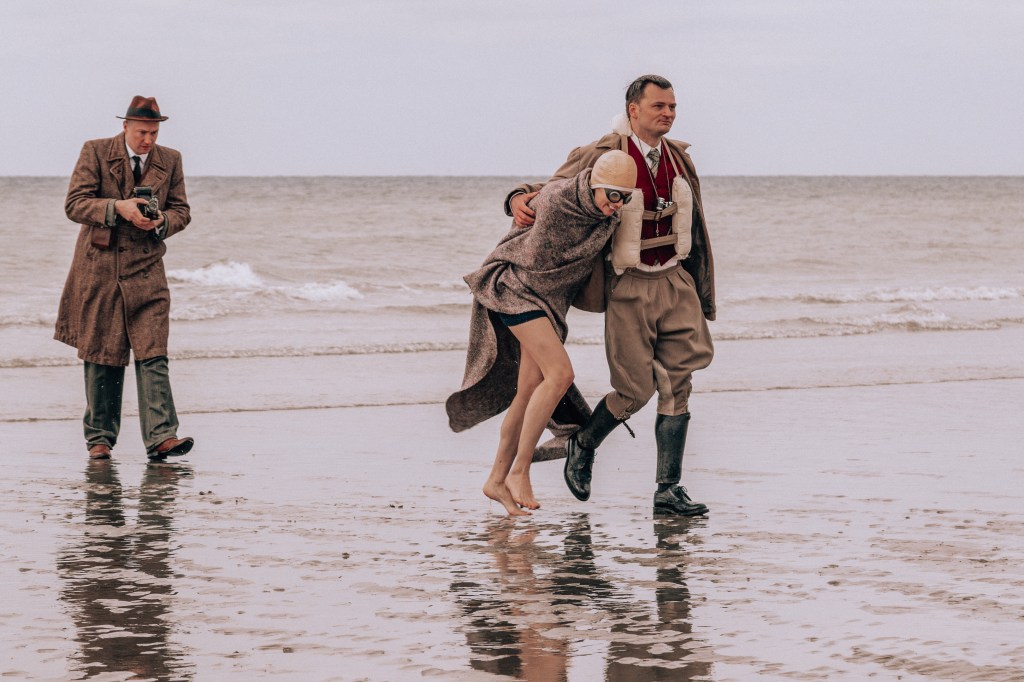
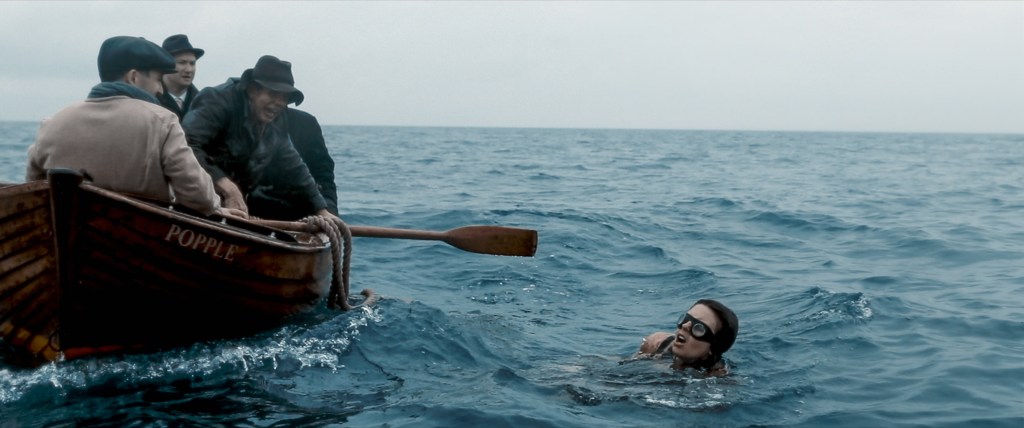
She takes her first steps into the water in the very early hours of the morning in her eighth Channel swim attempt, heading out to sea to endure the freezing cold with only a rowing boat for support containing her trainer, oarsman, reporter and doctor.
This latest attempt to complete the crossing turns out to be just the beginning of Mercedes’ trials. Not long after, Edith Gade, her swimming nemesis, claims to have swam the Channel in a faster time, but then suddenly drops the bombshell that it was all a hoax – a mischievous act on her behalf to show that anyone could claim they’d swam the channel.
This causes pandemonium in the press, throwing Mercedes’ achievement into significant doubt as the first British woman to swim the channel. Unable to convince the courts of her achievement, she decides the only way to prove it is through a vindication swim.
Writer and director, 23-year-old Elliott Hasler, shows a knack and flare for telling historical drama that belies his years, tackling here themes of female prejudice and misogyny in the 1920s in a story of controversy and uplifting feminist empowerment.
The script skips about with a likeable wit amongst its sentiment that makes an endearing concoction, brought to life by the two leads’ exchanges, like when Harold dramatically tells Mercedes about her forthcoming attempt: “…cold, extreme fatigue…it’s bested the strongest of men,” to which Mercedes dryly replies: “Well, thank God I’m a woman.”
There’s a nice cinephile’s nod to the most famous sea faring film of all, as Harold sings drunkenly into his whiskey glass, “Farewell and Adieu You Fair Spanish Ladies”, made famous in Steven Spielberg’s Jaws.
The acting has a hamminess that immerses the audience into the 1920s era, most notably from the actresses, who look to replicate the RP pronunciation of the time, something Mercedes was known to treasure as an anglophile nearly as much as she did her relationship with the sea.
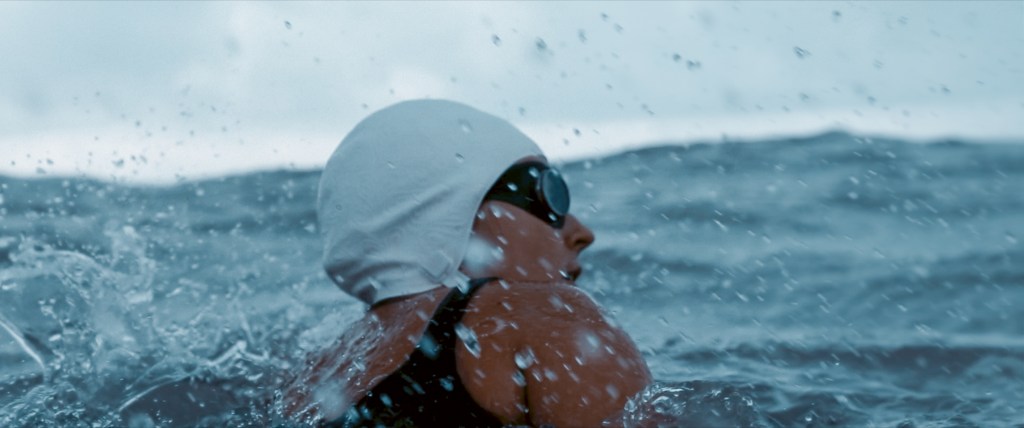
Leading actress debutant Kirsten Callaghan, not only bears a striking resemblance to Mercedes, evidenced in the archive footage obtained from the 1920s, but as a local Brighton girl, she goes the extra mile by swimming all the sea shots herself in a genuine 100 year old swim suit complete with motorcycle goggles and hat.
She’s supported amiably by highly regarded character actor John Locke playing Harold Best, who revels in the opportunity of a leading role having appeared in such major studio movies as The Darkest Hour and more recently Poor Things, bringing a gravitas to the story’s ebbs and flows.
The visuals are stunning, capturing incredible shots of the English coastline, that make a perfect backdrop for the cinematography. The attention to detail in the costumes, vehicles and props make this small independent film look as polished as a high end period drama and completing the film’s ambitiousness is a masterful score by award winning composer Daniel Clive McCallum, which rings out with all the drama of the high seas and oppressive austerity of the time.
This is the director’s second biopic feature based in his home town of Brighton, begging the question, could Elliott Hasler be the Martin Scorsese of Brighton? He’s taken another step on his own Channel swim and it will be down to cinema audiences to judge whether he’s made it.
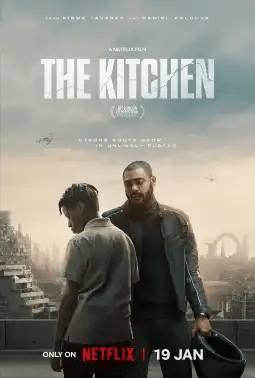
A British film by first time director Daniel Kaluuya (Get Out) alongside co-director Kibwe Tavares, The Kitchen is set in a dystopian future not too far from now. Tensions run high in a London housing project called the Kitchen due to the harsh conditions and notably from the oppressive tactics of the law enforcement. Most want to get out including Izi (Kane ‘Kano’ Robinson, Top Boy) who reluctantly takes a young kid, Benji (Jedaiah Bannerman), under his wing and tries to keep him out of trouble whilst looking out for his own future. Out now on Netflix.
Working in a funeral parlour aiming to move out of the project Izi meets a young boy Benji, whose mum has recently passed away and someone he knew from the Kitchen. Benji has nowhere to go and without a mother and with no father figure around it’s down to Izi to keep an eye out for him and keep him from straying to the cool biker gangs. Meanwhile the law enforcement agency continue a violent regime of raids on the estate aiming to shut down the community, which is holding out against its closure.
It’s a vibrant portrayal of a futuristic London done with minimalistic effort but with maximum effect. The architectural designs, with the housing project at its focal point, capture a futurescape rooted in the present but adding some subtle visual effects of holograms and drones for a Bladerunneresque style depiction of a run down estate and its surrounding shanty town.
There are strong performances from Grime music pioneer Kane ‘Kano’ Robinson (Top Boy) and a young debutant Jedaiah Bannerman who build a fatherly son bond from their Kitchen experience together. There’s also a ‘non-actor’ celebrity touch with footballer Ian Wright as DJ Lord Kitchener, who plays the good vibes on the radio for the community and who is also the social messenger giving out subterranean information over the public speaker system.
This is a grand marker laid down by actor come director Daniel Kaluuya alongside his collaborative partner here Kibwe Tavares that has a strong social message on inner city social issues, with a big heart and a vibrant back beat, it’s bound to resonate with film fans.
Scala: Sex, drugs and rock and roll cinema is a documentary film telling the story of the infamous Scala cinema renowned for its all-nighters in one of London’s once seedier parts, Kings Cross, attracting both film and non-film enthusiasts alike, including many future film illuminati. This is a vivid description of one of cinema’s fabled venues, its rise and fall, and the shenanigans in-between that left an indelible mark on UK cinema. Opening in cinemas in the UK & Ireland on 5 January 2024. BFI Player & BFI Blu-ray release on 22 January 2024.
Based on the book Scala Cinema 1978-1993 by Jane Giles a former programmer at the cinema this is an entertaining frolic through the history of a London cultural landmark, with its unmistakable white picture palace dome sticking out from the London skyline, a place so seemingly void of regulation it’s a wonder the cinema lasted as long as it did.
Told through the eyes of the folks that were there including many well known names in the film and entertainment industry such as filmmakers Peter Strickland, Beeban Kieron and Ben Wheatley who contribute amongst the revealing insights from those that worked there and the movie fans who dared venture through its doors.
The experience clearly left an indelible mark on them too with accounts that would have most people walking out before the trailers began. Comedian and journalist Adam Buxton describes the otherworldliness of the palace with the sound of the trains inside and the element of the unknown when leaving to face the late night (or early morning) streets of King Cross.
Ralph Brown who played the unmistakeable druggie Danny in cult classic With Nail & I worked at the cinema and recounts how he had his own dodgy side business there, very much in keeping with the character he would later become famous for playing. The box office staff too had their own halloucinagenic mushroom experiences that seemed to go hand in hand with the various vices in the cinema and the surrounding area.
The monthly programme was eagerly anticipated and was a piece of art work itself, designed by Mike Leedhamand Patricia McGrath, fans were keen to find out what was showing next – which was unlikely to be showing anywhere else soon. The cinema provided the kind of innovative genre busting programming only found at quirky film festivals, its daily changing double-bills and unforgettable all-nighters introduced Shock Around the Clock horror, sexploitation, LGBTQIA+ and Kung Fu specials all at low prices and often for free – especially if you knew someone who could get you in!
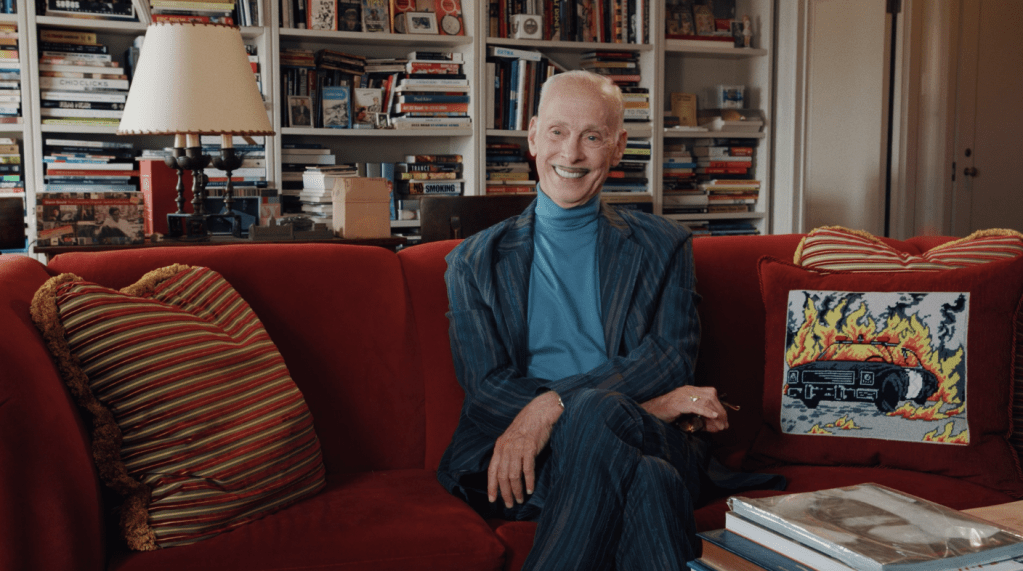
Featuring some of the most revered alternative auteurs who pushed the boundaries of decency such as John Waters’ film Pink Flamingos (1972), whose ultra-bad taste film starred drag artist Divine and Curt McDowell’s Thundercrack (1975), whose film was in such bad taste it was played until the 35mm print disintegrated.
John Water’s eventually admits he got arrested for his filmmaking, which he laughs at the comparison with the Scala’s own run in with the law. The cinema was closed down after screening the then banned film, Stanley Kubrik’s A Clock Work Orange (1987). Unable to pay the fine and its lease about to run out the cinema’s doors closed for good.
If you thought cinema was just about Marvel movies and multiplexes this documentary will give you a reassuring shot in the arm that no consumer panel featured in the making of any of these movies. With its own resident cat likely to give you a fright of its own, it was described as the kind of cinema where it could be difficult to know which way to look for the most shocking spectacle.
It’s a great tribute to its founders and the people that worked there who shared their love and knowledge of film with as wide an audience as possible welcoming a community of misfits and vagabonds, whilst managing to inspire a few well known alumni of its own – not least the film’s writer and director, who incidentally, took the rap for the Clockwork Orange lawsuit!
Scala: Sex, drugs and rock and roll cinema, an accompanying BFI Southbank season of the Scala’s greatest hits, running throughout January with selected films on BFI Player.
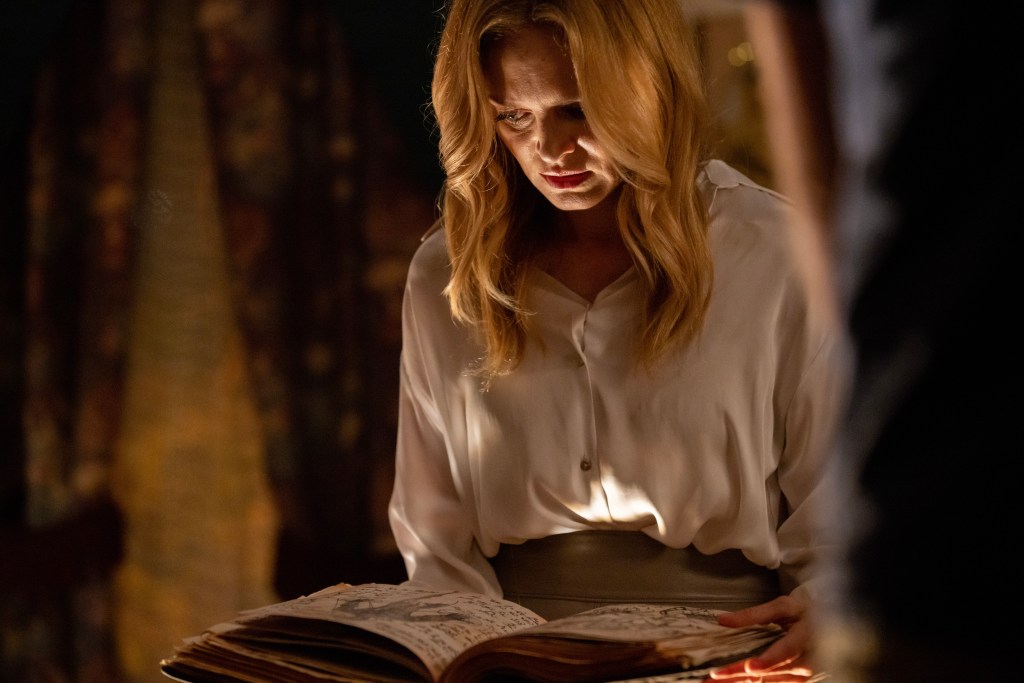
Suitable Flesh stars Heather Graham as a psychiatrist who becomes obsessed with a young patient suffering from an extreme personality disorder that leads her into a dangerous family occult. Having opened this year’s Pigeon Shrine FrightFest its release is just in time for the Halloween spook season. Now available in UK cinemas and on TVOD.
Psychiatrist Elizabeth Derby (Heather Graham) is in a padded cell in a psychiatric hospital, she’s there for murdering the person in the bodybag which has just arrived in the hospital morgue and she’s still highly disturbed by their presence there. Looking totally out of sorts, her doctor friend Dr Daniella Upton (Barbara Frampton) comes to find out what’s happened and so she begins to recount her story.
We flashback to her life before all of this, a happily married psychiatrist with her own practice before she’s visited by a young student (Judah Lewis) who says he’s read her book on Out of Body Experiences (as a Symptom of Schizophrenia) and that he’s had an out of body experience himself. With all his twitches on show he pleads with her to help him and she agrees to take him in her office where he has an episodic attack that has him convulsing on the floor. His personality is momentarily transformed but despite some pretty inappropriate behaviour Dr. Derby is taken-in by the patient and is willing to help.
Not being able to get the patient out of her head she visits his home where she curiously lets herself in to the open house. She finds the father (Bruce Davison), a somewhat cranky old gentlemen, who has an interest in another book with some strange occult like drawings and his own degree of inappropriateness. He sends her on her way rather abruptly but she’s soon back again when she receives an emergency call for help and finds the father unconscious on the floor. This time when she tries to help, the son intervenes, he’s in a state of high anxiety and starts ranting he needs to cut off his head and cut out his brain, at which point his father raises from the dead and then things start to get pretty weird.
The out of body experiences take on a David Cronenbergesque dimension with an 80s synth sound demanding some high tension and combined with a sultry sax it switches into a soft porn erotica experience capitalising on the multi faceted allure of Heather Graham, who puts in a kooky performance as she takes on the split personality roles head on.
Director Joe Lynch puts in some high gore to please the horror fans amongst the shuddering psychosexual melodrama and just before you can say how completely ridiculous it all is he drops a one liner to bridge the ludicrousness and ease the psychopathy. It’s a win win for genre fans looking to be entertained this halloween with some mind bending b-movie gore.
Film: Suitable Flesh
Director: Joe Lynch
Genre: Horror
Stars: Heather Graham, Judah Lewis, Barbara Crampton
Director Sofia Coppola brought her latest film Priscilla for the red carpet treatment at this year’s BFI London Film Festival. The biographical story of Priscilla Presley, wife of Elvis, has been adapted from the book Elvis and Me by Priscilla Presley and Sandra Harmon. Priscilla tells her story of how a young girl falls in love and how she grows up living in Graceland with the world’s biggest star.
Who better than Sofia Coppola, director of Marie Antoinette, to put the spotlight on a female protagonist living in an unparalleled world of fame and riches. Starring Cailee Spaeny and Jacob Elordi it’s bound to be a fascinating watch to make the comparisons between the lead actors’ performances with what we know about the life and times of Priscilla and Elvis.
BFI London Film Festival / Photographer: JJBFI London Film Festival / Photographer: JJ
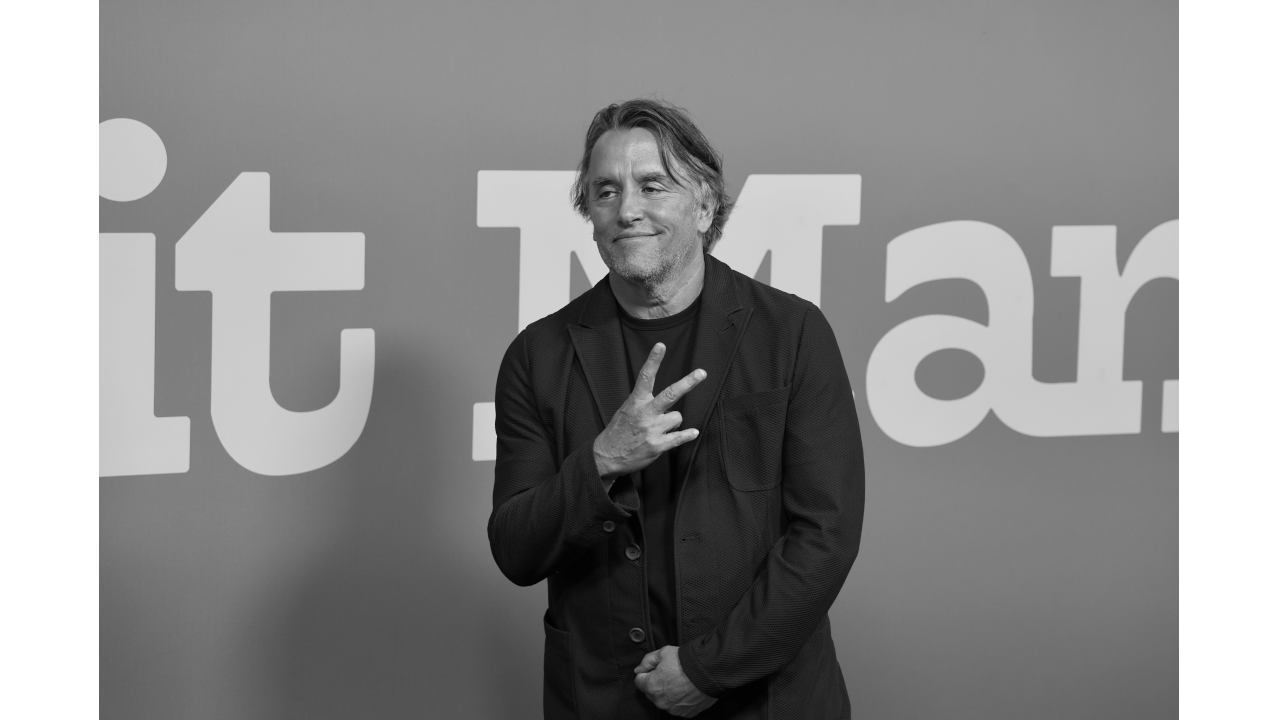
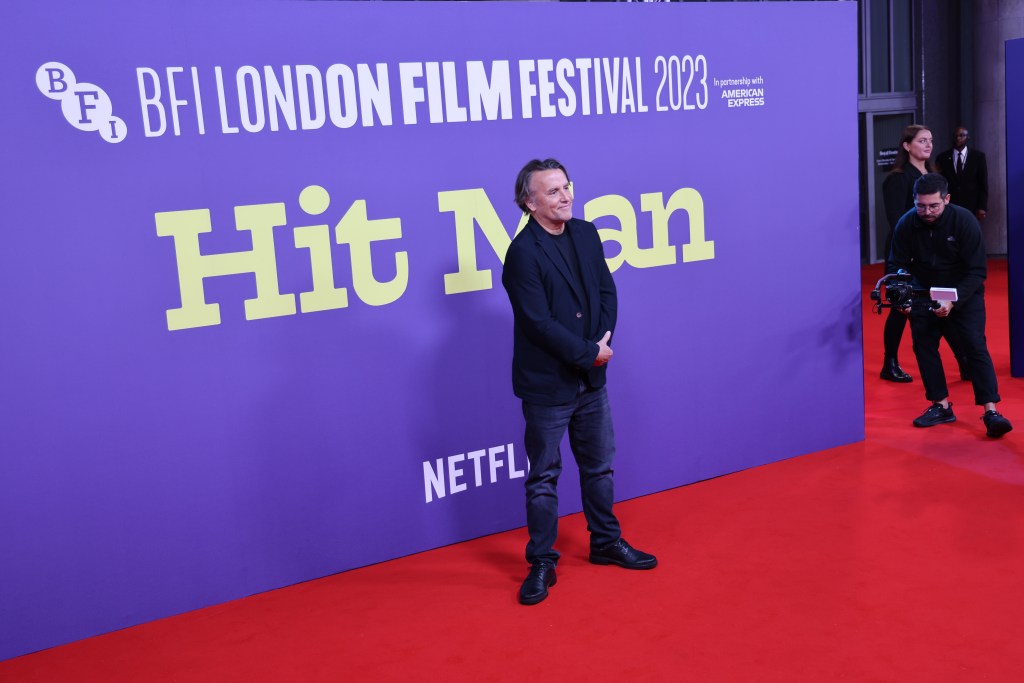
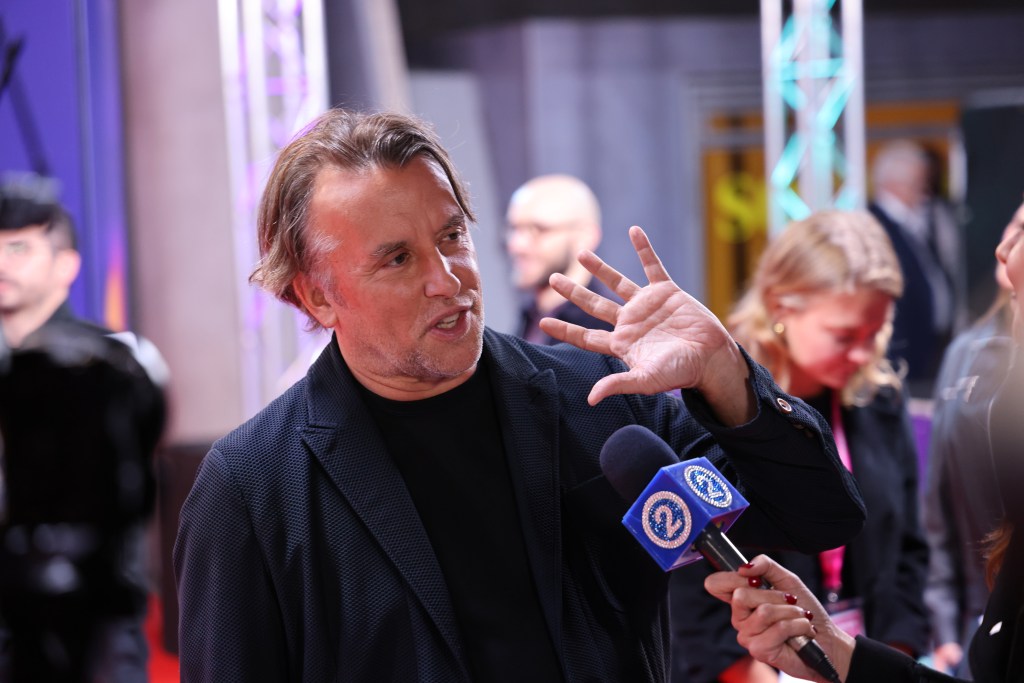
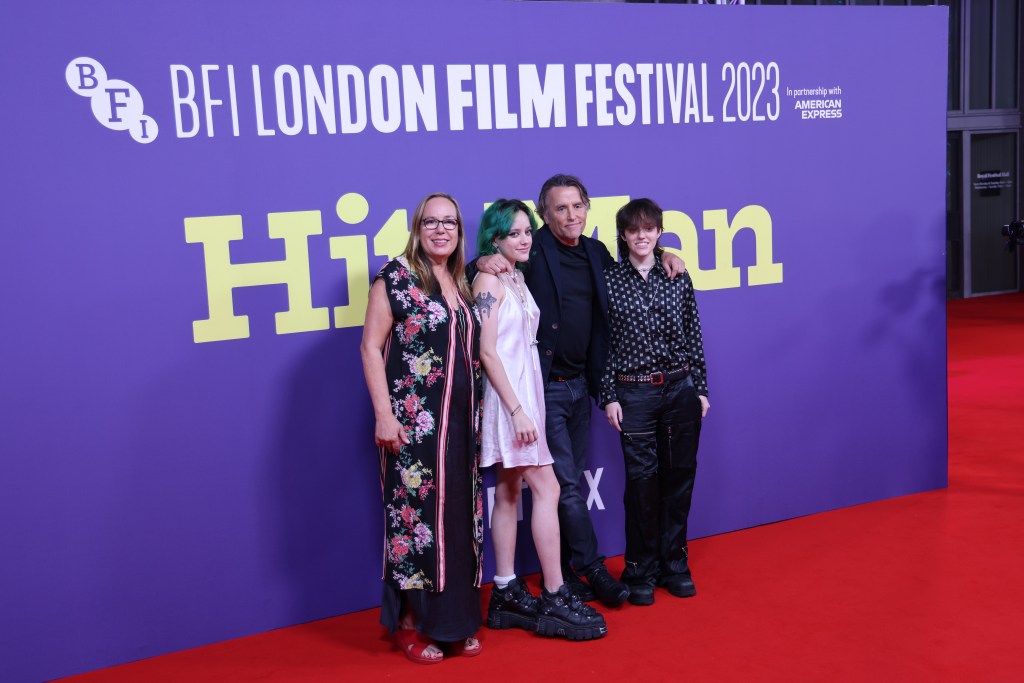
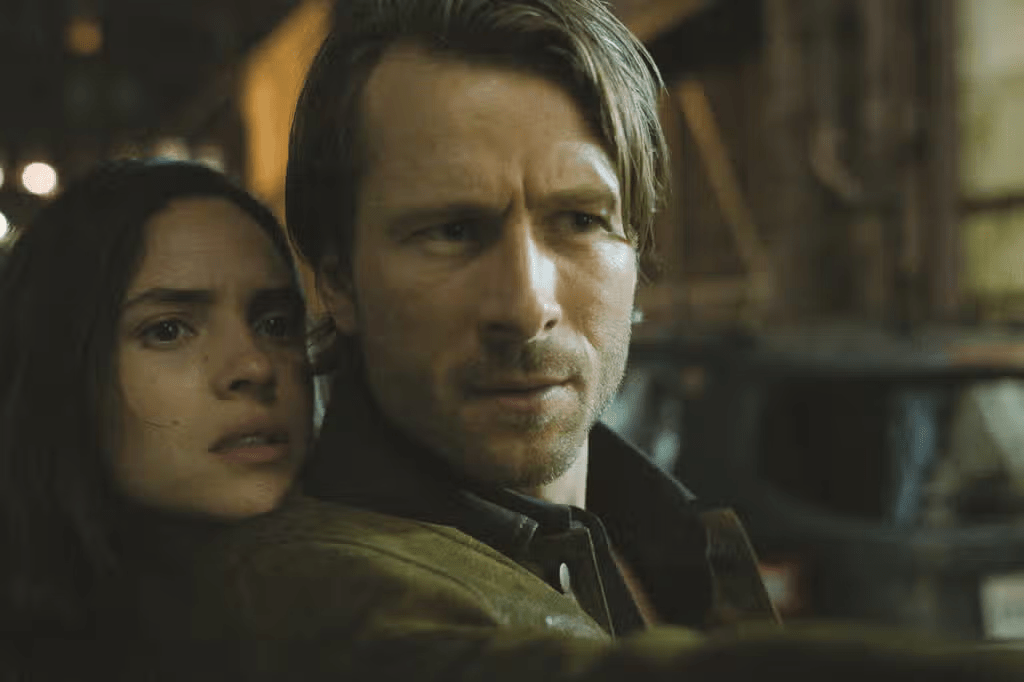
Director Richard Linklater’s latest movie Hit Man had its London Film Festival gala showing this week, a romantic comedy thriller starring co-writer Glen Powell (Top Gun: Maverick). It’s a film based on a true story about a mild mannered police liaison officer, Gary Johnson, who goes undercover as a ruthless hitman to catch a felon only to fall in love with the femme fatale (Adria Arjona).
With Richard Linklater’s catalogue of successes from Before Sunrise to the School of Rock and Boyhood this likely to be a festival hit for sure.
BFI London Film Festival / Photographer: JJBFI London Film Festival / Photographer: JJBFI London Film Festival / Photographer: JJ
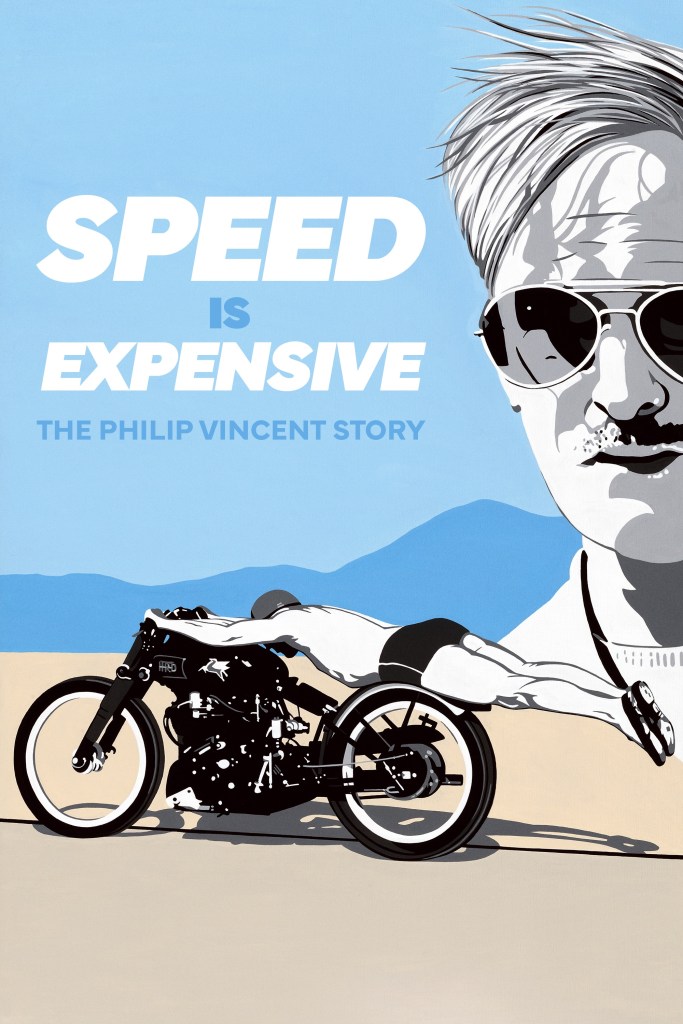
You’ve heard of a Harley Davidson, maybe even a Norton but have you heard of the Vincent? No? Well, this is the story of Philip Vincent and his motorcycle manufacturing company which made hand-made British bikes in Stevenage that would dominate the land speed records during the 40s and 50s. Speed Is Expensive will be available on Digital Download from 25th September.
This is a fascinating biography of a British motorcycling pioneer, Philip Vincent, narrated by Ewan McGregor, who brings a suitable amount of film star quality from the British motorcycle enthusiast’s perspective, piecing together the archive footage of Philip Vincent and his fledgling company along with his family’s home movies and interviews.
It’s a remarkable story of a prodigy who left an indelible mark on the world of motor racing, which could so easily have never happened. Philip was born in Argentina, the son of a colonial rancher and came to the UK to be educated. His academic prowess got him into Harrow and Cambridge, where he was basically asked to leave because he was spending too much time building and riding bikes.
After leaving Cambridge, he became the youngest owner of a motorcycle manufacturing company at the age of just 19 when he bought his racing hero’s company, Harold Raymond Davis (still the only man to win the infamous Isle of Man TT on his own hand-built bike).
Alongside another prodigal force of nature, Phil Irving, who travelled thousands of miles from Australia in an HRD sidecar to join the company, the two Phils would make a formidable partnership transforming the motorcycle industry with their inventions.
The stories and insights into a man and his legacy are made all the more perceptible because Philip Vincent was a keen camera enthusiast all the way back then. His family archive footage is combined with some well crafted filming of his bikes in action including the test drives from the warehouse and racing at the Isle of Man TT, all of which have in turn been lovingly put together by director David Lancaster.
The life of this eccentric British inventor is further imbued by the amusing stories of a bygone era from the people who were there, like when one of the test riders was caught speeding down a country lane only for the judge to throw the case out as nonsense because no motorbike could travel at 110 m.p.h..
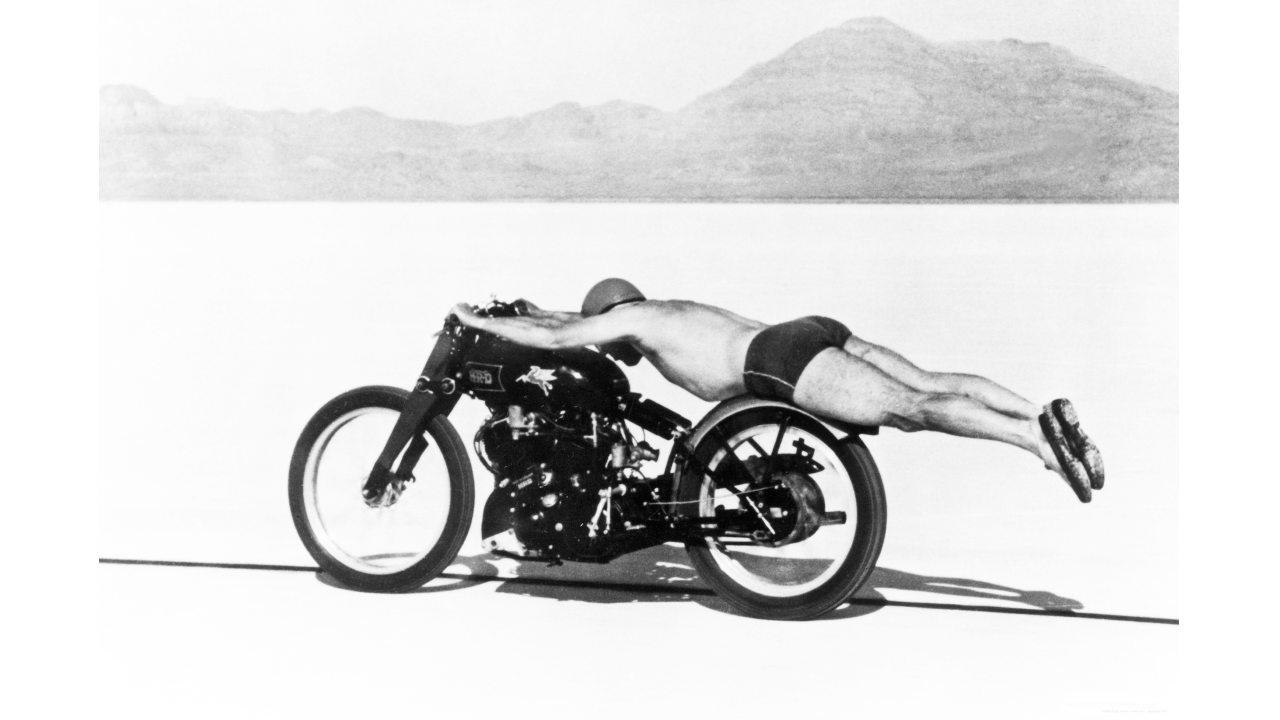
Then there is probably the most iconic motorcycling photograph ever taken of a man riding a Vincent motorbike in just a pair of briefs and plimsoles whilst laying horizontally, perched on the back wheel arch, arms out stretched holding onto the handle bars. This isn’t any staged photographic pose for artistic endeavour, this is a picture of Rolly (Roland) Free breaking the land speed record at 150 mph on the salt flats of Utah in the USA. The story along with the photo has to be seen to be believed.
The fact that the Vincent bikes attract a following of the rich and famous is further testament of its place in history and its cult status confirmed by a quote from Hunter S Thompson. The bikes have been written about in songs, featured in books and have sold for millions at auctions with fans describing the Vincent as a mythical beast, and to hear its effortless mechanical purr captured on black and white celluloid is a sight well worth the watch.
Film: Speed is Expensive
Director: David Lancaster
Stars: Ewan McGregor (Narrated by), Jay Leno, Paul Simon