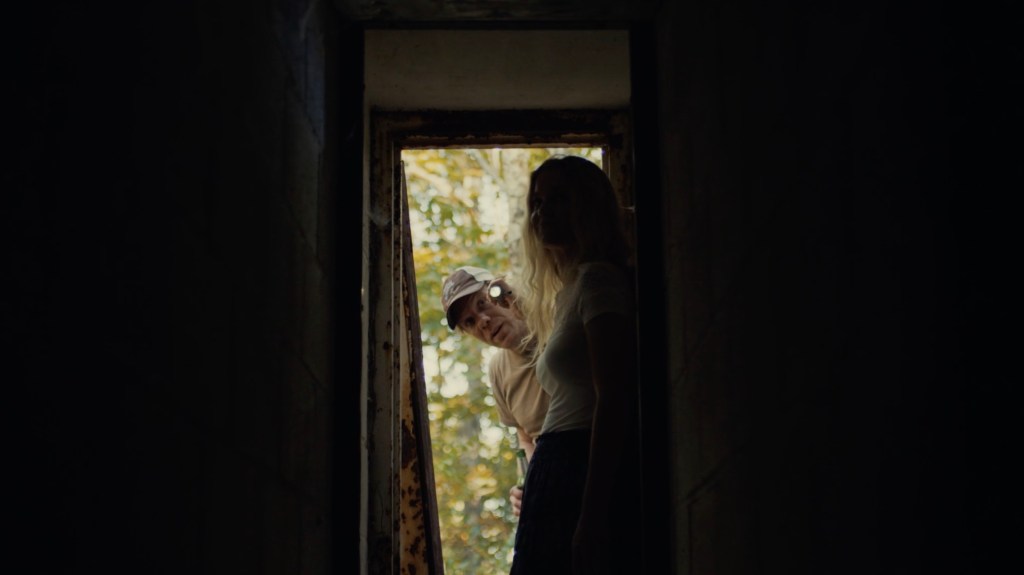
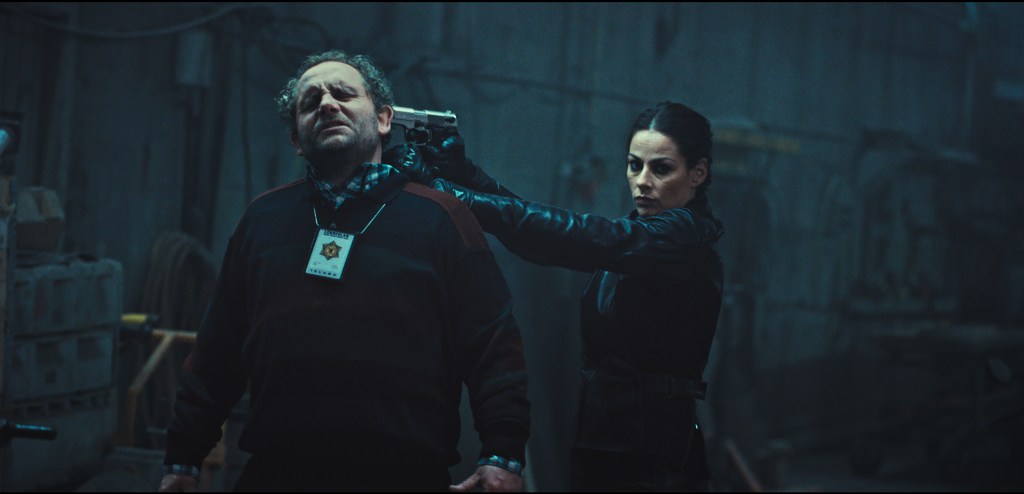
#Like is a dark tale about a teenage girl looking for revenge because her younger sister commits suicide after being trolled online. Written and directed by Sarah Pirozek’s it’s a cyber noir thriller available to rent and buy on all major digital platforms from 1st November.
Rosie (Sarah Rich) is commemorating the 1st anniversary of her sister Amelia’s (Samantha Nicole Dunn) suicide. Her sister had been an active user on social media: highly creative, posting about her activities; this would ultimately lead to her taking her own life after the trolling she received online. Rosie is looking back through her old posts and discovers the hate messages her sister was receiving and becomes determined to find the troller. Hacking into her sister’s account she manages to reactivate the troller’s creepy interests and takes her newly found evidence to the authorities only for them to refuse to investigate any further. So, she decides to take the law into her own hands and comes up with a plan to take her revenge.
For a first feature from Sarah Pirozek it manages to pull off a convincing and empathetic story. It’s an interesting take on the cyber bullying world and a warning of the potentially harmful impact of social media for young people. The plot doesn’t always stick together and the gulf in the gap between the young teenage girl on a push bike in pursuit of a man in a truck seems a bit strange but is perhaps an indication of the size of the task ahead of her.
Sarah Rich plays Rosie who puts in a heartfelt performance as the older sister shouldering some guilt and the responsibility to do something about the situation. She shows a mixture of sadness and loss whose own youthful naivety to get revenge runs parallel with the need to continue to live a normal teenage life. Marc Menchaca plays the Man (as per the credits) who quickly ticks a lot of the macho male stereotypes as the beer swilling construction worker, which he manages without overly labouring the cliches.
Although a feminist movie at heart it would appeal to anyone looking for a thought provoking modern day story, even for a wider teen audience, although it does justify its adult rating. A cyber coming of age thriller where even though a female victim is the catalyst of the story, the female is also the heroine too, looking to reverse the typical sexploitation in her own slightly disturbing pursuit of justice.
Film: #Like
Director: Sarah Pirozek
Stars: Marc Menchaca, Sarah Rich, Samantha Nicole Dunn
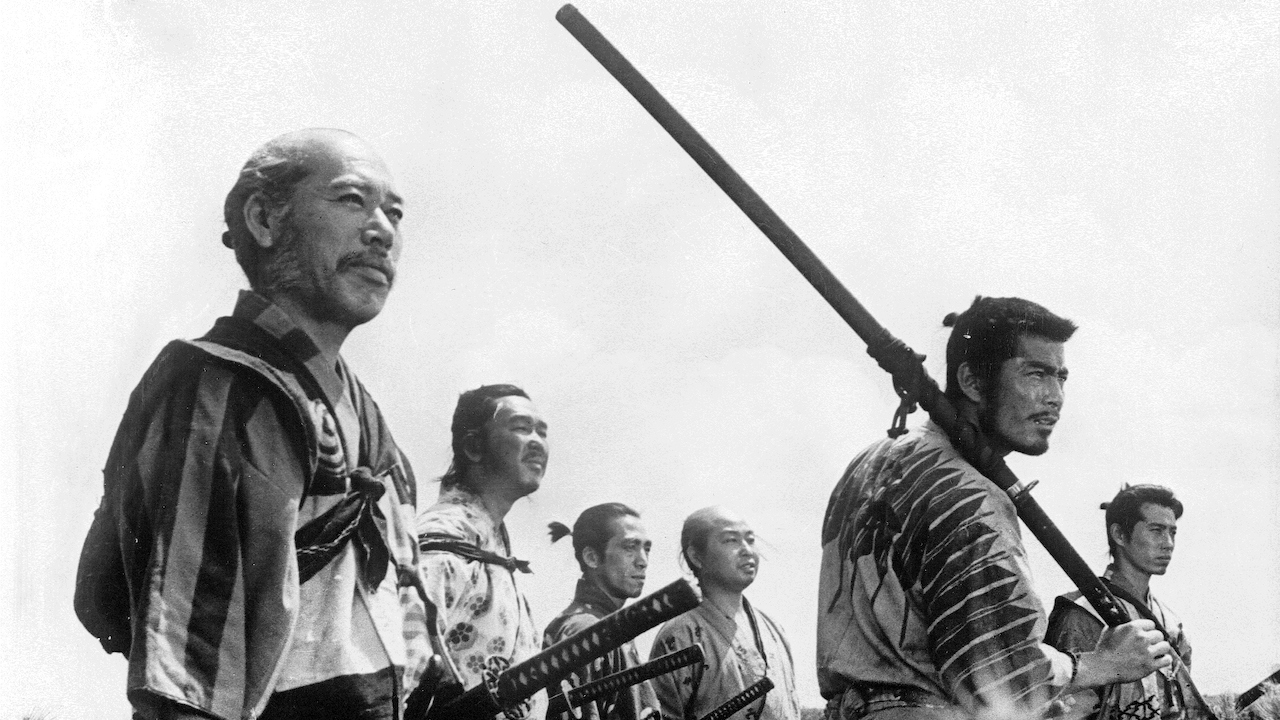
Opening in selected cinemas from 29th October 2021 as part of the BFI’s season celebrating 100 years of Japanese cinema, Seven Samurai (1954) is Japanese director Akira Kurosawa’s own favourite film, an epic tale about a village under attack from a group of bandits that hits upon the idea to hire a group of samurai to protect them.
The film starts with one of the villagers overhearing the bandits intentions to steel their crops once they’ve been harvested. He reports back to the village where everyone falls into panic and despair. They seek out the wise old soothsayer for guidance who remembers a similar occasion when a village survived the bandit ran-sackings by employing the services of some samurai, and this is his advice to them.
A group of the villagers therefore set off into town prepared to offer what they have, which isn’t much, in return for the services of the samurai. They are looking in particular for the masterless ones, called ronin, who roam the streets unable to take menial work due to their status. The first samurai recruit Kambei (Takashi Shimur) is seen in action rescuing a hostage situation. Using his craft and guile to disguise himself as a priest he overcomes and kills a crazed kidnapper. He becomes the group’s leader helping to recruit the rest who have to pass an improvised test – basically to avoid getting clubbed over the head when they are invited into a hut. They all manage to deftly do this except for the last one, the drunken rogue Kikuchiyo (Toshirô Mifune). This wannabe samurai, desperate to join the gang, is pushed around and teased by the others because of his drunkenness and his claims to having noble parentage, but he still remains determined to join them.
As the party head off to the village to make preparations for the imminent attack Kikuchiyo continues to follow them and his perseverance finally pays off when they accept him as one of the seven samurai. In the village the tensions are high as they have to contend with having their village occupied by a group of strange samurai whilst knowing these samurai will also train them to protect themselves against the impending attack from the bandits, which will result in an epic battle and fight for their lives.
Akira Kurosawa’s visual mastery and storytelling is beautifully executed. Whilst being an action film, with a remarkable finale battle sequence in the torrential rain, it has a social and moral heart giving us a glimpse into the world of the Japanese samurai warrior placed in juxtaposition against the poor and humble village way of life.
Akira Kurosawa was himself influenced by the great Western films of John Ford and in turn he influenced other classic Western films such as the Magnificent Seven. There are some classy performances most notably from the authoritative Zen like leader Kambei (Takashi Shimur) and who could forget the clowning tics of Kikuchiyo (Toshirô Mifune) wearing one of the most famous hats in cinematic history.
At just under three and a half hours long films don’t get much bigger than this and despite also being in black and white its overall style and pacing make this essential viewing and is rightly touted as one of the best foreign films ever made.
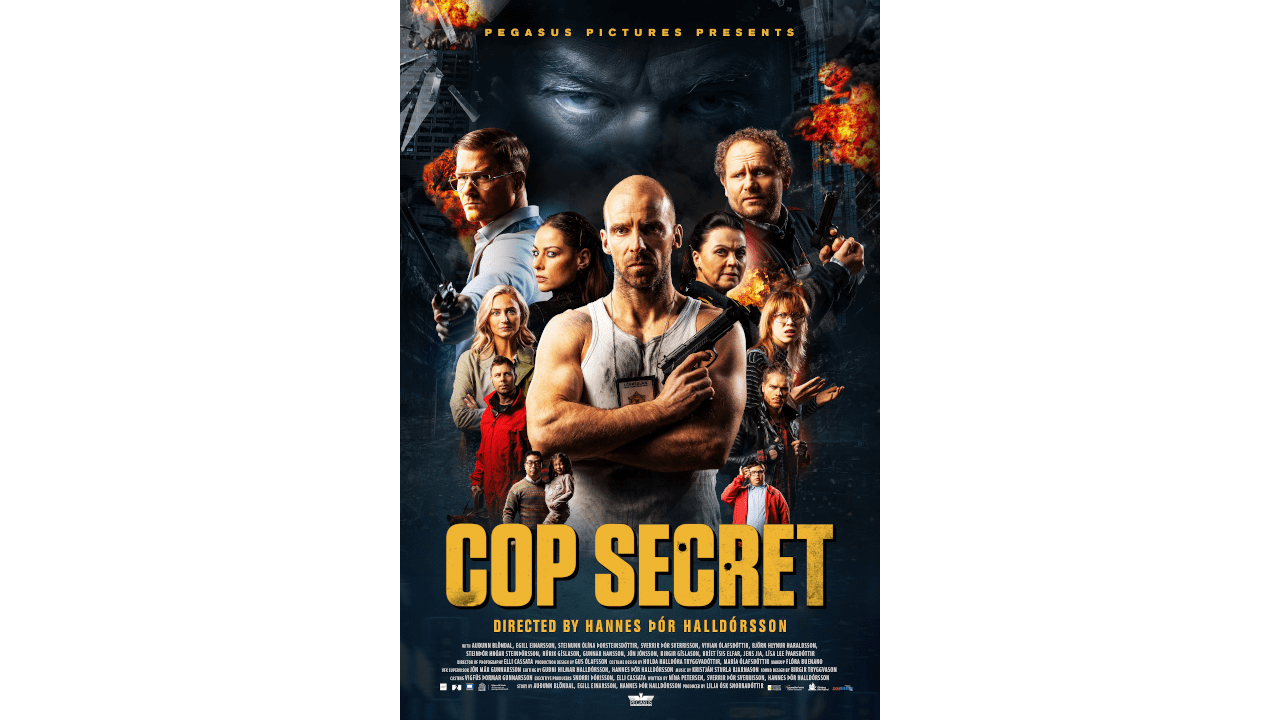
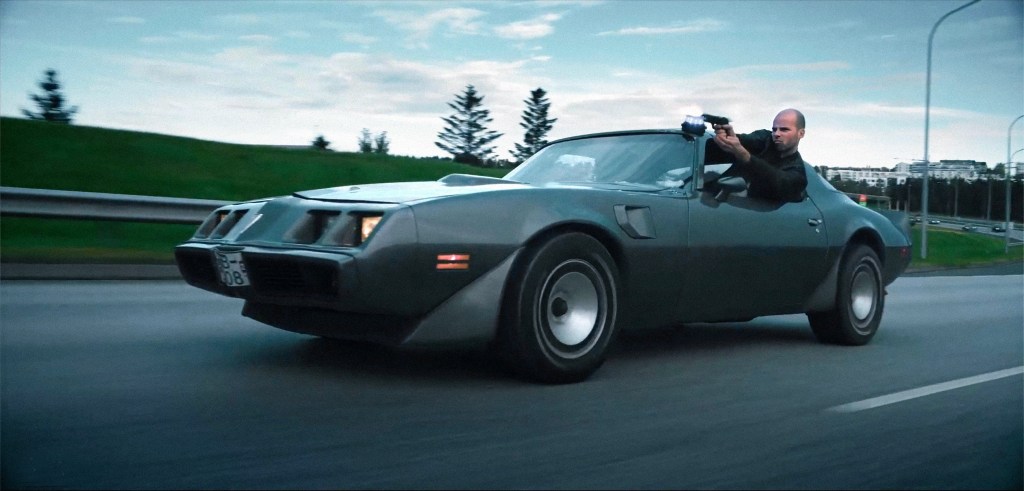
Cop Secret had its premiere at the BFI London Film Festival 2021, it’s an Icelandic action-comedy parodying the high octane Hollywood police films, where two rival cops have to team up to stop a mastermind villain only to get more out of their partnership than they bargained for.
Bússi (Auðunn Blöndal) is known as Reykjavik’s super cop, he’s prepared to bend the rules to get the job done and he’s so tough he’s even got his own TV show with highlights of him beating up the bad guys. His partner Klemenz (Sverrir Þór Sverrisson) is not so super and as they go on a high speed chase after a bank robber he becomes hysterical (pointing out all the driving infringements Bússi is contravening). When the pursuit enters an off limits jurisdiction Bússi is not giving up the chase so easily and on entering the neighbouring zone of Gardabaer he goes head to head with Hördur (Egill Einarsson), a posey super-slick cop dressed in designer clothes and driving a flashy sports coupe. He’s the complete opposite to the dishevelled and unshaven Bússi and in spite of their jibing exchanges of macho bravado the two end up having to work together. Their partnership has already developed in an unexpected way bringing to the fore Bússi’s conflicting emotions as he struggles with his masculine super cop identity and his strange feelings for the openly pansexual Hördur.
The robberies are down to a criminal gang who are seemingly breaking into banks without taking anything. The English speaking Rikki (Björn Hlynur Haraldsson) is the mastermind behind the break-ins who hams up the psychotic villain cliches and is partial to dropping a strange wildlife fact into the conversation whilst mimicking a terrible baddie’s version of a Clint Eastwood accent.
The backdrop to the action is the day’s hotly anticipated football match between Iceland and England’s women in a World Cup qualify. Besides becoming a central part of the plot, it is a notable inclusion in the script from the writer and director Hannes Þór Halldórsson that is a tacit reference to his previous career as a top international footballer (incredibly he played in goal for the Icelandic national side and here he shows his great versatility).
This Icelandic version of the light hearted spoof genre parodies the small city of Reykjavik against the all action US cop films whilst flipping the traditional action hero’s sexuality on its head. It can’t match the explosive special effects of its contemporaries but for mocking silliness it delivers by the spade load.
Interview with Trent O’Donnell the director and co-writer of ‘Ride the Eagle‘, a feel good comedy dealing with family, relationships and bereavement set in the wilderness of the Yosemite National Park. Shot during lockdown it brings together a comedy ensemble including Jake Johnson, D’Arcy Carden, J.K. Simmons and Susan Sarandon. Available on digital download from October.
Please introduce yourself and your film
My name is Trent O’Donnell and my film is called “Ride the Eagle”.
You are an experienced comedy writer and director. How does this film compare to your work to date?
Well it’s my first feature. So largely my work has been two fold, I work either writing things that I’m going to make, which is more in the UK / Australian model of writing and directing shorter run series of television, and then in America I did a lot of sort of guest directing when you go on to these bigger shows and you drop in do a couple of episodes and then you go away again. That was kind of my experience up until this point. This was the first time I’d done a bigger longer project and it took a pandemic to get me to actually do it but it is something I’ve been wanting to do for a long time.
You co-wrote and directed the film. Do you see yourself as a writer or director?
I see myself very much more as a director than a writer. I love the process of writing and I love the ideas behind writing, but I in no way regard myself as a polished writer. Like everything I have written I have directed myself. So when I write scripts they are very much a working document, I’ve never really written polished scripts, which I’ve sent out into the world and asked people to give me money for them. It has always been that I have sort of written things that I know I’m going to be on set and I know that I will be making them. I regard myself as a rough writer but much more as a working director.
What is the directing process like for you normally?
Normally as a director, first and foremost, I love working with actors. I’d say I’m a performance based director. I think a lot of comedy directors are performance based but largely my work is sort of I’m taking a writer’s script and I’m breaking it down. There is a homework part of it where you are blocking the shots and you are working out how you actually want to shoot the thing. That to me is all the grunt work and when I’m actually on set, the sort of joy of it, is working with actors and working with great comedy actors and being able to get things on their feet, feel when it’s working and feel when it is not and sort of adjust accordingly as I go. I would say when you look at directors overall they usually fall into one of different categories. You could be a very technical director who is very good at doing action sequences and you plan everything within an inch of its life. I’d say that I’m not that, I’m much more pure comedy performance director.
The film is set in the wild frontiers of America and looks a perfect location for lockdown. How did you find it?
Well basically this film was born out of Jake Johnson and I. We met on New Girl. I was the producing director on New Girl. Jake and I became friends and we became writing buddies and we would send each other ideas, different ideas for shows and films and we actually, just before the pandemic, Jake and I tried to sell a TV show. We didn’t sell it and off the back of that, I think partly through the frustration of just having to try and develop and pitch and do all those sort of things, we thought maybe when the pandemic hit, it would be nice to just go and make something. So we set ourselves a date to shoot something, we just got together and we beat out the story, decided what we liked, narratively what interests us both and then we looked at, probably more of a practical sense than most films are made, we looked at what we had and what was available to us, and so like all those locations in the film were either my place or Jake’s place. He owned that cabin up near Yosemite. So we knew we had those things right from the start and on top of that Yosemite has always been one of my favourite places in the world, I just love that whole area.
The characters were a lot of fun, and it was a funny and relatable story but quite absurd and exaggerated too. Was there an element of truth in any of the characters or were they just fictitious?
There were definitely elements of truth, no one was based on anyone specifically, but I would say definitely elements from my extended family and definitely from Jake’s extended family and we kind of took all those little things from people we knew and sort of mashed them together without it being directly from my family of Jake’s. We always like comedy that is grounded more in truth and feels believable but within that you find ridiculous things in real life that feel absurd that you wouldn’t believe unless it really happened. So we definitely cling on to those kinds of things. We want it to feel relatable but also be funny and entertaining. We found like so many people, almost everyone has some sort of fracture in their extended family to some degree with these grudges that people hold etc and we found that was kind of a rich area.
I don’t want to give any gags away or any spoilers away. Could you give us a quick synopsis of the story?
The film is basically the story of Leif played by Jake Johnson who is estranged from his mother Honey played by Susan Sarandon. Honey passes away right when the film starts and basically Honey leaves Leif a conditional inheritance. She leaves him her cabin up near Yosemite but only on the condition that he completes this list of kind of obscure, weird tasks and it is all about her trying to pass on one final lesson to her son that she was estranged from and never really knew.
There was some lovely casting. How did it come about?
It was weirdly the easiest casting process I’ve ever been involved with, simply because of the time that we made it, which was a couple of months into lockdown and into covid and so everyone’s projects were put on hold, no one had anything on the horizon. We were a very bespoke, little, tiny unit, so we weren’t a massive filmset, we were only a handful of people, which meant we could all be tested and we could be contained and so the casting was simply: I had worked with J K (Simmons) before and I just simply emailed him and he responded that day and said, “Sounds fun.” We went directly to all of our actors. Susan we hadn’t worked with before but she was just the archetype in our head and we just thought we’d wildly just email her agent and say, “Is there just any way she would do this?” And two days later we were speaking to her on the phone. So it was weirdly a very easy casting process because no one had anything on at the time because usually when you try to cast these things, you get responses that yeah they’re tied up for the next 10 months. But we got everyone that we wanted right away. We wrote it with Susan in mind, not thinking she would do it. J.K I knew at least I could ask him. D’Arcy Carden is a friend who I had worked with before, so we got all these people that we had written for which was kind of incredible.
There was another star, the rescue dog Nora. Was she easy to handle on set?
She was great, she is a retired guide dog, she was very directable. The only thing with it was it was kind of scary because it was Jake’s real dog and Jake has 2 young daughters and they would have killed him if he had lost the dog. So we were constantly having to keep tracks of the dog making sure the dog was ok; only because Jake is scared of his daughters. But no she was great, she was really easy and probably the easiest animal I have ever worked with.
What advice would you give to anybody looking to direct or write something?
My advice is to always just go out and make things. It is very accessible now to get cameras, people make movies on their phones and such. I think it is just having an idea and certainly this was the case with this film. Just creating your own momentum and actually going through with it and doing it, is such a huge part of the process. For this movie we just set ourselves a date. We said alright we are not doing anything, this is when we are going to start shooting our film and we sort of worked back from that date. My advice is to always go and make things. It doesn’t matter how small a scale, create your own momentum and finish them.
Film: Ride the Eagle
Director: Trent O’Donnell
Stars: Jake Johnson, D’Arcy Carden, J.K. Simmons and Susan Sarandon
The Maltese Falcon (1941) is back in cinemas from 17th September to celebrate its 80th anniversary as part of the BFI’s Watching the Detectives season. Adapted from Dashiell Hammett’s novel it sees John Houston take his directional debut in this black and white film noir classic.
Private investigator Sam Spade (Humphrey Bogart) and his partner Miles Archer (Jerome Cowan) are asked to find a woman’s missing sister and Sam’s partner is quickly bumped off in the process. A straight forward missing person case quickly turns into a double homicide, in which Sam himself has become a suspect as we find out he has been having an affair with Mile’s wife. All this has happened without even a mention of the golden falcon described so dramatically in the opening credits. So ensues the investigation to find the murderer and also discover the whereabouts of this valuable bird that another visitor to the detective offices, Joel Cairo (Peter Lorre), has sought the services of Sam Spade.
This is a Humphrey Bogart film through and through as he plays the tough wise-cracking San Francisco private dic, Sam Spade, whose only scruples are to get to the bottom of the case. A street smart detective on pally terms with the police who is able to mix it with the gangsters and still finds time to play hard and fast with the ladies. But Bogart is more than ably assisted throughout by a supporting cast that includes Mary Astor as the femme fatale Brigid O’Shaughnessy, who switches between the fragile and needy to the manipulative and even violent in a heartbeat. Sydney Greensheet (appearing in his first film at the ripe old age of 61 years old) plays Kasper Gutman “the fat man” gangster head behind the search for the Maltese Falcon. He is like a cross between Orson Wells and Alfred Hitchcock all rolled into one with his gentrified but underhanded negotiations. Then there is Peter Lorre who puts in a fantastically kooky performance as Joel Cairo setting the bar high for the devious, conniving villain.
The film’s quirkiness, with some laughable scenes and sometimes dark dialogue, make you wonder if it is in spite of these or in lieu of these that it is considered such a classic. When Peter Lorre’s Joel Cairo first appears in the Private Eye’s offices you immediately know you’re in for a film noir treat with his shifty mannerisms; his subsequent disarmament and rearmament is risibly entertaining. At the beginning the mythical story introducing the Maltese Falcon, a long lost treasure of a golden, jewel-encrusted bird gifted by the Knights Templar, turns up much later as a “black figure of a bird” and looks not much more than a lump of lead. But it’s these kinds of things the audience are asked to acquiesce and indulge in as part of the storytelling process and have become archetypal components of film.
Widely considered a masterpiece and one of the earliest examples of film noir it is often placed at the top of film polls and was part of the first group of films to be put in the US National Film Registry for being “culturally, historically, or aesthetically significant” and whilst now largely resigned to the black and white vaults for movie buffs to discover, its caricature performances will no doubt continue to massively influence filmmakers.
As for the Maltese Falcon, it got the last laugh. Several of the falcon props made for the film are considered some of the most expensive film props in the world valued at well over $1 million each, much much more than what the movie cost to make.
Picture Stories is a documentary film charting the rise of one of the UK’s earliest pictorial magazines, Picture Post, which was influencing British culture during the 30s through to the 50s. Picture Stories will be available on Digital Download from 30th September.
Stefan Lorant (1901 – 1997) editor of Picture Post, discusses the forthcoming issue of the magazine with Tom Hopkinson (1906 – 1986), assistant editor (left). Original Publication: Picture Post – 59 – How Picture Post is Produced – Pub. 1938 (Photo by Kurt Hutton/Getty Images)
The documentary looks at the stories of the people behind this ground-breaking photographic magazine that brought in a new era of photojournalism showing not just a glamorous side of Britain but also the common everyday life stories which established a new dialogue for British working class culture. It features diary like extracts from its founder and editor Stefan Lorant and Tom Hopkinson, his eventual successor, as well as commentary from many experts in the field including the photojournalists working on the magazine, talking about how unique and influential it had been in the UK media.
Stefan Lorant was clearly a man on a mission, of Austro-Hungary decent, his father was a studio photographer and he himself had great success with photography and magazines in Germany before he had to flee the Nazis having been imprisoned for opposing Hitler. He found success in the UK as a magazine editor bringing his photographic style of journalism, which led to him launching Picture Post just before the outbreak of war. He had a vision to show the real lives of ordinary people, including the social class struggles of the time illustrated with a humanistic kind of photographic storytelling.
The photography (and the photographers) were central to the magazine’s success and was aided by the developments in photography at the time with the introduction of the Leica 35mm cameras meaning early street photography became much more practical. It shows some of the published features from the Getty archives like ‘What Makes Piccadilly’ (1954), picturing a day in the life of the famous London location and we are shown through some of the contact sheets from what would have been an exhaustive 2,000 frames, giving you some idea of the scale of its coverage.
For media enthusiasts of print journalism, the documentary makes for a fascinating insight into the inner workings of the magazine. It’s an interesting historical account of how its innovative practices and flagrant use of photography led the way in photojournalism.
When the Screaming Starts had its world premiere at Frightfest 2021 and will get its northern premiere at Grimmfest on 9th October. A comedy horror about a documentary filmmaker who has discovered a wannabe serial killer online and wants to capture his murderous rise to infamy.
Norman Graysmith (Jared Rogers) specialises in making ‘award-winning’ documentaries about people living on the fringes of society and has found the perfect subject in Aidan (Ed Hartland) who has a twisted dream to become a serial killer. A perfect person for Norman to film as unlike other true crime TV series this is his opportunity to document a serial killer as it happens.
Norman visits Aidan at his home and so begins the documentary inside a film format following Aidan’s crazy-eyed murderous ambitions through his interviews to camera. We see him lose his job at the cinema because he clearly likes horror films a bit too much as he stabs and twists along to the action. Claire is his similarly disturbed girlfriend with a ‘mutual appreciation for murder’. She tells us how she takes photos to capture people’s souls and keeps them in her scrapbook of death.
Aidan and Claire announce they are going to start a family à la Charles Manson and start the application process interviewing a collection of odd ball candidates to join them. The interview questions are fairly standard: what’s your job, who’s your favourite serial killer? Amongst the candidates being interviewed are a delightfully sinister looking pair of twins (Vår Haugholt and Ronja Haugholt), a food critic (Louise Ann Munro) with a preference for long pig (human flesh) and a yoga teacher (Kavé Niku) with broken English who has possibly turned up at the wrong place.
Once the recruits have been assembled they are moved into a house together to begin their training and first up is weapons training day, which continues with a silly retractable knife gag and sees Jack (Yasen Atour) the geezer trying to suffocate the confused yoga teacher with a plastic bag and then it’s not long before they are ready for their first murder spree together.
The mockumentary style parodies a number of reality shows with interviews telling each character’s back stories assisted by the voice over narrative from Norman himself who seems to be doing his best Louis Theroux impersonation but is as much like Josh Widdacombe. Fans of the UK sitcom ‘The Office‘ will be familiar with the same awkward chats and looks to camera and the opening sequence news clips have a ‘The Day Today‘ look about them with the same irreverent sense of humour as the news presenter announces, ‘When it comes to murder, somebody always ends up getting killed.’
It doesn’t match up to the vampire mockumentary ‘What We Do In The Shadows’ but there is still plenty to enjoy in some of the characters like Jack the deli fishmonger geezer with his lively market patter, Amy (Octavia Gilmore) the dominatrix who really ups the tempo to bring about a spectacularly violent killing spree, and Norman and Aiden’s character arcs eventually bring to the fore their own ambitious natures or lack of them.
As a comedy horror it has plenty of gags to keep audiences amused but without falling off your chair, meanwhile the gore is shockingly intense in parts but in small enough doses to maintain a sense of lighthearted comedic fun throughout the murderous premise.