South (1919)

SOUTH is screening at BFI Southbank and in selected cinemas from 28 January and out on Blu-ray/DVD on South and the Heroic Age of Antarctic Exploration on Film, released by the BFI on 28 February.

A black and white silent documentary with music showing unprecedented footage from one of the very first Antarctic expeditions during ‘the Heroic Age of Antarctic Exploration’. This is the story of the ship “Endurance’s” fateful mission led by the intrepid explorer Sir Ernest Shackleton, a colleague of “Scott of the Antarctica”,  and a man of similar standing in the field of Antarctic exploration, filmed by the ship’s very own cinematographer, Frank Hurley. 

On July 1914 a crew of 28 men left the UK shores to attempt to cross the yet unconquered seas of the great Antarctic Continent. On board were not only a cinematographer and a banjo player (a “vital mental tonic” for the sailors) but also an incredible 70 husky dogs required to pull sledges. The boat finds the going not unsurprisingly difficult through the ice floes before it finally gets stuck and despite their best efforts to free it the boat is eventually pushed up out of the sea like a toy ship by the shifting icecaps, and is marooned on the ice with the crew and dogs having to abandon ship.

Having to camp on the moving icebergs, remarkably the crew seem quite jovial throughout their predicament stuck in the polar regions with what must have been limited resources in freezing conditions. There were no signs of panic and no doubt this was down to a highly experienced crew led by Sir Ernest and supported not least by what must have been a formidable banjo player. In the process of filming seals were killed, allegedly for dog food, which may not placate any animal rights activists but survival here was clearly a priority at a time when the world’s view on such things was evidently different.

It’s a true story of great British exploration where even the ability to film in freezing conditions over two years is an incredible feat in itself (although they do manage to bring along a new petrol powered sledge invention. Crudely sponsored by Shell – a sponsorship scoop not to be missed even back then).

Commemorating the centenary since Sir Ernest’s death the documentary, despite its antiquated black and white imagery, is an incredible account of the expedition with some striking pictures of the old sailing boat, the frozen landscapes and wildlife. How different it is now to think this once impenetrable landscape is now rapidly disappearing before our eyes.

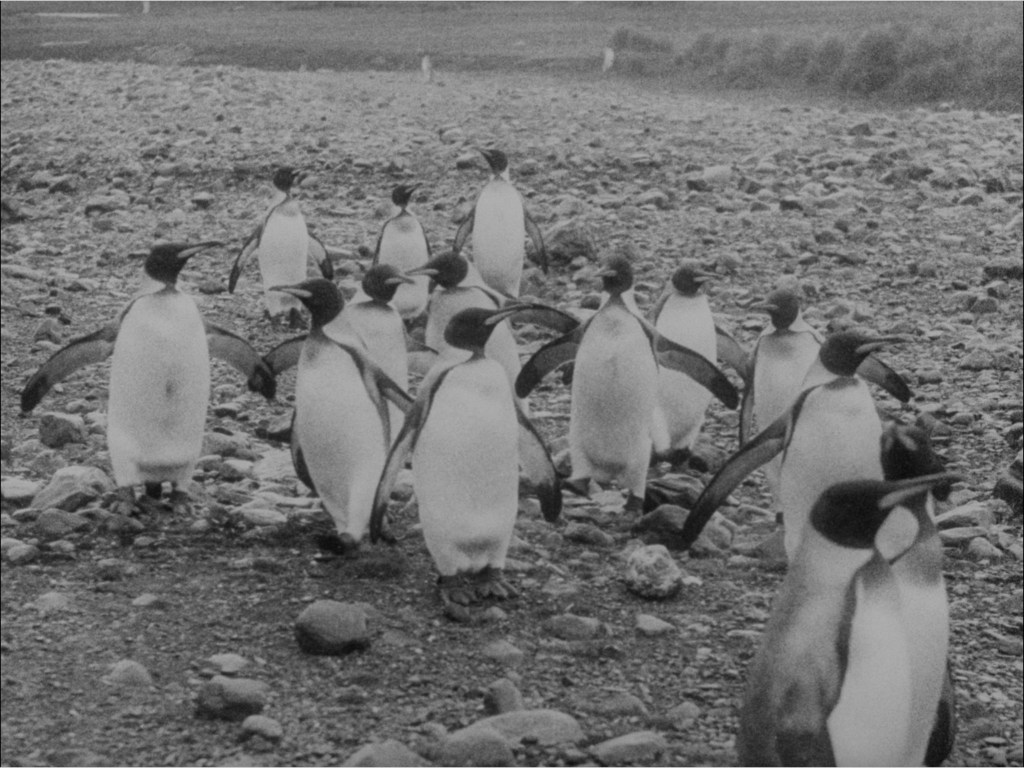
The wildlife is captured to such a degree that three quarters of the way through, the film becomes a fully dedicated natural world programme with the stars of the film switching from the husky dogs to the penguins. Compared to today’s Ultra High Definition cameras the footage may seem some what pedestrian without the thrills and spills of “The Blue Planet” style of series but that would take away from what is an invaluable piece of archiving, that still burns brightly with a sense of wonder and discovery. 

Film: South (1919)

Director: Frank Hurley

Genre: Documentary

Run time: 1hr 21min

Rated: U

Rating: 3/5

Home

Available on Apple TV from 24th January, a man returns home after spending almost 20 years in jail to face up to his past in a small Californian town where not everyone is happy to see his return. From first time female director Franka Potente, starring Jake McLaughlin (Warrior) and Kathy Bates (Misery) it is a bittersweet tale dealing with bereavement.

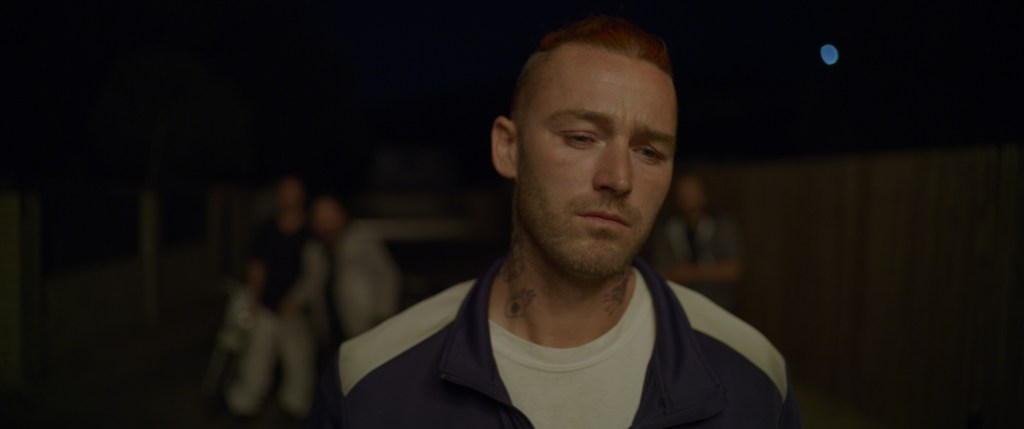
It’s been almost 20 years for 40 year old Marvin (Jake McLaughlin) who is returning home to his mother’s after a long stretch in prison. Within the first 5 minutes he’s skateboarded across half of California, turned down a quickie with a waitress, waited the longest time possible for a supermarket coffee and wrestled his mother’s home help to the floor. It seems a peculiar backwater part of the world and Marvin is no different. A tall athletic looking guy who looks physically intimidating in his sports tracksuit with tattoos on his arms, hands and neck, and his hair slicked back and shaved at the sides. Having spent so long away things must be pretty strange for him as he discovers what he’s missed in the world and reminisces with his old druggie loser friend Wade (Derek Richardson), hanging out at a few of their old haunts like the skate park.

He catches up with his mother (Kathy Bates) and when he finds out she is terminally ill their time becomes especially poignant as they play cards at home, drinking and smoking together despite her being on an oxygen tank. Not everyone is pleased to see him though. The brother and sister who lost their grandmother are holding major grudges and are not going to make life easy for him insisting, “We can’t do nothing…I want to let him know he’s not welcome here.” This much they do but perhaps surprisingly the sister becomes close to Marvin and they begin to build a relationship despite their differences.

Written and directed by Franka Potente known for her acting in Run Lola Run and the Bourne series she achieves the small town feel of an arid part of California using some good local locations like the diners, the backyards and the alleyway. The camera shots are quite simply put together that can drift in and out of focus on occasions but with a mix of close up shots and some quick editing, especially for the alley scene, the slightly dirty framing is easy to follow.

Well cast, Jake McLaughlin plays the man child anti-hero who’s straight out of prison probably still wearing the same shiny tracksuit he went in with and bearing the burden of his guilt. Kathy Bates plays the mother with plenty of vim in spite of her condition and is seen sat on the porch with shotgun in hand and collapsing on the porch with equal grace delivering some beautifully droll lines along the way in her languid Tennessee accent, “Prison ain’t supposed to be fun anyway.”

The story comes across incredibly twee considering its dark nature but this is probably as much to do with its likeable cast. Don’t expect any major surprises as the only real surprise is that we don’t fully understand the reasons behind Marvin going into prison and without knowing any of his backstory we are left unsure whether he deserves any kind of redemption at all.

Film: Home

Director: Franka Potente

Stars: Jake McLaughlin, Kathy Bates, Aisling Franciosi

Genre: Drama

Run time: 1hr 40min

Rating: 3/5
The Last Thing Mary Saw

The Last Thing Mary Saw is available on horror channel Shudder, it’s a supernatural horror that goes easy on the horror whilst still managing to provide a chilling account of a young girl’s interrogation after the sudden disappearance of her grandmother from a repressively religious household.

Set in the puritan town of Southold, New York in 1843 the film begins with the interrogation of the young farm girl Mary (Steffanie Scott) who is sat with blood trickling from behind her blindfolded. She is under suspicion regarding her grandmother’s disappearance and the hostile manner in which she is made to read the Lord’s Prayer by her interrogators is a clear indication of her guilt, certainly for the town’s law enforcement. The interrogating constable (Daniel Pearce) has a somewhat incongruously sympathetic ear for her story in comparison to the other bible wielding figures in the baying community, as he intriguingly clutches a book which plays a central role in Mary’s interrogation. 

We flashback into the events leading up to the disappearance, beginning with Mary’s relationship with the maid (Isabelle Fuhrman), which has come to the worrying attention of her parents who are in religious hysterics and despair over their daughter’s carrying ons with the maid, “They long for one another’s touch and they do so in bright sunlight,” her mother cries. As a result the parents have turned to the wisdom of the household’s matriarch, the grandmother (Judith Roberts) for guidance, who cuts a foreboding figure. 

Because the family’s relatives refuse to take the maid on themselves the matriarch decides “correction” is the only way forward before the girl can be moved. The grandmother administers a painful punishment to the ‘sinful’ girls who have to kneel on dried rice whilst reciting prayers for prolonged periods. This proves to be just one of the callous measures used to intimidate the inhabitants into conforming behaviour and to understand there is no escape. 

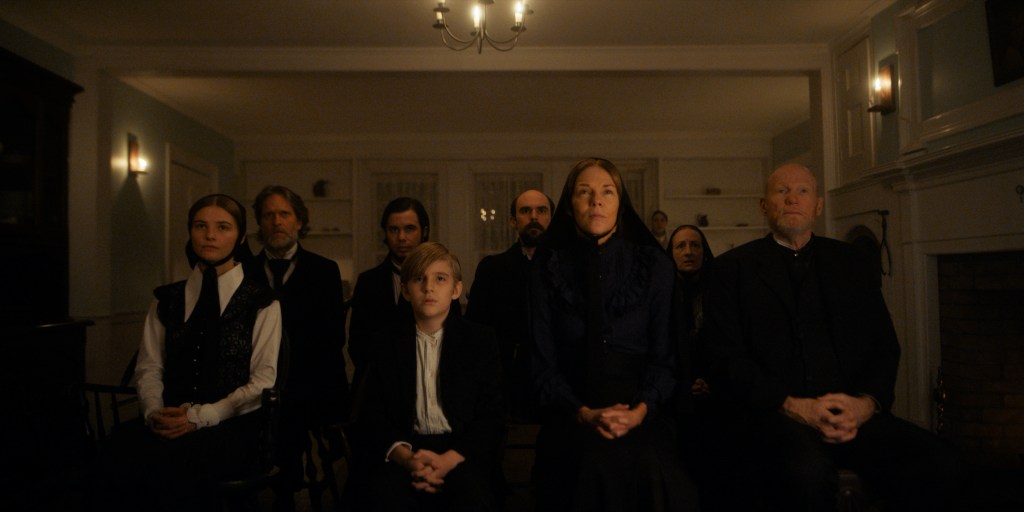
From first time feature film director Edoardo Vitaletti this is a well-crafted film that atmospherically captures the period. Set on location at an imposing wooden farmhouse the candle lit scenes by night and the overcast shots by day give a sense of a harsh puritanical time assisted by the remarkably dour costumes and funny looking chin strap beards. The cast convincingly draw you further into this world with the angelic looking girls wishing to explore their feelings for each other but their secret liaisons are never far from prying eyes. They are up against the might of the matriarchal grandmother played with a disturbing puritanical presence and each supporting actor brings an additional righteous or non righteous quirkiness to the proceedings.

What is impressive from the writing and direction is the way in which Vitaletti leads you to water without forcing any graphic detail upon you and still manages to maintain a gripping edge. There are one or two surprising moments which seem to have caught even the director by surprise. They may be there by design as a way of portraying the higher forces at work but there is also what seems to be a significantly large plot hole unreported but regardless of this the story still holds together carrying a claustrophobic menace throughout.

It’s an interesting period of American history for the story to indulge in playing with the religious and moral themes that must have been relevant at the time and adding its own supernatural twist. Horror fans may come away disappointed if they are expecting to be hiding behind their seats as this has a much slower insidious manner and has as much in common with a Romeo and Juliet tragedy for an LGBTQ audience than as an out and out horror.

Film: The Last Thing Mary Saw

Director: Edoardo Vitaletti

Stars: Rory Culkin,Isabelle Fuhrman,Judith Roberts,Stefanie Scott

Genre: Drama, Horror, Thriller

Run time: 1hr 28min

Rating: 3/5

December Worksheet

Drive My Car

Click for film review with film language worksheets & audio:

Drive My Car Listening
Drive My Car Pronunciation 1
Drive My Car Pronunciation 2
Drive My Car Pronunciation 3
Language content and exercises including reading, comprehension 
questions, vocabulary, discussion questions and pronunciation exercises

Drive My Car

Drive My Car is available to rent on the BFI Player and is part of the BFI Japanese season, based on the short story “Men Without Women” by Murakami Haruki it won the Best Screen Play at Cannes 2021. It’s about (spoiler alerts) a theatre actor / director and his sexually charged relationship with his screenwriter wife that abruptly ends after her sudden death and how his chauffeur becomes his companion and confidant in a story of interwoven and comparative lives.

It begins with a woman naked on top of a man, legs akimbo, as she tells an erotic story. The woman is screenwriter Oto (Reika Kirishima) who is married to the man, theatre director Yûsuke (Hidetoshi Nishijima). They continue the story in the car the next day remembering the sexual fantasy from the previous evening. It’s a ritual of theirs – she tells an erotic story during sex and he reminds her of it the following day fuelling her creative storytelling.

Another ritual of Yûsuke’s is learning his lines in the car with his wife’s recorded voice and he is currently learning Chekov’s Uncle Vanya whose lines become cleverly woven into the story’s narrative. He has to leave town for a show but when his plane is cancelled and he returns home unexpectedly he finds his wife in the throes of a sexual act with a young actor acquaintance Koji (Masaki Okada) but deciding not to intervene he keeps up the pretence of his not knowing by video calling her from a hotel in a somewhat muted tone.

The story takes a sudden turn when Oto is found dead after suffering a cerebral haemorrhage, which is followed by the opening credits that appear after more than an hour after the film’s beginning! Moving into the second phase of the film Yûsuke takes a job as a play director for a production of Uncle Vanya in Hiroshima where he will be based for the next two months auditioning and rehearsing the play. But there is one unusual condition that he must abide by, he must have a young female chauffeur (Tôko Miura) to assist him – which for him is not necessarily an easy thing to agree to. As the auditions get under way we see Yûsuke is an expert in directing multilingual performances and here there is a mix of American, Japanese, Korean and also a deaf sign language user, and amongst them is the young actor, Koji, who had an affair with his wife.

Yûsuke chooses his cast and accepts their invitations for drinks and dinner to get to know them better and discover some of their idiosyncrasies. Koji asks him to join him for a drink and he goes knowing about Koji’s relationship with his wife but without letting on as they talk about sexual relationships. One of the producers asks him to dinner at his home with his wife and he discovers he is married to the deaf actor in the production but hadn’t wanted to tell him incase it biased his decision, meanwhile Yûsuke gives a gushing appraisal of his chauffeur that would normally be reserved for a leading starlet.

As the play’s opening evening draws nearer an inevitable major incident happens which results in Yûsuke and his driver, Misaki, taking time out together to visit her hometown becoming even closer as she shares her story about how she became a driver after her mother’s death and the loss of her home in a mudslide, and they are able to share in their grief together; but of course even with the play’s major disruption to its preparations the show must go.

Directed by Ryûsuke Hamaguchi (Asako I & II) his play within the film adds an affirming solidity to the story that takes us on an emotional journey with conversations about love, infidelity, secrets, disclosure, grief and trauma showing a depth of emotions whilst seemingly cruising through, in stoic fashion, the 3 hours run time without ever feeling the need to stop.

The cinematography emphatically captures the urban sprawl of the everyday Japanese cityscapes and the mis en scene of the apartments, bars, homes and theatres are immaculately executed and accentuated by the POV shots for the conversations, immersing you in them, and of course there are plenty of driving shots: getting into the car, getting out of the car, starting the car, pulling away, reversing, parking, smoking and talking in the car; and in particular it’s the conversations in the car that bring a confessional type of intimacy as they drive along the highway with the engine purring in the background.

There’s a great deal to enjoy here from the peculiarities of the creative artists to the secrets and confessions people choose to hold and divulge all captured in a simplistic and yet engaging way encapsulated none more so than by the classic red Saab 900 on display.

Film: Drive My Car

Director: Ryûsuke Hamaguchi

Stars: Hidetoshi Nishijima, Tôko Miura, Reika Kirishima

Genre: Drama

Run time: 2hr 59min

Rated: 15

Rating: 4/5

November Worksheet

Pitbull-Exodus

click for film review with film language worksheets & audio:

Pitbull-Exodus_Listening
Pitbull-Exodus_Pronunciation_1
Pitbull-Exodus_Pronunciation_2
Pitbull-Exodus_Pronunciation_3
Language content and exercises including reading, comprehension 
questions, vocabulary, discussion questions and pronunciation exercises

Shepherd

Shepherd is a psychological horror from British director Russell Owen about a bereaved husband who takes a job on a craggy isolated Scottish island only to find there are dark forces at work and he has to fight to keep his sanity and save his own life. In UK/EIRE Cinemas from 26th November.

Eric (Tom Hughes) has had to bury his young wife who died in mysterious circumstances. On his own, with just his dog as a companion, still suffering with grief, he finds a job in the local newspaper as a shepherd on a remote island. Before leaving for the job he visits his mother Glenys (Greta Saatchi), who seems to have little sympathy. His deceased wife was clearly someone she didn’t like very much, feeling she divided their family. Eric takes the ferry to the island with the ferry attendant Fisher (Katie Dickie), a spooky looking local who doesn’t dare set foot a proper on the island. She shows him the old cottage and the lighthouse and reminds him of his job to look after the sheep, before wishing him an ominous good luck. Life on the island looks bleak. Totally isolated, the cottage is completely run down, there’s no generator or water and despite his best efforts to make a home for himself it is not long before the island and the cottage take a sinister hold on his fragile state where even the sheep begin to give him funny looks.

Written and directed by Russell Owen it’s a small but excellently cast film led by Tom Hughes as the rugged island venturer trying to escape his past. Greta Saatchi puts in a surprising turn as his weary mother wearing the most delightful aran stockings and Katie Dickie plays Fisher the one eyed ferry attendant who holds the island’s secrets and who’s unnerving gaze is enough to make even the dog cower.

The location shows the breathtaking scenery of the remote Scottish Isle captured dramatically by cinematographer Richard Stoddard and the production design from Chris Richmond maximises the horror with minimalist effort. There are some startling scenes that show great horror credentials and it’s excellently scored with some dramatic orchestration heightening the escalating tensions and bringing the island to life.

This has the ingredients of a classic British horror with the wild British Isle scenery, which is a joy on the eye, tinged with a suitable amount of grey overcast weather and a quirky little cast. Although it misses a final satisfactory appeasement in my book, maybe there will be more shepherding to come.   

Film: Shepherd

Director:  Russell Owen

Stars: Tom Hughes, Kate Dickie, Gaia Weiss & Greta Saatchi 

Genre: Horror, Mystery

Run time: 1hr 43min

Rated: 15

Rating: 3/5

Habit

Habit is a coming of age action comedy about a young party girl Mads (Bella Thorne) who finds herself on the run after her and her friends’ drug deal goes wrong and they have to take shelter in a convent. Habit will be available on iTunes Digital Download from 22nd November here.

Despite Mads’ early religious pretensions as a young child and her mother questioning why she can’t just be a normal kid, Mads grows up to be quite the wild child. Moving from Texas to California she goes from praying to Jesus in her bedroom to turning up late to her sex addicts class and scoring drugs off of a dealer in rapid time. Mads has picked up some drugs for her 2 best friends Addy (Andreja Pejic) and Evie (Libby Mintz), returning back to their house, which is the sexiest skuzzy drug den you could imagine, in time for the girls to go sell them in the club to ‘L.A’s horniest crackheads”. Since she has nothing better to do Mads joins them for a drug and sex fuelled club night with hallucinogenic episodes that leaves her throwing up the expensive drugs she’s imbibed whilst wearing a nuns uniform.

The afterparty brings about a second round of drug and alcohol intoxications until the next morning when they discover the money and drugs have been snatched. The party is well and truly over and now not only are they in trouble with their dealer (Gavin Rossdale) but they are also in trouble with their dealer’s dealer who is a slightly less sympathetic Queenie (Josie Ho) along with her heavy Tuff (Jamie Since), to the the tune of $20,000. Mads and her partners in crime Addy and Evie, who look more like glamorous supermodels than drug dealing addicts, need to find a way to get the money back, which leads them to a convent in the Hollywood Hills.

Directed by Janell Shirtcliff who wrote the screenplay along with Libby Mintz this is a film full to the brim of female sexuality and angst aiming to redress the male patriarchal balance whilst maintaining a sexy edge by wearing less clothes and being even more sexually provocative. The film has caused some fervent complaints ironically not for its unholiest of communions the girls partake in but for the barely recognisable appearance of Paris Jackson as an apparent gay female Jesus Christ.

The styling is very L.A. cool with some retro hippy outfits and Hawaiian shirts emphasised by a sun saturated grading and supported by a likeable pop soundtrack that includes songs from Duran Duran, Billy Idol and Paris Jackson. The sex and drugs paraphernalia is not for the feint hearted nor is the blasphemous religious connotations being acted out that could cause some offensive.

As an alternative chick flick it shows plenty of bad ass attitude and a youthful rebellious female angst that glamourises this particular L.A. party scene with lots of wimples that aim to raise a few titters but don’t expect too many revelations.

Film: Habit

Director: Janell Shirtcliff

Stars: Bella Thorne, Andreja Pejic & Gavin Rossdale, Paris Jackson

Genre: Comedy, action, drama, thriller

Run time: 1hr 21min

Rated: 18

Rating: 3/5

Pitbull- Exodus

Pitbull – Exodus’ is a new crime thriller from Polish director Patryk Vega, a genre veteran, back to his explosive best with a film showing some violent gang wars in Eastern Europe, available in UK / EIRE cinemas from 19th November.  

The film begins with the backstory of Nos (Przemyslaw Bluszcz) and how he became an expert bomb maker which brings him to the attention of the Pershing gang, the worst gang in Poland. His explosive talents are much admired and are put to good use in the waging gang wars but when he blows up a bomb disposal worker he attracts the attention of Warsaw PD Gebels (Andrzej Grabowski) and they become locked in a vengeful battle.

We then jump in time to what feels like a completely different film (largely because Gebels has taken off his wig and his moustache) to a group of polytechnic students who have decided that the only way to make money is to steal it, so they put their nerdy computer skills to good use and begin a robbing spree of rich households. But as each robbery gets them into more and more trouble their luck totally runs out when they end up robbing the wrong house with the wrong occupant, Nos, reigniting the old rivalry between Nos and Gebels. The result is some extremely violent tit for tat shootings, kidnappings and torture.

As can be deduced from the title, Exodus, there is a religious element which feeds the script and brings a biblical reference to the proceedings as a guide for Gebels’ not so moral compass. Although not all the violence looks believable the beginning segment really shows off some explosive special effects capabilities, and the big bangs and mass shootings keep the body count high. Slightly too long at just under 2 hours the tempo dips in the middle before its climatic hunt at the end, heightened by its suitably atmospheric music.

Written and directed by Patrick Vega the script is totally over the top but is full of likeable genre touches like when Nos introduces himself to his lovely looking date telling her about himself, the bombs he makes, the people he’s kidnapped and the ‘top notch amphetamine’ he produces, done in his slow deliberate Eastern European accent that is the endorsement of his gangster credentials and his affinity with evil. 

Amazingly Pitbull – Exodus was shot in English as well as in Polish for its global audience and whilst the dialogue doesn’t always ring true and the acting is far from flawless what it lacks in Oscar credentials it makes up for with some authentic Eastern European accents, menacing looking thugs and plenty of TNT.

Film: Pitbull – EXODUS

Director:  Patryk Vega

Stars: Przemyslaw Bluszcz, Tomasz Dedek, Andrzej Grabowski

Genre: Drama

Run time: 1hr 52min

Rated: TBC

Rating: 3/5

A Bird Flew In

A Bird Flew In has been officially selected for Best UK Feature at the Raindance Film Festival 2021. One of the first films shot after the pandemic and about the pandemic, it’s an emotional look into the lives of a group of people working on a film who return home to the news of the country going into lockdown.

Shot in black and white the film opens with the melancholic sounds of folk jazz musician Al Joshua whose songs set the tone throughout as we’re taken into the lives of a cross-section of different people as they deal with life in isolation. 

The assortment of characters are all going through their own peculiar lockdown experiences, there’s the producer Naomi (Kirsty Bell) and her estranged husband Drew (Bill Fellows) who has by the sound of things found himself a new lockdown partner; there’s the beautiful actress Rebecca (Camilla Rutherford) struggling with her mental wellbeing as she tries to deal with isolation whilst maintaining a social media connection; Diane is the film’s director (Sadie Frost) who needs to team up online with the editor Lucy (Morgana Robinson) discovering a flirtatious side to their relationship that sadly hits the buffers as we gather Lucy’s mum has contracted COVID; and there is Peter (Jeff Fahey – the Lawnmower Man) the narrator of the story and the writer of the film within a film, a romantic poet trying to capture the heart of the beautiful French actress Anna (Julie Dray) with his writing prowess. 

Directed by Kirsty Bell it’s a stylised approach with the black and white images, low key narration and heartfelt empathetic stories which is not unlike a Guiness advert but without the euphoria. Shining a subdued light on the crises with barely a mask, sanitiser or mention of loo roll, looking at these people’s problems happening during and brought about by a pandemic situation. Instead we see more about the relationships although there are plenty of other familiar lockdown themes like working from home, the video zoom calls, phone conversations about nature and it even manages to shoe horn in the new home abortion law passed in the UK; all dressed by some elegant home interiors where even the caravan has a luxurious feel to it – especially with the scantily clad Camilla Rutherford hopping around inside in her underwear. 

Capturing a softer artistic side to the pandemic disaster with its collection of differing characters and its transient look into their lives it never stops long enough to get too depressing and there are love hopes too. It has the warmth of an all-star cast with cameo like appearances from Derek Jacobi and Frances Barber that keep a glossy sheen on these pandemic tales of woe.

Film: A Bird Flew In

Director:  Kirsty Bell

Stars: Derek Jacobi, Jeff Fahey, Julie Dray

Genre: Drama

Run time: 1hr 35min

Rated: TBC

Rating: 3/5